Farmkeepers Blog
The Farmkeepers is the official blog of NC Farm Families. It is here that words will flow, our voice will be heard, a stand will be made, and the farm families of North Carolina will be protected. In these posts, we'll set the record straight. You'll see the faces of the families who feed us. Here, you'll receive all the updates and news. It is here that we will fight for farmers and be the keepers of the farm in NC. We hope you'll join us. Follow along on social media and by joining our email list.
Answering Your Questions About Renewable Natural Gas (RNG) on Hog Farms
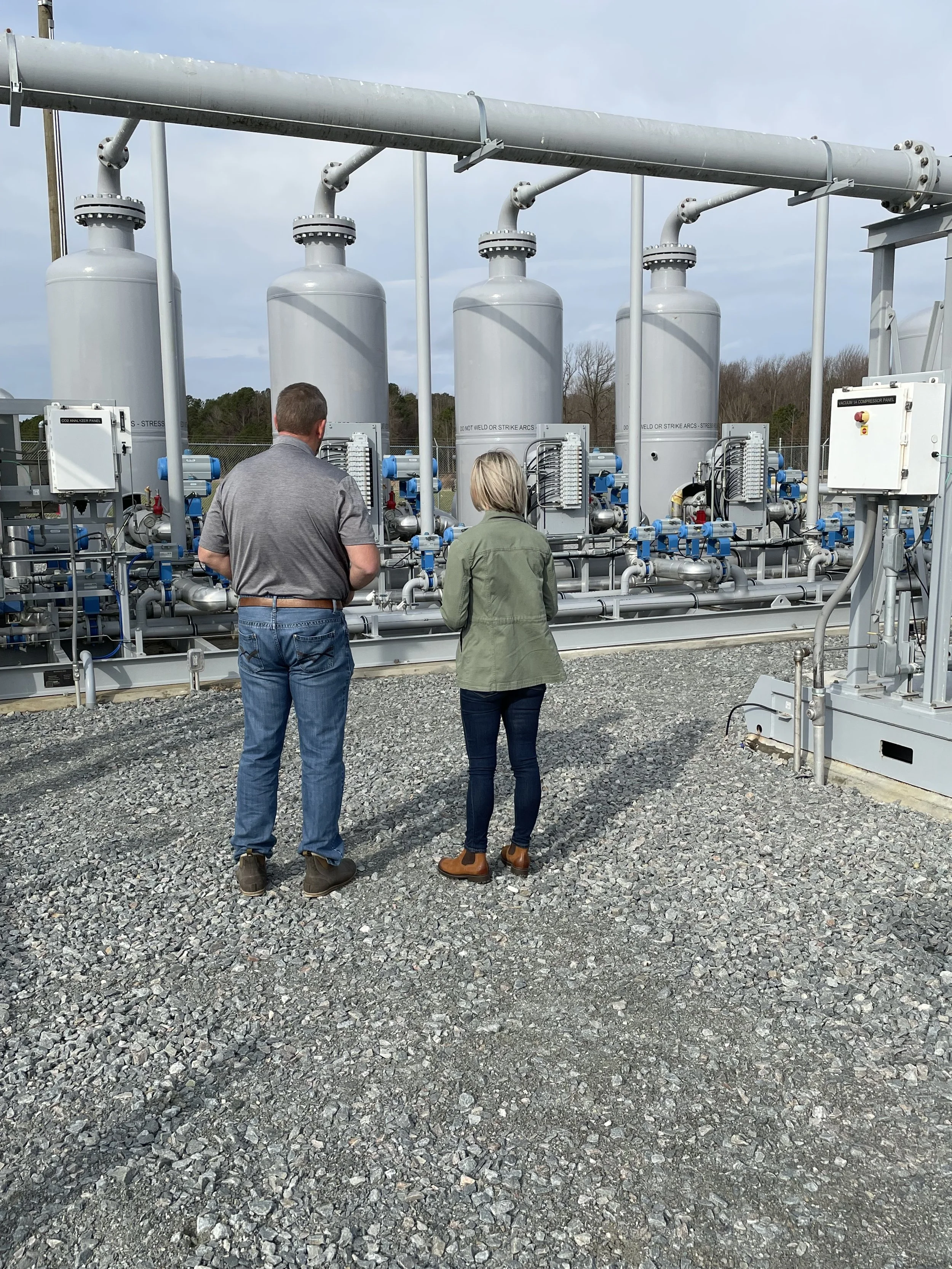
Change can be scary. At the vary least, it can raise a lot of questions. With the opportunity to implement renewable natural gas projects on some of North Carolina’s hog farms, there have been many questions raised—questions of safety, impact, and simple curiosity.
While most are excited about the opportunity for NC to become a leader in RNG, there are those that have reservations. And so, we wanted to provide answers to some frequently asked questions. Whether you are a skeptic, a sucker for new technology, a community member, a farmer, or a consumer, we hope this answers some of your queries.
FAQ’s
-
No. Ammonia levels are dependent on the number of pigs. The size of farms, nor the amount of nitrogen on the farm is changing.
-
No it doesn't. Farmers will still be fertilizing crops with wastewater. However, GHG and other farm emissions will be reduced and treatment and storage capacity will be enhanced. The lagoon/sprayfield system is still highly regulated, designed by university professors, and is non-discharge. Learn more about lagoons and spray fields here.
-
Covering lagoons will decrease odor as the emissions from the breakdown of manure will be removed from the farm.
-
Farmers have long been the adopters of innovation. RNG is the next innovative frontier. RNG allows farmers to add another source of income that mitigates manure management costs, while being better stewards of the environment.
-
No. Biogas is the only thing that will leave the farms.
-
The biogas that will be transported through the gathering lines is 30-40% CO2, which is what is in a fire extinguisher. In addition, the pressure in the gathering lines will be very low, less than what is in a car tire. In these conditions, the gas is not explosive.
-
No. The only thing being added is digesters.
-
No new hog farms have been allowed to be built in NC since 1997. RNG does not change this. A modification to current Swine Permits are required to build RNG on existing farms.
-
No. DEQ found that the Swine Permit "did not discriminate on the basis of race, color, or national origin on its face, in its implementation, by its impact, or in any other way." In addition, digesters and RNG are good for the environment as described, so any impacts would be positive.
-
Simply, they have. You can see a map of these farms here. In addition, farmer’s participation is voluntary. As farmers chose to participate, they will apply for permits, and their choice to participate will be known.
-
We think there are different reasons for opposing this innovative technology. 1) people may have misconceptions about RNG. We're trying to provide answers and information to put those misconceptions to rest. 2) Sometimes people just want to be critical and would love it if pig farmers didn't exist.
-
Yes! A recent survey showed that residents strongly support RNG programs
Attacking renewable energy projects? “Environmental” activists refuse to support innovations involving hog farms
You’d think an organization that supports environmental causes would enthusiastically throw its support behind an innovative project that will generate clean, renewable energy. But you’d be wrong.
The Southern Environmental Law Center (SELC) recently wrote an article in The News & Observer attacking a proposed renewable natural gas project involving dozens of hog farms in rural North Carolina. These activists who oppose animal agriculture simply cannot bring themselves to support anything that benefits our family farmers — regardless of the environmental and economic benefits.
They ignore the opportunity to reduce greenhouse gas emissions. They forget about the jobs and economic impact the project will bring to our rural communities. And they disregard the opportunity for North Carolina to establish itself as a national leader in clean energy.
The Align RNG project, a partnership between Smithfield Foods and Dominion Energy, will cover lagoons, capture methane, and convert it into renewable energy. This is the type of innovation and advancement that our farmers have always made through the years.
Those who care about our environment should embrace projects like this. But groups like SELC are attempting to turn this into a referendum on the lagoon and sprayfield system rather than accepting it for what it is — a responsible step toward a cleaner energy future.
Their rationale for opposing the project does not make any sense. In fact, SELC recently praised Smithfield’s approach to manure management in Missouri, where farmers have made capturing biogas and generating renewable energy a core part of the process – a process almost identical to our own. Except due to colder temperatures, Missouri farms will only be able to produce biogas eight months out of the year, versus year-round here, making their system less efficient than ours.
North Carolina can be a leader in clean energy. Those who want to protect our environment should focus on the meaningful impact this project will have on our environment and the people of eastern North Carolina and leave ulterior motives out of it.
Activists Oppose Innovations that Improve NC Hog Farm Environmental Sustainability
If you’ve ever wondered about the true motivation of the activists who relentlessly attack our family farmers, here is a clear indication: their puzzling opposition to generating clean, renewable energy from North Carolina hog farms.
Smithfield Foods and Dominion Energy have pledged to invest $500 million to capture methane from hog farms and convert it into renewable natural gas through a partnership known as Align Renewable Natural Gas. The project’s initial efforts involve hundreds of farms in three states — many of them located in Duplin and Sampson counties.
It’s a solution that will significantly reduce greenhouse gas emissions, create clean renewable energy, and further reduce threats from flooding by using covered lagoons and digesters to capture methane gas.
Image from Align RNG
Yet, the Waterkeepers and others refuse to support the project. Check that — it’s not simply that they don’t support the project, they are actively trying to kill it.
And that shows their true intentions.
These groups won’t support any innovations that help our farmers and make our industry more sustainable — no matter how much they will help the environment. They simply want to put hog farmers out of business.
What other logical reason is there for opposing a project that will establish eastern North Carolina as a leader in renewable energy, creating new jobs and attracting new investment in our rural communities?
In a recent blog post from the Waterkeeper Alliance, Pamlico Tar Riverkeeper Jill Howell argues in vain that capturing biogas won’t help our environment.
Huh?
It’s clear that the very notion of saying something — anything! — even halfway positive about the innovative steps being taken by our industry to help the environment is simply impossible for these activists. That’s all you need to know.
If you would like to show your support for the Align Energy project, you can submit comments on their proposed air quality permit to DAQ.publiccomments@ncdenr.gov. Use subject line: Align Energy. The deadline for comments is Friday, November 20.