Farmkeepers Blog
The Farmkeepers is the official blog of NC Farm Families. It is here that words will flow, our voice will be heard, a stand will be made, and the farm families of North Carolina will be protected. In these posts, we'll set the record straight. You'll see the faces of the families who feed us. Here, you'll receive all the updates and news. It is here that we will fight for farmers and be the keepers of the farm in NC. We hope you'll join us. Follow along on social media and by joining our email list.
Looking Back: The Smithfield Lawsuits
It was three years ago this month when the nuisance lawsuits against Smithfield and Murphy-Brown were settled. It came on the same day that an appeals court upheld the questionable rulings of a biased judge and the exorbitant awards of a Wake County jury located far away from North Carolina hog farms.
A lot has changed since then, and a lot has remained the same. Here are some of the highlights:
What’s Changed
The NC General Assembly has passed legislation that preserves and protects the Right to Farm. This includes updates to the Farm Act that clarify who can sue farms for nuisance (neighbors who live within a half-mile of the farm); when they can sue (within one year of any substantial changes to farm operations); and how much they can recover (no more than the fair market value of their property). The legislation also states that punitive damages cannot be awarded if a farm has not violated their permit within the past three years. Challenges to these laws were rejected by the NC Supreme Court.
A trial lawyer at the heart of the Smithfield litigation is currently running for the Republican nomination for Governor of North Carolina. Bill Graham is a partner at Wallace & Graham, the Salisbury law firm that spearheaded the Smithfield lawsuits and originally filed lawsuits against individual family farmers in North Carolina. “This is not just a case. This is a cause,” Graham said of the lawsuits, which sought no changes to our farms — only money.
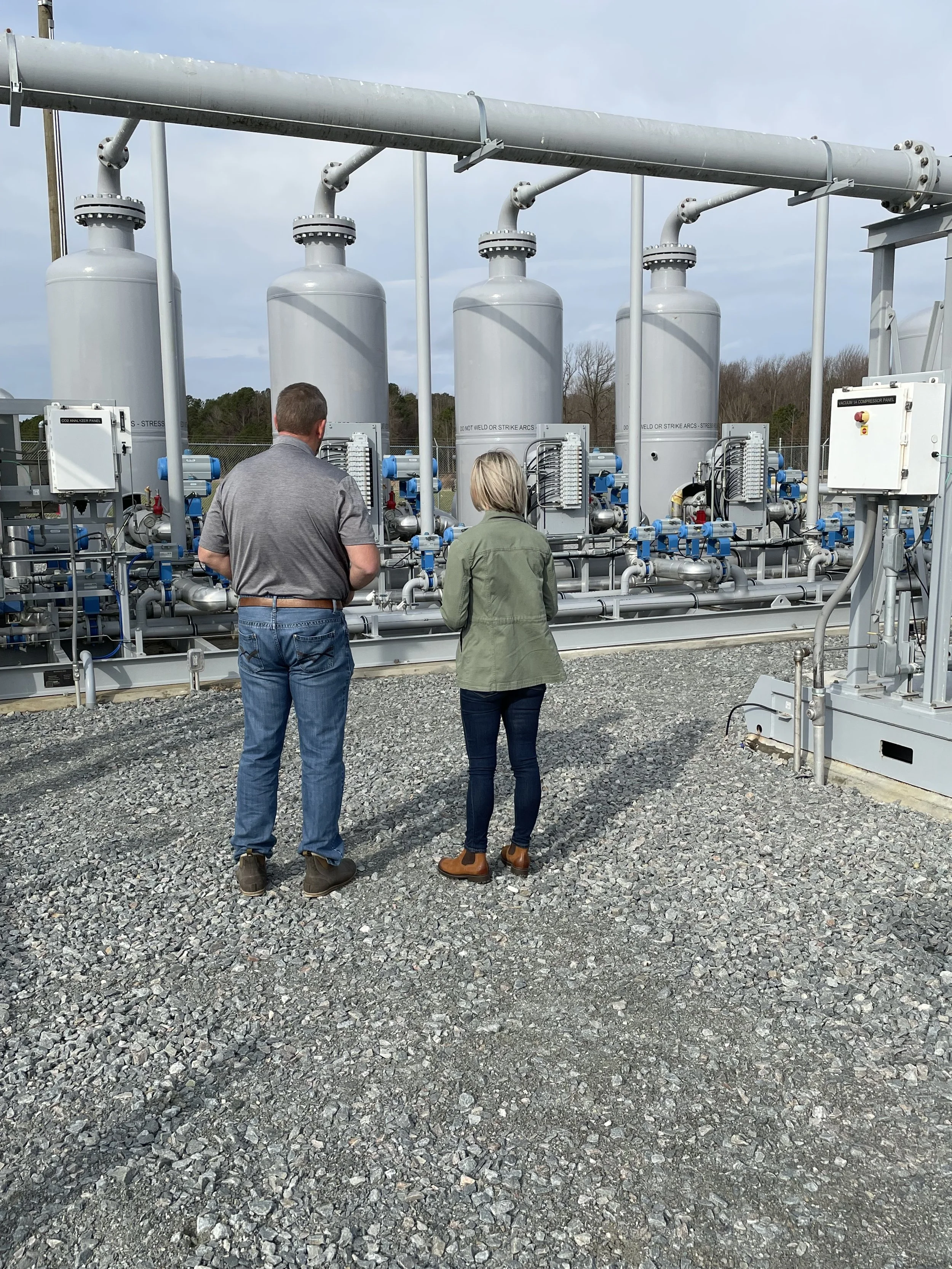
An increasing number of North Carolina hog farms are now covering lagoons to capture methane emissions and generate renewable natural gas. The lagoon covers reduce greenhouse gas emissions, reduce odors, and minimize the potential for flooding. Predictably, activist groups who frequently complain about odors and flooding are staunchly opposed to these biogas projects.
What Hasn’t Changed
Attacks against the pork industry haven’t stopped. The Southern Environmental Law Center (SELC) and the Duplin County chapter of the N.C. NAACP filed a Title VI complaint with the U.S. Environmental Protection Agency in 2021, alleging that DEQ is violating the civil rights of minorities in Duplin and Sampson counties by issuing biogas permits on hog farms. (Activist groups filed a similar complaint in 2014 regarding the issuance of hog farm permits. That complaint was settled in 2018 with no finding of discrimination.)
The Attacks Continue, Part II: Activist groups continue to spread false and misleading information about NC hog farms, including studies designed to raise health concerns. One example — a “study” by a Duke University professor that alleges residents who live near NC hog farms have elevated risks of disease and death. Despite the lack of any evidence that ties health claims to hog farms — even the study’s authors acknowledge that there’s no causation or correlation — the media continues to reference flawed studies like this.
The Attacks Continue, Part III: NC hog farms were at the center of another lawsuit against Smithfield Foods. This suit alleged that animal waste and associated odors and dust from a Duplin County farm traveled beyond the property line and were “trespassing” on the neighbors’ property. The creative attempt to get around the restrictions on nuisance lawsuits was dismissed in September 2023.
We know that those who are opposed to animal agriculture will continue to attack our hog farms. But, rest assured, one thing that won’t change is that NC Farm Families will stand up and speak out for our farm families. We’ll continue to sound the alarm about the legal and political threats facing our industry and work to educate residents about the positive steps being taken on our farms.
Make your voice heard: Comment on the new state permit for NC hog farms
North Carolina hog farms operate under some of the most stringent regulations in the nation. Every hog farm in the state that raises more than 250 pigs a year must receive a general permit issued by the NC Department of Environmental Quality (DEQ) and adhere to the permit conditions.
Every five years, DEQ reviews the permit and can change the permit conditions. The 2024 general permit is currently under development, as well as a new permit for farms that use digesters to generate renewable natural gas. The drafts of the swine general permit and digester general permit were released in late July, and the state is accepting public comments via email until Friday, November 3. In addition, the state will gather feedback at four public hearings, including one at James Sprunt Community College in Kenansville on Thursday, October 5 (6:00 pm) and one at Wayne Community College in Goldsboro on Tuesday, October 10 (6:00 pm).
We know that state regulators will hear repeatedly from the activists who want to make it more difficult for our family farmers to raise pigs, poultry and cattle. These groups will continue to push for burdensome and unnecessary regulations that help further their agenda.
If you support North Carolina agriculture, it is critical that we make our voice heard and speak out against adding new regulations to the swine general permit and digester general permit. Here are three things you can do to help:
Plan to attend the public hearings in Kenansville (Oct. 5) or Goldsboro (Oct. 10). There is also a virtual, online meeting planned for Thursday, October 26. You can sign up here to speak at the virtual meeting.
Send an email to DEQ with written comments about the permit. Click here to add your name to a pre-drafted letter or send comments directly to DEQ at publiccommentsDWR@deq.nc.gov.
Share this post and encourage friends and families to provide comments.
This is an important opportunity to have a say in what regulations our hog farms must follow until 2029. The new permit will take effect on October 1, 2024.
Learn more:
DEQ website: 2024 Animal Feeding Operations General Permits (public hearing schedule, draft permits, etc.)
The Tenacity of Farmers—How Carolina Swine Integrators Began
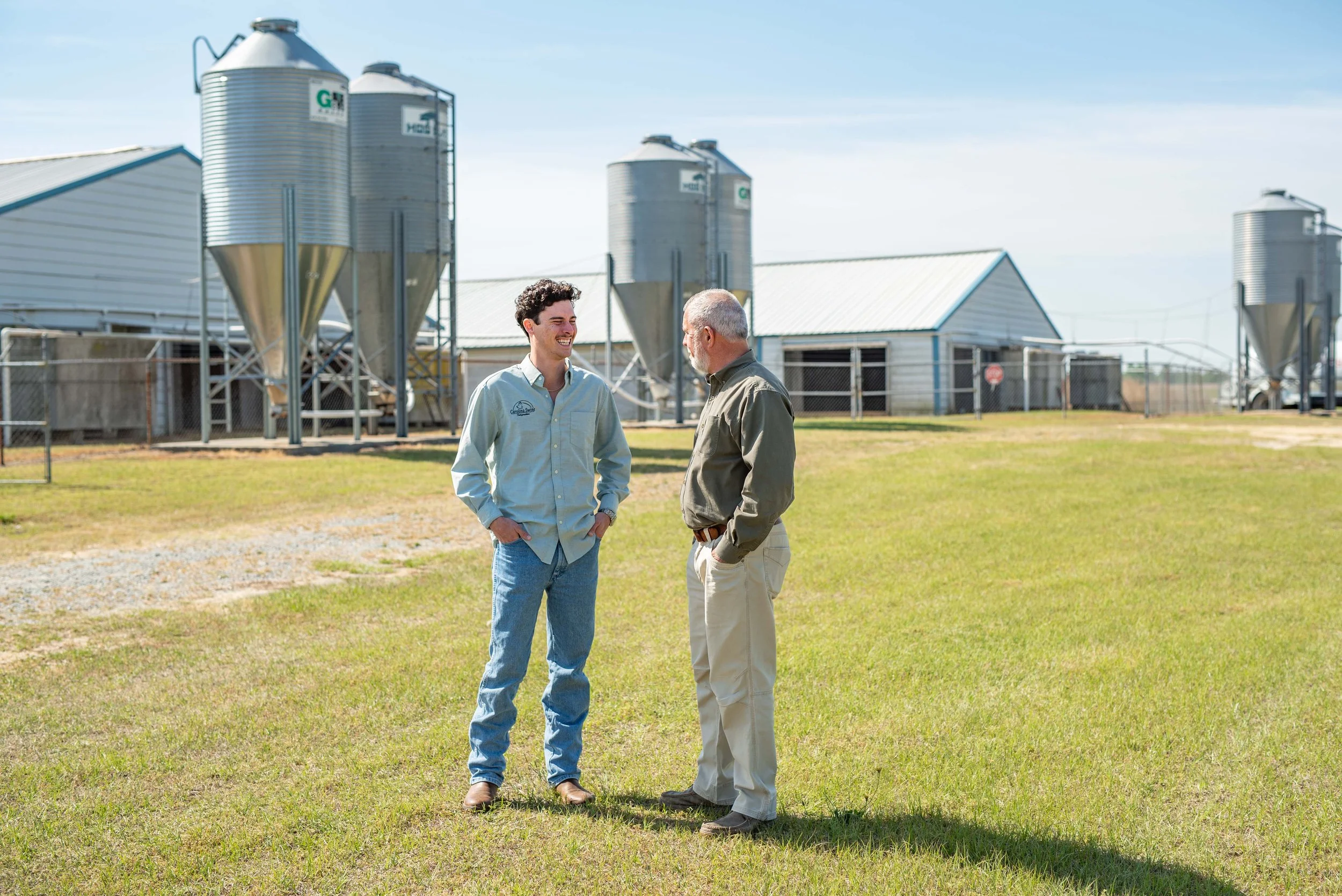
One of the character traits of a farmer is to be able to maintain flexibility. They are problem solvers who role with the punches. Farmers are a tenacious group that are not to be deterred. They hold strongly on to hope and faith, because at times that’s the only thing that gets them by. Like many, Darryl Floars and son, Blake, exhibit these traits.
Part 1—Becoming Hog Farmers
In the past two decades, the Floars have evolved a great deal in their farming endeavors. What started as acreage in the mid 90’s for recreational purposes for the family, turned into an opportunity to become hog farmers.
“We’d go there all the time on weekends, riding four-wheelers, shooting skeet, and hunting,” said Darryl.
The Floars asked their neighbor if he ever wanted to sell his land, to let them know. Upon retirement, the gentleman offered the land up to the Floars under one condition—they’d also buy the hog farm. And so, a new adventure began. A decade later, and the family decided to purchase an additional sow farm.
Blake, the youngest of four, took an interest in the farm and chose to go to NCSU for Agriculture Business. He has developed a real passion for the industry.
“I love the farm. I love this industry. I love the people. They’re the most important thing to me,” Blake said.
Blake has made a point to immerse himself in various aspects of the farm from barn work to contracts to educating the public.
“A lot of my friends don’t know what I do or anything about agriculture. I try to make a point to get the word out there a little bit,” Blake shared. “People have never wanted to know more about where their food comes from and never known less about how their food is made. I try to educate. Overall, people are good people. They just want to know, and people have a right to know where their food comes from.”
Hog farming wasn’t always an option for Blake, though. In 2020, he got the news that Goldsboro Milling was closing their hog operations. Blake diverted his plans to return to the farm after graduation and went to Arizona to sell life insurance instead.
Part 2—New Plan
Obviously, the news wasn’t good, especially since the family had just purchased another sow farm 1-2 years prior. Although depressing, Darryl took it all in stride.
“My wife and kids always ask, ‘doesn’t anything bother you?’ The Lord’s been good to us. If I end up with a horse and buggy, that’s okay. I look at it that way,” Darryl said.
This wasn’t to be the end of their hog farming story, though.
“To be honest with you, I didn’t really have a plan. I just prayed for guidance. I had a guy come in who wanted to meet with a guy, and that’s how it started. I really think the Lord put that in place,” Darryl said.
After the meeting, Darryl called Blake to tell him that there might be a viable plan in the works. That was in March of 2021. By October, Blake moved back to the farm full-time.
“I found out life insurance wasn’t for me, and I came back to the farm,” said Blake.
The plan? The Floars would partner with other growers that had gone out of business to supply hogs to a new packer. Essentially, the Floars would become their own integrator, supplying pigs to growers. They put together a plan. Currently, they have a 2,000 head sow farm in operation with plans to expand upwards to 6,000 sows. This would put over 100+ finishing floors back in business. That means a new start for many growers.
Darryl and Blake are really excited about the group they’ve got together so far.
“It’s like a big family. I haven’t known these guys all that long, but it’s turned into a big family of growers, and it’s been awesome to work with them,” said Darryl of their growers. He went on to say how much he values having “good people—good hog people around” him to compliment his more business-oriented mind.
For Blake, the growers are a big part of why he does it: “The growers are some of the highest character people I’ve ever met. That’s what drives me. We have our farms, and we want to get our farms going but really, it’s about that group of people. We want to help them get going again. That’s why I do it.”
Part 3—The Future
After sitting empty for a year, the Floars’ farm is filled with pigs again. The endeavor, called Carolina Swine Integrators, is at what the Floars calls the exciting part. After a lot of planning and hard work, they have sent their first batch of pigs to growers.
“It’s good to see all these parts come together because it’s been about a year in the making. There’s a lot of work that goes into it before you get that first wean pig off the sow farm. It’s a lot of work,” shared Blake. “So, to see that finally come to fruition, has been pretty rewarding recently, but we still have a long way to go. A lot of challenges, but there’s always challenges,” he continued.
Big things are happening at Carolina Swine Integrators. It’s been an all-consuming effort. Darryl says that he is finally able to have a little peace and take time to deer hunt and ride his horse on the farm.
Blake says he’s had a sharp learning curve. “I grew up around the farm but wasn’t involved in the day to day.” He credits everyone in the industry for helping him learn and supporting him. Blake puts a high importance on learning and developing relationships with others in the industry. However, sometimes, he says, he prefers the company of pigs to people.
For Blake and Darryl, they’ve also had to learn to work together. Blake says that “you have to learn where the boundary is between when he’s your dad and when he’s your boss.” That isn’t always simple, though, when farming is your life. “It’s hard for it not to be all-consuming, but after we leave work, I try for him to just be my dad.” For Darryl, Blake is his go-to guy. “He helps me read through contracts and is very detail oriented. He fills in the gaps for me really well.”
While excited to be up and running, they also want to grow, but they want to be smart. “We want to take baby steps. We don’t want to get ahead of ourselves. We do want to grow, but a slow growth,” expressed Darryl.
Blake echoed his dad’s desire to grow but added that they are also focused on sustainability. “Part of being sustainable is being profitable. If we aren’t profitable, we can’t do any of these sustainability things that we hope to do in the future. Sustainability is a big deal,” Blake said.
It’s not just sustainability and growth that the Floars have their sights on. They, like so many farmers, want to do things the right way.
“We care about what we do because at the end of the day we want to be good neighbors. We want to be responsible, and I think farmers are. That’s who they are. They’re high character people. They care for their neighbor. Doing things the right way is in the nature of farmers. We don’t want to take any shortcuts. We want to do it the right way,” Blake said passionately.
What started as just enjoying some outdoor activities in Eastern NC for the Floars turned into so much more. It turned into a career, a test of faith, chasing opportunity, building something new, developing friendships, and maintaining their flexibility. The journey isn’t over, but with the tenacity and faith of farmers, they persevere in new and exciting ways.