Let's Shoot Straight Mr Dove

The Waterkeepers leader in North Carolina, Rick Dove, just posted a comment on Farm Families’ Facebook page, and he doesn’t like our video Eighteen Years Ago.Our video tells the story of what happened, almost twenty years ago, when Mrs. Elsie Herring complained about a hog farmer spraying too close to her home: How the company investigated her complaint, agreed with her, moved the farmer’s irrigation equipment and planted a wide buffer of trees between her home and the farmer’s field.That happened almost twenty years ago. But, a few months ago, one of the Waterkeepers’ allies reported, on its website, the farmer was spraying too close to Mrs. Herring’s house now.We made a video to set the record straight. And Rick Dove didn’t like that. He claimed our video was “alternative facts.” Here’s the video so you can judge for yourself:

Not long ago, Rick Dove had a problem with ‘alternative facts’ himself.The morning after Hurricane Matthew, Dove set out to spin a story to the press about an environmental disaster – and blame it on hog farmers. So he climbed into an airplane to fly over flooded farms to take photographs.We know now, according to state records, only one half of one percent of the lagoons on hog farms were inundated during the floods. One other lagoon on a shuttered hog farm (that hasn’t had a hog on it in five years) had two minor ‘breaches.’

In all, on 99.5% of the hog farms, nothing happened to harm the environment. But that wasn’t the picture Rick Dove and the Waterkeepers wanted to paint. So he resorted to a ruse: He posted nine pictures, all taken from a plane, all taken at different angles, of one flooded farm. But he didn’t explain, This is one farm. He posted four pictures of another farm, two of another, four of another. Dove even posted a picture of a flooded municipal waste treatment plant in Hookerton and called it a hog farm.Dove then spun his story to the press. The Washington Post even published Rick Dove’s photo of a flooded municipal waste treatment facility in Hookerton and called it a hog farm.Those were “alternative facts.” And Rick Dove hasn’t set the record straight.

Hog Farmers Ruin Lives: An Untruthful Story about Elsie Herring

One of the new videos from the Waterkeeper Alliance tells a heartbreaking story… or, at least, the story would be heartbreaking if it was true. When the Waterkeepers climb up on their soapboxes, they like to depict hog farmers as villains who don’t care about “racial injustice.” To prove their point, they like to tell the story of Elsie Herring, an African-American woman in Sampson County who lived near a hog farm.

Back in 1998, Mrs. Herring had a legitimate complaint: The hog farmer next door was spraying too close to her home.Here’s what happened: Mrs. Herring took her grievance to the farmer, the company investigated, and agreed. Mrs. Herring was right. The farmer then moved his irrigation equipment further away from Mrs. Herring’s house, stopped spraying close to her home, and the company planted a grove of trees between her home and the farmer’s field as an additional buffer. Eighteen years later, that story took an odd turn. The Waterkeepers, along with one of their allies, posted a “report” on the Internet saying a farmer was spraying waste eight feet from Elsie Herring’s kitchen window… not 18 years ago. But now. Today. The Waterkeepers took a mistake that had happened almost two decades ago – and told people it is happening now. Here’s a photograph of Mrs. Herring’s home today.

Elsie Herring’s House

Elsie Herring’s House

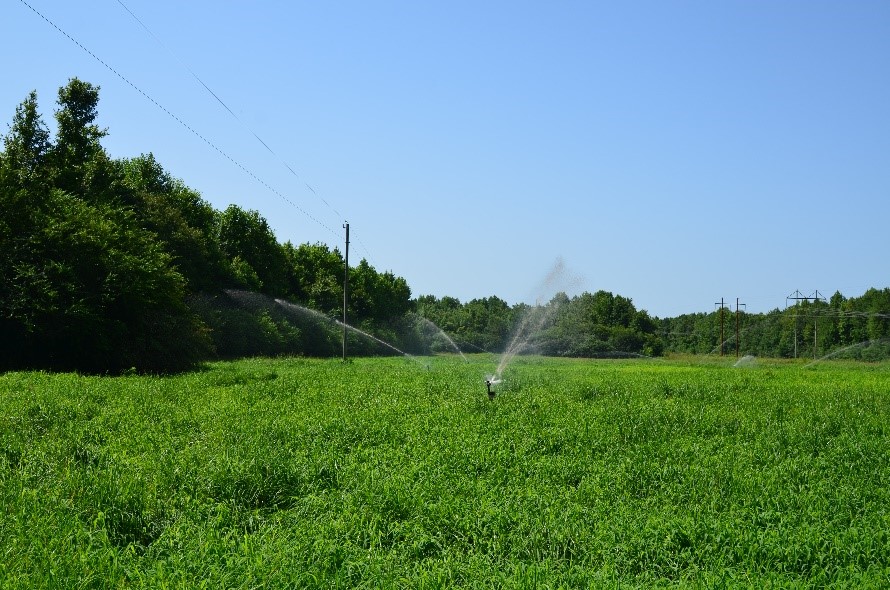
The trees planted years ago have now grown into a forest so thick you can’t see the farmer’s field from her house. This is a photograph of the farmer’s field on the far side of the trees.

Spray field next to Herring’s house.

Spray field next to Herring’s house.

And this aerial photo shows that the farmer’s irrigation doesn’t come any closer to the house than nine hundred feet* – not eight feet like the Waterkeepers claimed.

Map

Map

And here’s a video that tells the entire story.

Hog farmers aren’t perfect. But they are honest, hard-working people. And when they make a mistake they fix it. Just like that farmer did 18 years ago.The Waterkeeper Alliance is just playing politics. The hard part is, when the Waterkeepers play politics, a lot of hard-working farmers get hurt.

*Update: this distance has been changed from 200 to 900 feet to represent the most current situation. Regardless, the claim of 8 feet is false.

Why the Waterkeepers' Mantra is Wrong

baldwinThe Waterkeeper Alliance has released nine new videos attacking North Carolina hog farmers. Let’s take a look at the first one, which they’ve posted on YouTube and promoted (paid to run) on Facebook.The Waterkeepers video repeats the same old mantra they have tried to foist on people for years. They say-- There are a lot of hogs, there are mountains of waste, and there’s not enough land to absorb it all. Now, that’s just plain dead wrong. And the Waterkeepers know it. Here’s why:A farmer can’t just build a hog farm and go into business. They have to obtain a permit from the state. And to get that permit, they first have to tell the state two things: How may acres of land they have on the farm, and what crops they are going to raise.Next a state lab, using soil tests and agronomic rates, calculates how much manure those crops will consume as they grow.Then, finally, the state uses the lab’s data to determine how many hogs the farmer can raise on their farm without over-applying manure to the land.It’s that simple: How much land the farmer has and the crops they grow determine how many hogs they are allowed to raise.In addition, state officials inspect every hog farm each year to verify the farmer is complying with every one of those regulations. If they don’t, the state can put that farmer out of business.But you won’t see those facts in these Waterkeeper videos. They just scream, There are a lot of hogs, there are mountains of waste, and it’s gotta be polluting. But, in fact, the whole system – from permits to studies in state labs to state inspections – is designed to protect the environment. Here’s a video that tells a story about how one farmer, James Lamb, has worked to comply with state regulations to protect the environment for almost two decades.The Waterkeepers just keep on spinning. But, of course, it’s all just politics. The hard part is, when the Waterkeepers play politics, hard-working farmers – like James Lamb –  get hurt.