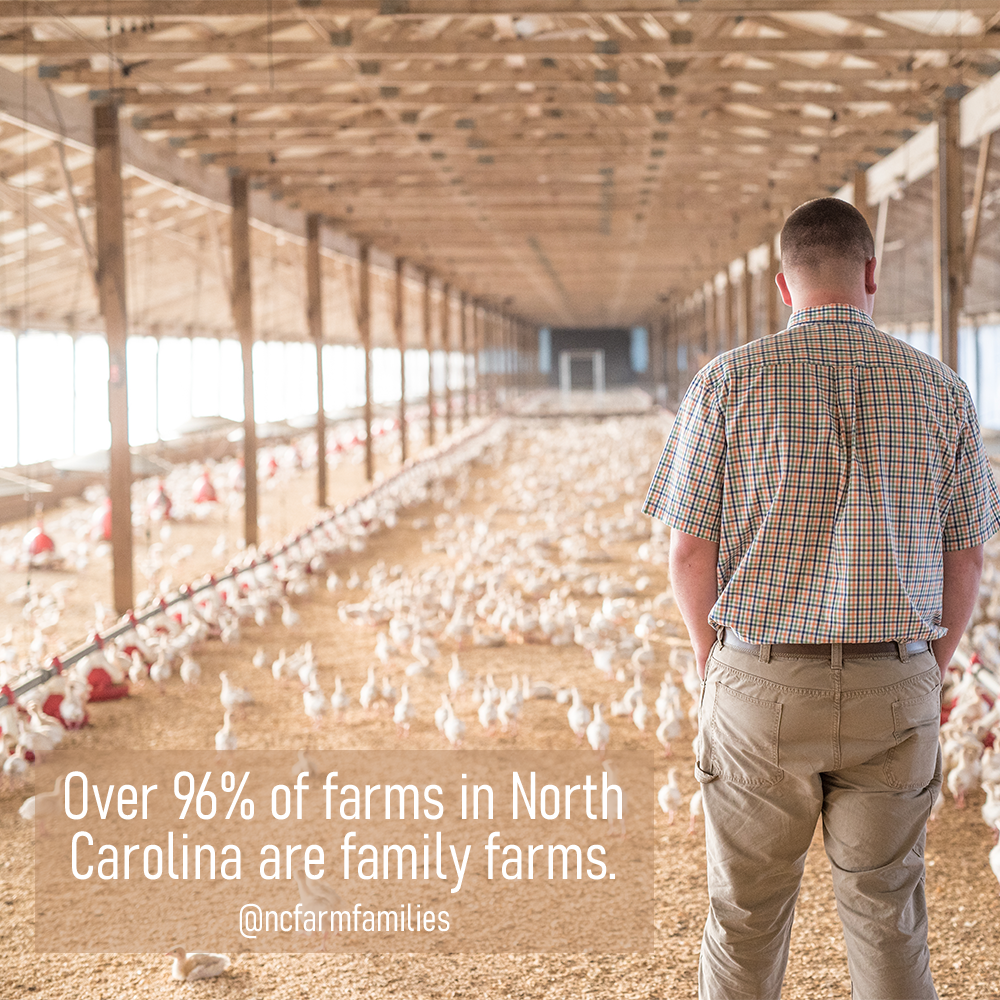
Environmental activists have launched another campaign targeting North Carolina agriculture. This time, they've recruited more than 1,600 volunteers to study satellite images, identify poultry barns and hog farms, and mark their locations on a map.
And what have they found?
Farms.
Thousands of them. Farms that produce food, support rural communities and provide livelihoods for North Carolina families.
The project, called “E-I-E-I-O No!”, is being promoted as an effort to uncover the supposedly hidden footprint of North Carolina agriculture.
The name itself is revealing. Perhaps the organizers would prefer farms that look like the illustrations in a children's storybook. But agriculture has evolved, just like every other industry. With fewer farms feeding a growing population, it has had to.
But here's what's missing from all those dots on the map: actual evidence that the farms are doing anything wrong.
A satellite image can't tell you whether a farmer is responsibly managing nutrients, protecting water quality or following sound environmental practices. It can't determine whether a farm is complying with environmental regulations or harming nearby communities.
Yet the environmental organizations behind this project have already characterized these farms as threats to public health and the environment.
It makes you wonder if they are simply gathering information to support conclusions they've already reached?
Here's something else worth pointing out: There's nothing particularly new about this exercise.
In 2016, the Environmental Working Group and Waterkeeper Alliance announced a project mapping thousands of North Carolina poultry and hog farms. They followed with additional maps and reports in subsequent years, including another statewide poultry analysis released just two months ago.
For more than a decade, environmental groups have been using satellite imagery to identify North Carolina farms, estimate animal populations and raise concerns about their environmental impact.
Now another group of activists is doing much the same thing, presenting it as the discovery of some long-hidden secret.
What exactly have they uncovered that wasn't already known?
Most importantly, there's something else missing from this entire exercise.
The people.
Behind those poultry houses and hog farms are North Carolina farm families. Honest, hard-working people who have invested their savings, worked long hours and spent generations building businesses that help feed our state and nation.
They aren't strangers to the communities where they farm. They live there, raise their children there, support local businesses and volunteer in their communities. They care about their neighbors and the land and water on which their livelihoods depend.
Yet these families are being reduced to anonymous dots on a map, portrayed as environmental threats simply because they operate a farm.
North Carolina agriculture is our state's largest industry, supporting hundreds of thousands of jobs and sustaining rural communities. The families who make that possible deserve better.
Perhaps these environmental organizations should spend a little less time looking at farms from satellites and a little more time getting to know the people who work on them.
They see dots on a map. We see farm families.