
Farms Gone Forever: The plight of development & farmland loss in North Carolina
North Carolina’s number one industry is agriculture. There are over 42,000 farms in the state, covering 8.1 million acres. From row crops and livestock to fruits, vegetables, and forestry, farm families across our state work every day to produce the food, fiber, and fuel that keep North Carolina—and much of the country—running.
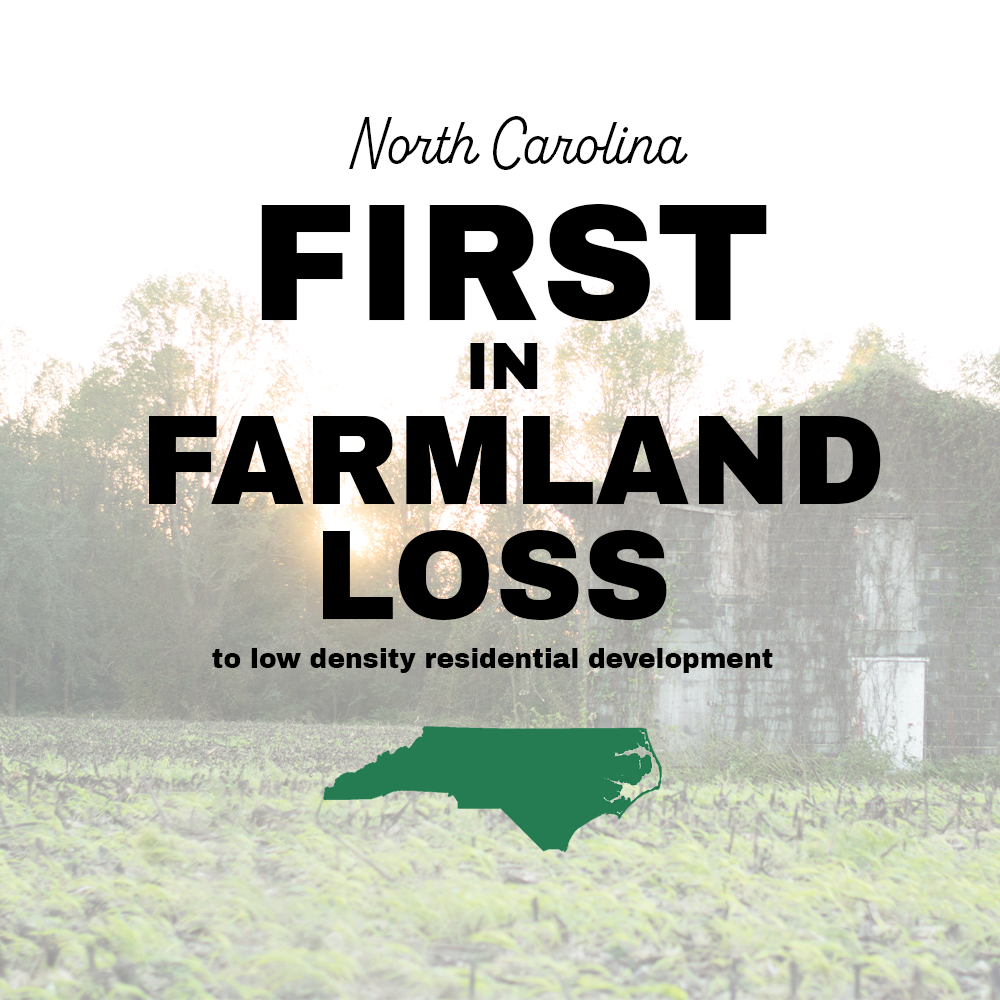
But North Carolina also holds a statistic that gives many in agriculture pause: our state ranks first in farmland loss to low-density residential development. In fact, current estimates suggest that more than 1.6 million acres of farmland in North Carolina could be lost by 2040.
For farm families, that number isn’t just about acres. It represents fields that have been farmed for generations, land that supports rural economies, and the working landscapes that define so much of our state.
The Quiet Disappearance of Farmland
Farmland loss rarely happens all at once. More often, it happens a few acres at a time.
A field along a county road becomes a few house lots. A neighboring farm sells part of its land for a new development. Over time, the open farmland that once stretched across a community becomes smaller and more fragmented.
For farmers, this change can create real challenges. Large equipment must navigate around new development. New neighbors may not always be familiar with normal farm activities like early morning planting, harvesting late into the evening, or the occasional smell of fertilizer. And once farmland is converted to residential use, it almost never returns to agriculture.
Why Farmland Matters to All of Us
Farmland is more than just open space—it’s the foundation of our food system and a critical part of North Carolina’s economy.
Agriculture contributes billions of dollars to the state’s economy each year and supports hundreds of thousands of jobs. Farms also help maintain wildlife habitat, protect water resources, and preserve the rural character that many communities value.
When farmland disappears, those benefits can disappear with it.
Protecting farmland isn’t about stopping growth. North Carolina continues to attract new residents and businesses, and growth is part of a healthy, thriving state. The key is making sure that growth happens in a way that also protects the working lands that sustain agriculture.
Keeping Farms in Farming
Farm families are deeply committed to the land they steward, but they also face tough decisions. Rising land values, development pressure, and questions about the next generation can make it difficult to keep farmland in production.
That’s why farmland preservation tools and programs matter. Conservation easements, farmland protection initiatives, and voluntary agricultural districts give farmers options to protect their land while continuing to farm it.
These programs help ensure that farmland remains available not only for today’s farmers, but for the next generation as well.
The Role of Community
Farmland preservation isn’t something farmers can do alone. It requires support from communities, local leaders, and policymakers who recognize the importance of agriculture to North Carolina’s future.
When communities prioritize farmland protection in planning decisions, support local agriculture, and work alongside farm families, they help strengthen the foundation of the state’s number one industry.
Looking Ahead
North Carolina agriculture has always been rooted in resilience. Farm families adapt to changing markets, unpredictable weather, and evolving technology. But the one resource that cannot be replaced is farmland itself.
Once it’s gone, it’s gone.
North Carolina’s farms have shaped the state for generations. With thoughtful planning and strong community support, they can continue doing the same for generations to come.
Because when we protect farmland, we’re not just saving acres—we’re protecting the future of agriculture, rural communities, and the families who make it all possible.
Continue the conversation on Raised on the Farm Podcast. We sit down with Brandon Batten, a farmer in Johnston County, NC to talk farming, faith, farmland loss/preservation, and the importance of getting involved in our communities.
Johnston County is among the top 5 fastest growing counties in the state and one of the top counties nationally for farmland loss.
Listen on Apple or Spotify or directly at: https://www.buzzsprout.com/2144019/episodes/18635864