

Farmkeepers Blog
The Farmkeepers is the official blog of NC Farm Families. It is here that words will flow, our voice will be heard, a stand will be made, and the farm families of North Carolina will be protected. In these posts, we'll set the record straight. You'll see the faces of the families who feed us. Here, you'll receive all the updates and news. It is here that we will fight for farmers and be the keepers of the farm in NC. We hope you'll join us. Follow along on social media and by joining our email list.
More False Tales About the Hog Industry: A Response to Food & Environment Reporting Network
The latest attack on North Carolina hog farmers arrived Friday — an article about the ongoing nuisance lawsuits that was full of false and misleading information produced by anti-agriculture activists and a freelance journalist named Barry Yeoman.
It reads like a “greatest hits” album, filled with a familiar cast of characters repeating claims that have been debunked time and time again. The outfit behind the story — the Food and Environment Reporting Network (FERN) — Is that same group that published a wildly inaccurate and discredited story about livestock complaints in North Carolina earlier this year.
FERN is funded by the Schmidt Family Foundation, which has a goal of harming animal agriculture.The foundation recently provided $190,000 to FERN, in part, for “modern muckraking.” It has been funding an array of efforts that are aimed against modern agriculture, including directly paying for an ongoing effort to organize class-action lawyers to bring more lawsuits against, among others, Smithfield Foods.

It’s unclear why anyone thinks that destroying farms, driving up food prices and dismantling rural economies is a worthwhile endeavor.
If you read the article, it’s important to understand the context of what you are reading — that is, what you are reading is underwritten by a well-funded advocate who is against agriculture. It isn’t actual independent journalism, though it’s presented with that veneer.
One of the more laughable passages seems to suggest that state Rep. Jimmy Dixon, a farmer himself, is somehow compromised because the pork industry has accounted for about 12 percent of his campaign contributions.
This, in a story that is 100 percent paid for by an anti-agriculture advocacy group.
The tale is as one-sided as the trials were – recall that no juror, not one, ever visited any of the farms that were on trial. The Texas lawyers on the other side of the courtroom didn’t want that. They didn’t want the jurors to see and smell for themselves.

The story prominently features Elsie Herring, the most-quoted neighbor of a hog farm on the planet. She is given free rein to say that the farm she lives near “is blowing waste” on her. This is simply not happening, and no respectable media outlet should repeat these falsehoods.
The story also lends much credence to Steve Wing, who was both a UNC-Chapel Hill professor AND founder of the N.C. Environmental Justice Network (NCEJN), which is also funded by Schmidt and advocates against agriculture.
Wing, now deceased, was described as a “committed activist” in his obituary… and has said to students that he literally “made arrangements” with advocacy groups in his “research” in order to “subvert the interests” of the university. That much is apparent in the various discredited studies by him.
The story seeks to frame this issue as one about racial division, which is one of the saddest and most despicable aspects of these cases and of the continued efforts by those who wish to close our farms. There remains a continued effort by these activists to divide people based on race. It should be rejected by all fair-minded people, especially when what they say is flatly false.
The irony of the story is that numerous media outlets who have spent time on our farms contradict it. True journalists describe the farms in terms that are vastly different than litigants in lawsuits. And so do neighbors, including in the trial Barry wrote about.
Just last week, a group of media members visited a farm in Sampson County.
Shortly after the media arrived on the farm, a husband and wife – the farm’s closest neighbors – came walking back to say hello and offer their own testimony.
“We’ve enjoyed living out here,” the wife said. “The farm doesn’t bother us.”
What bothers us all is something else: inaccurate tales told by advocates who are disguising themselves as the media.

U.S. Court of Appeals to consider hog farm lawsuit in January

An appeal of the controversial nuisance lawsuits against Murphy-Brown will be considered by the U.S. Court of Appeals for the Fourth Circuit in January 2020. That’s when the appeals court in Richmond will hear arguments from the pork producer about seven serious errors that resulted in an unfair and improper trial.
The appeals court will hear oral arguments from Murphy-Brown and the plaintiffs during its January 28-31 session as it considers requests to dismiss the case, reverse the punitive damages award, and/or order a new trial. Rulings are typically issued three to six months after oral arguments are heard.
This is not the first time the U.S. Court of Appeals has considered issues involving the nuisance lawsuits. In September 2018, a panel of three judges sharply criticized U.S. District Court Judge Earl Britt for imposing a gag order during the second trial.
The Fourth Circuit called the gag order “ill-advised” and “unconstitutionally vague,” noting “the mischief of the trial court’s action should be apparent.”
“This is wrong,” the court wrote in a 24-page opinion vacating the gag order.
“The gag order has already inflicted serious harm on parties, advocates, and potential witnesses alike,” the ruled stated. “It has muted political engagement on a contested issue of great public and private consequence. It has hamstrung the exercise of First Amendment rights. Even in short doses, these harms are hostile to the First Amendment.”
“The gag order harms farmers,” the court wrote in describing the harm caused by Judge Britt’s order. “This case is about their lives and their livelihoods. Whatever differences the parties and their supporters have, they possess in common a passionate First Amendment interest in debating their futures. It seems very wrong that a court would take that from them. “
We have anxiously waited for this to be scheduled, and now, we wait to see the opinion of the Court of Appeals. Their verdict will impact the lives of many family farmers. We will keep everyone up-to-date and apprised of further progressions.
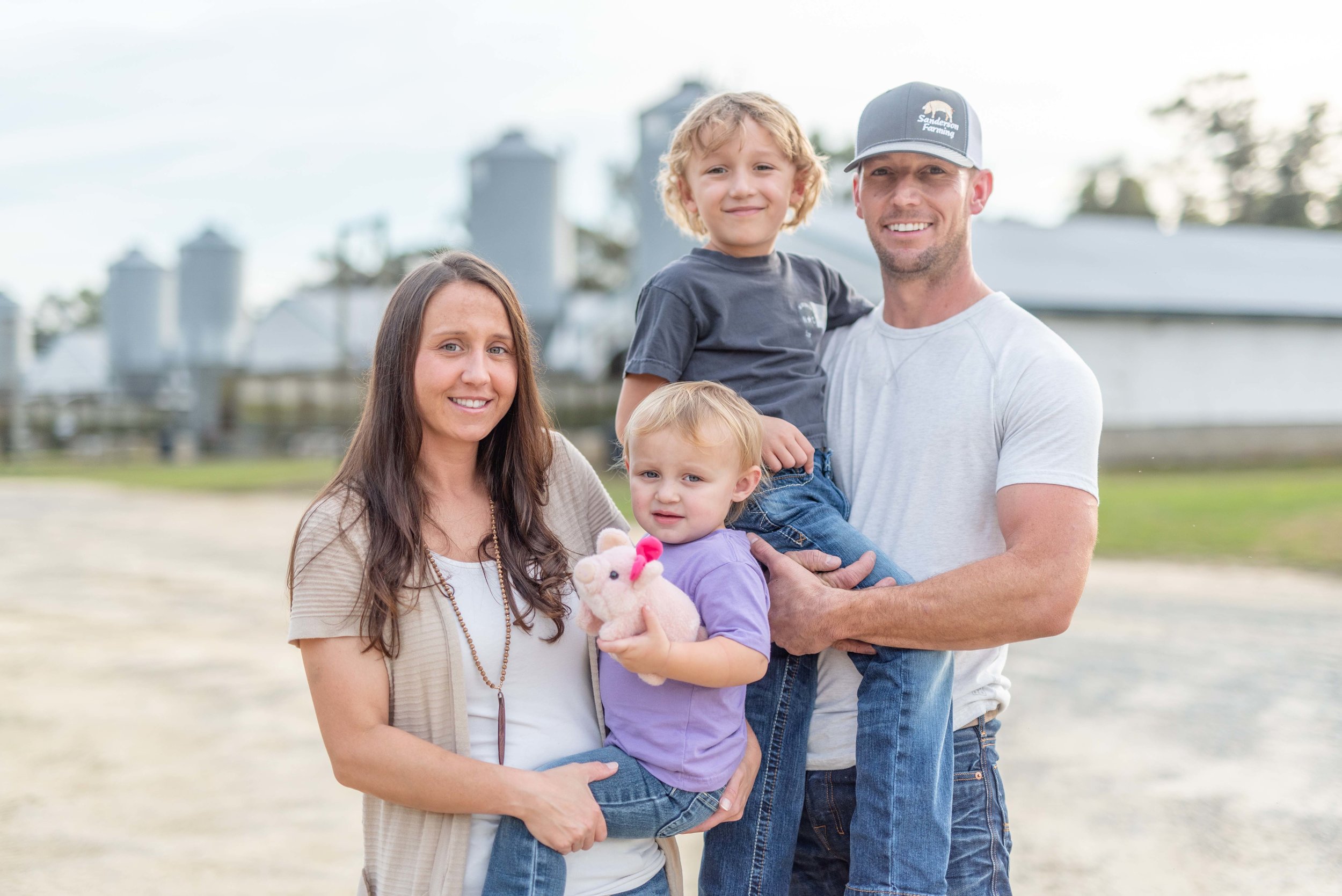
Raising a 5th Generation on the Farm: The Sanderson Family

The Sandersons have farmed land in Eastern North Carolina as far back as the 1850’s growing crops and hogs. The family has been farming the current land in Southwestern Wayne County for 4 generations, and now, another generation is coming up on the farm. The 5th generation already has a passion for pigs, tractors, and the land.
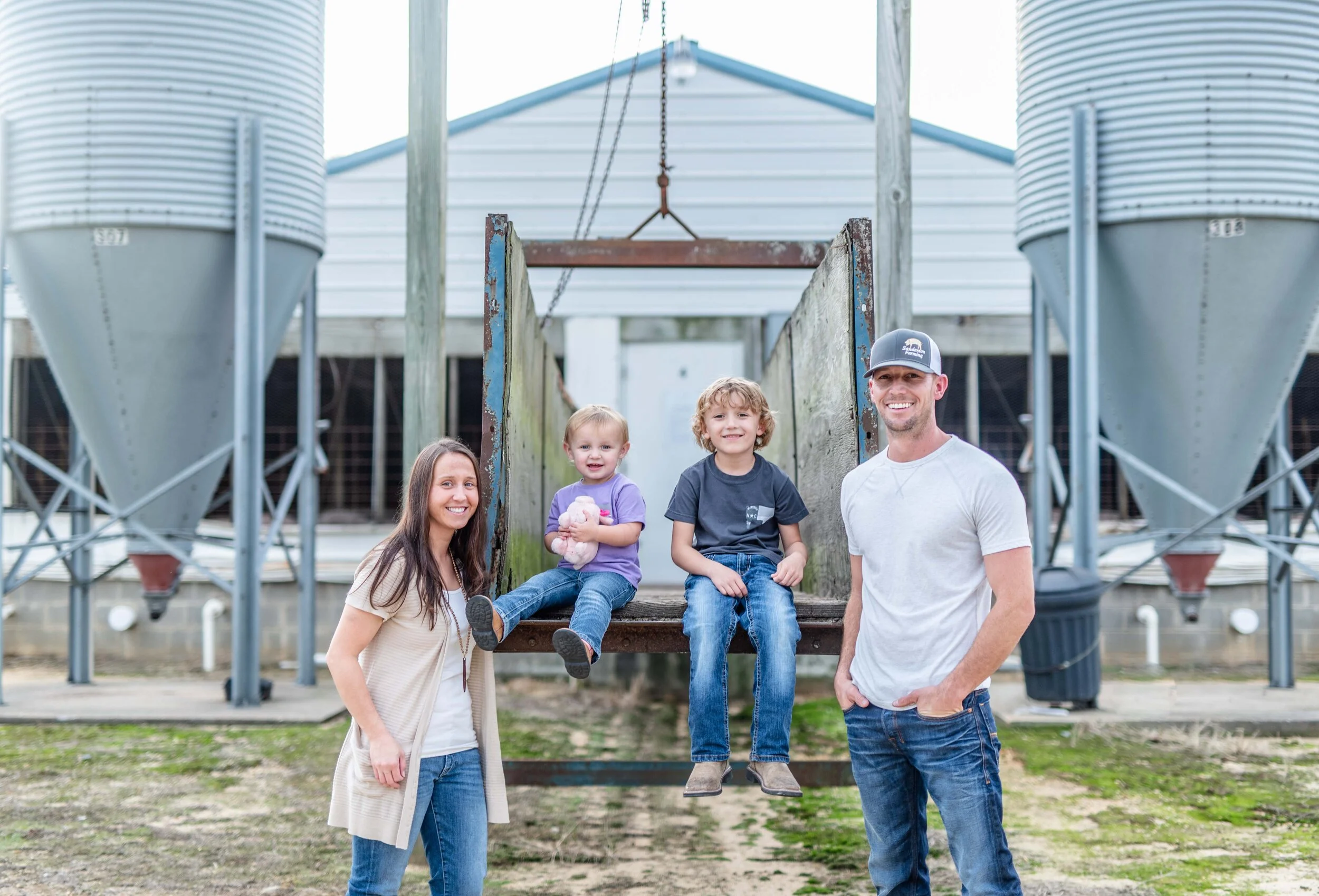
Matt and Andrea Sanderson live in Wayne County where they tend 950 acres of land with Matt’s dad. They currently grow, corn, soybeans, peanuts, and wheat on the farm. In addition to the crops, Matt and Andrea have 10 hog houses that they own together. They are also raising their two children, Spate who is 6, and Tessa who is 2, on the farm.

Both Matt and Andrea grew up around agriculture. Andrea’s grandfather had a small farm where she would help him and his brother in the summers with tobacco.
“I always admired my grandad and always wanted to ride with him on his tractor,” Andrea said.
In high school she got involved in FFA where her love of agriculture grew. She would later become an FFA teacher, and it was actually through FFA that Matt and Andrea met. They recall some of their first dates being on Matt’s farm where Andrea would help Matt work and wash his show steer for the spring show.
As the fourth generation on the current farm, Matt always knew what he wanted to be when he grew up.
“Ever since I knew what farming was, I knew it was what I wanted to do,” Matt said.
Andrea added that when Matt was little, he could be found under the bleachers playing tractors instead of on the baseball field during t-ball games. You could say that for Matt, it was a true calling and in his blood.
“I saw my dad and grandad and uncle do it. My uncle influenced me a lot when it came to hogs. He was a hog farmer, and my dad was a row crop farmer…now we grow both,” Matt said.
Eight years ago, the couple decided to diversify the farm and purchase a finishing hog farm. They just purchased a second hog farm the past year. Growers for Goldsboro Milling, they’ve really enjoyed working with the pigs. Not only does it help diversify their farm but being able to partner with an integrator takes a lot of the risk out for the Sandersons. Goldsboro Milling provides resources, and for the Sandersons, the partnership fits their operation very well.

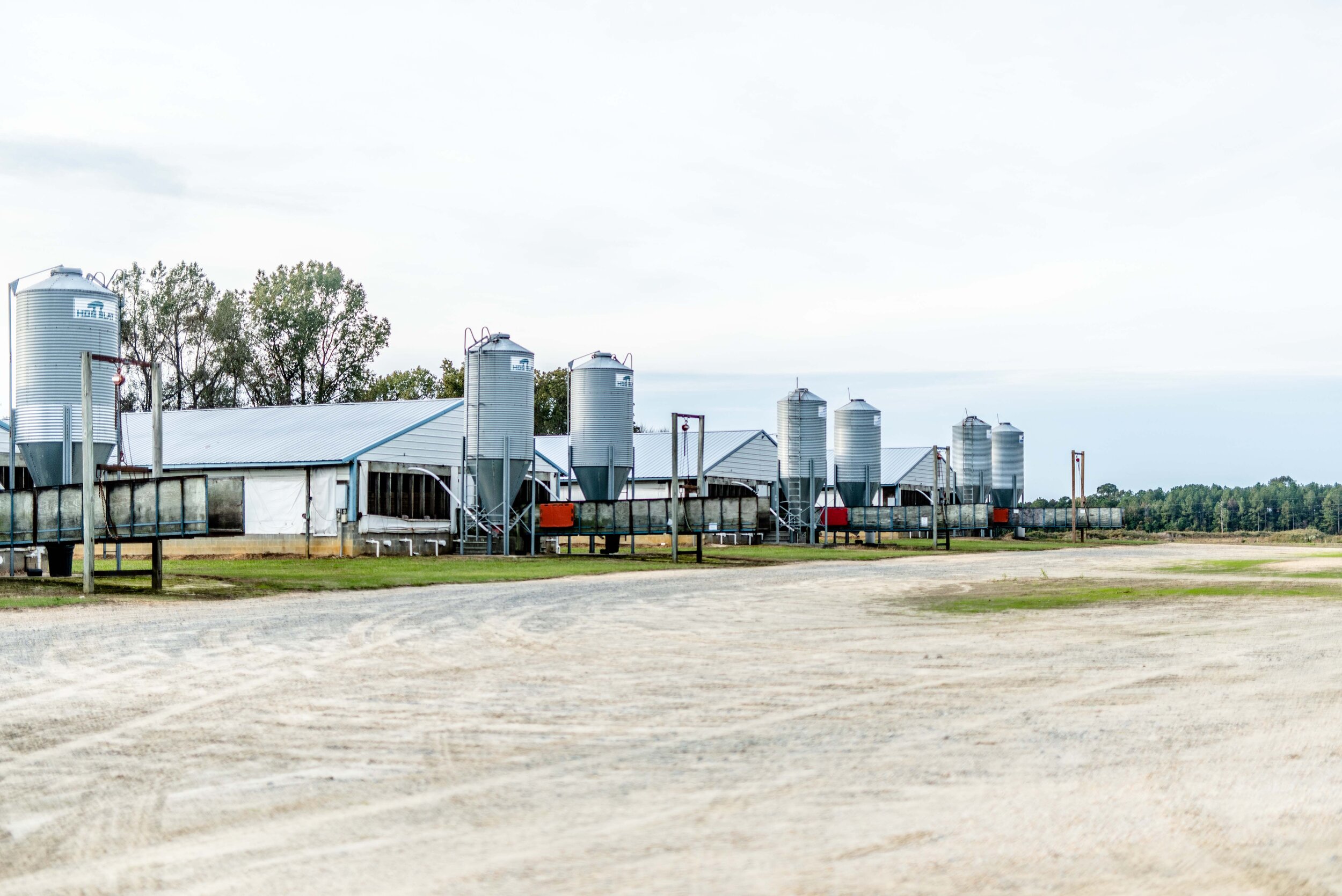


They appreciate how hog farming can work well with row crops on their farm too. Because of their long history as row crop farmers, they have a deep appreciation for the land and know the importance of taking care of the land.
“They soil sample annually, so they know exactly what the land needs. They do tissue samples on their plants when they’re not sure exactly how much nitrogen the plants need, so they aren’t applying anything on the land that doesn’t need to be there,” Andrea said.
By using technology like auto-steering when planting and autoswath when spraying, they can be more precise, efficient, and better stewards of the land.
“I think we care more about the land and the environment than anybody because we live on it and I’m raising my kids on it. It’s very important to me. We try to do as much conservation farming as we can,” Matt added.
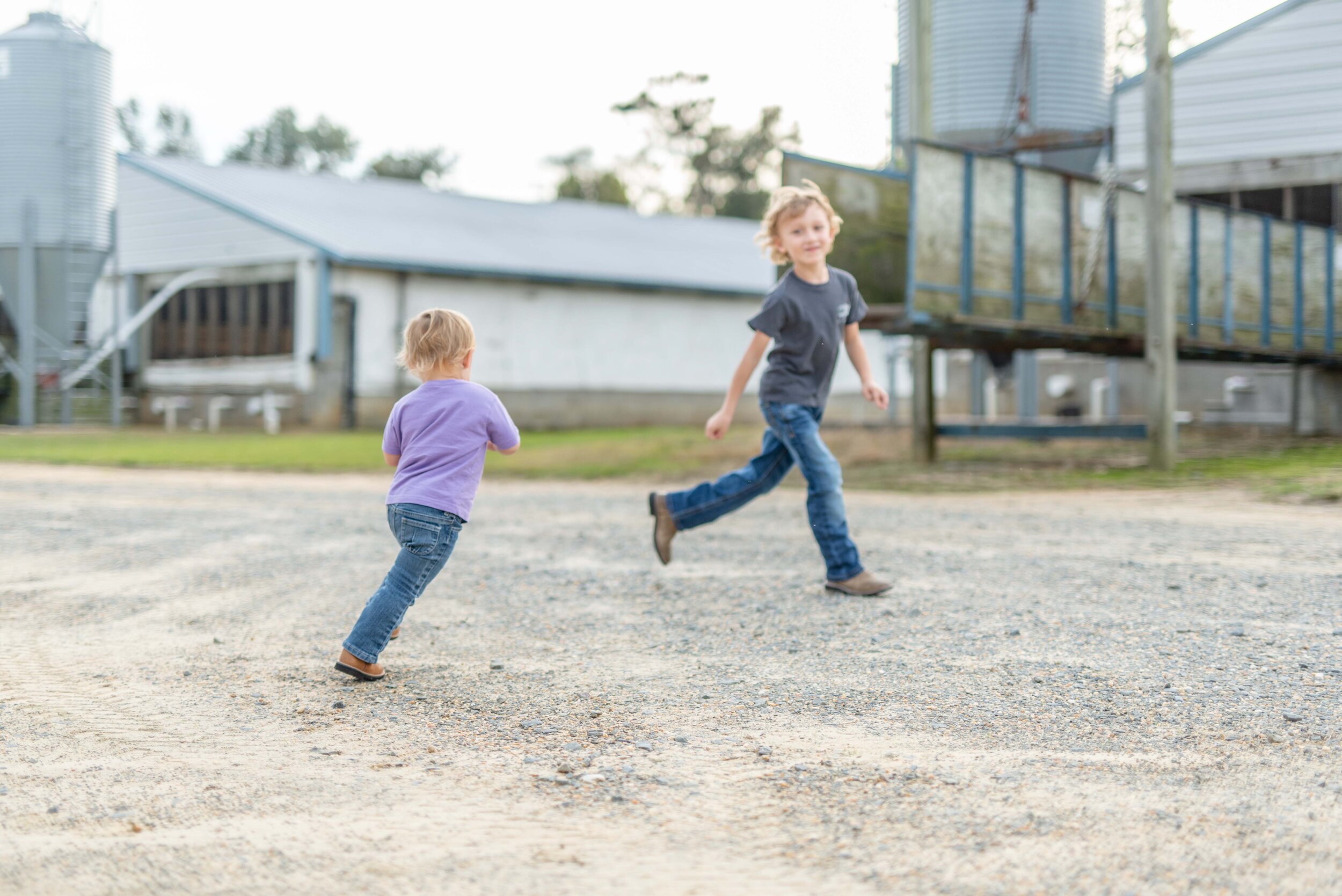
Raising the next generation on the farm means that you must take care of the farm and the land it includes. Andrea and Matt are committed to doing just that. They hope that living on the farm teaches their kids the value of hard work and that it builds their character. They want their kids to have an overall appreciation for the agriculture industry.
“We try to immerse both of them as much as we can whether it’s through 4-H or just having them on the tractor or combine or entering things in the fair. There’s probably not a whole lot of 6-year olds that know what a persimmon or chinquapin is,” Andrea shared. “He’s not just learning about farming, he’s learning about the land around him,” she continued.
Matt also feels that it is important that their kids learn about the land and how to be good stewards of it.
“I want them to learn the value of the land. When they ride by a farm, I don’t want the first thing they think is ‘how many housing lots I can sell off here.’ I want them to think ‘I can grow a crop here to feed the nation off of this land,’” said Matt.


It is their hope that their kids are the next generation to farm this land, and that the legacy will continue.
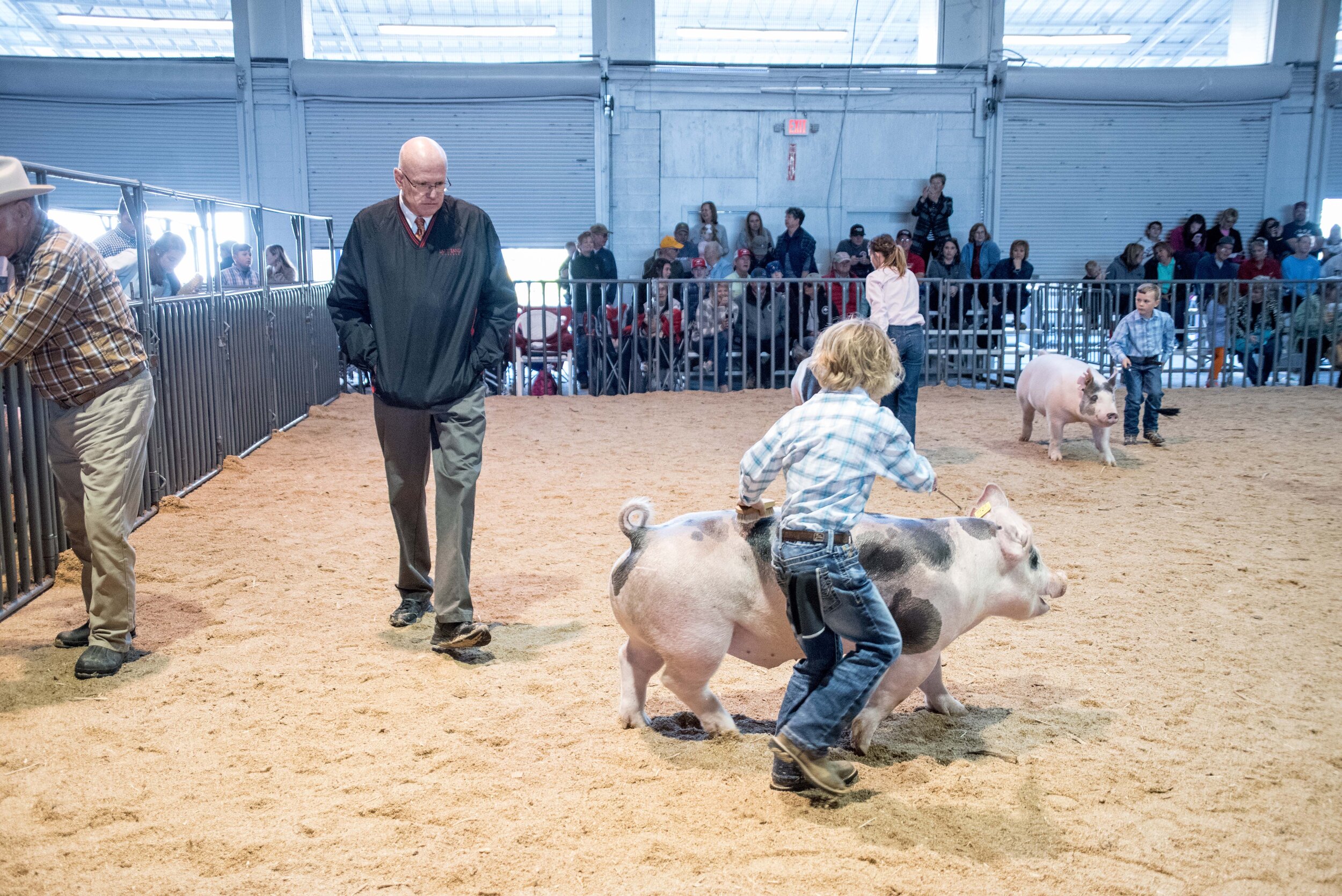
Spate and Tessa are well on their way. They already have such a young and bright passion for farming, specifically pigs. Spate was able to show pigs for the first time this year. He showed his first set of pigs at the Wayne County Junior Livestock Show and Sale. He enjoyed it so much that he decided to show in the fall as well. During the summer, he worked hard with his pigs and traveled to various shows across the state, competing in the Carolina Swine Showmanship Circuit. Although it was his first time, he won third in the state for his age category. He also competed at the NC State Fair and was recognized for his showmanship there as well.
When Matt was asked his proudest moment as a farmer, his response was not about an award or high yield, he said, “I love seeing my little boy show pigs. That’s probably one of my proudest things.”

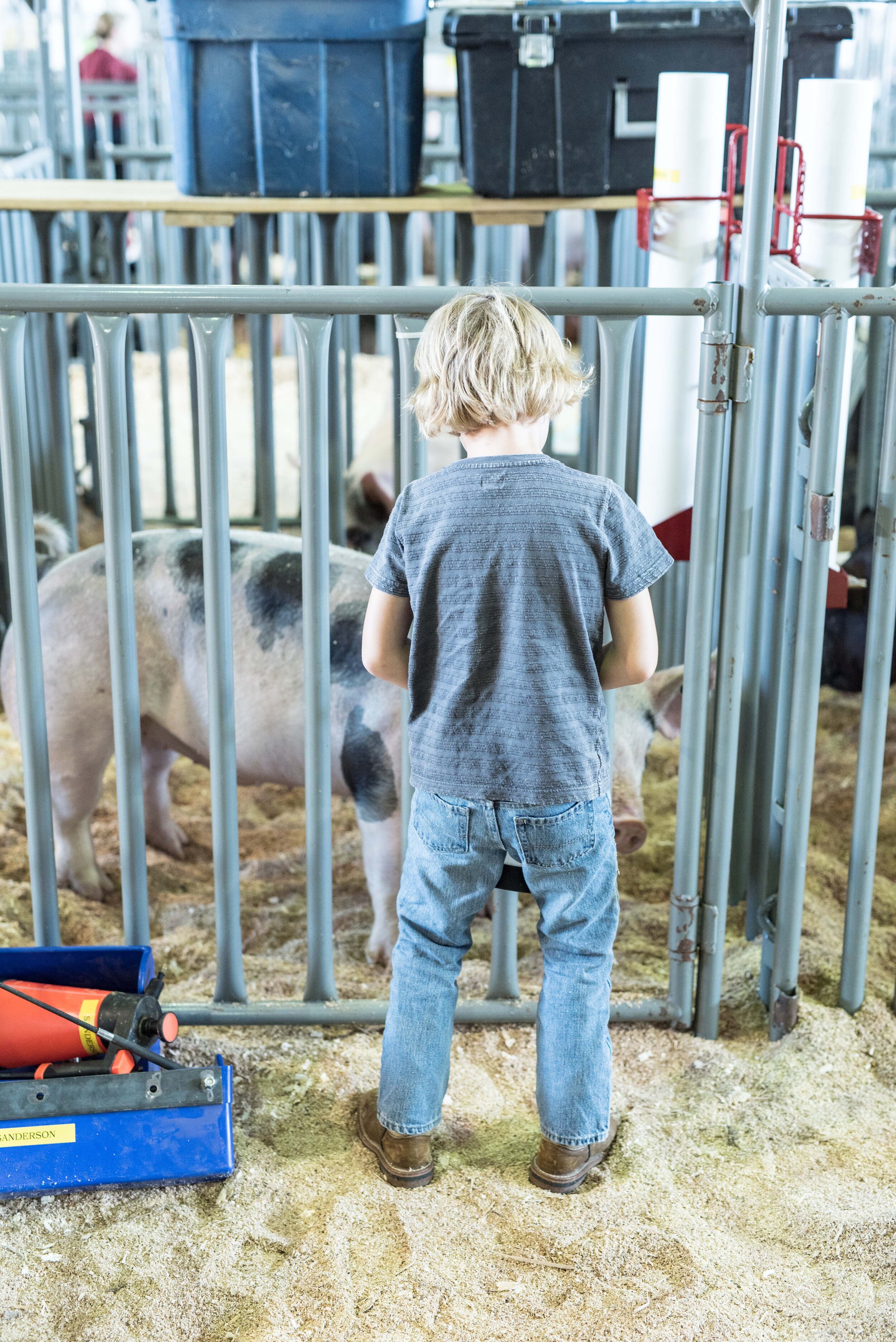

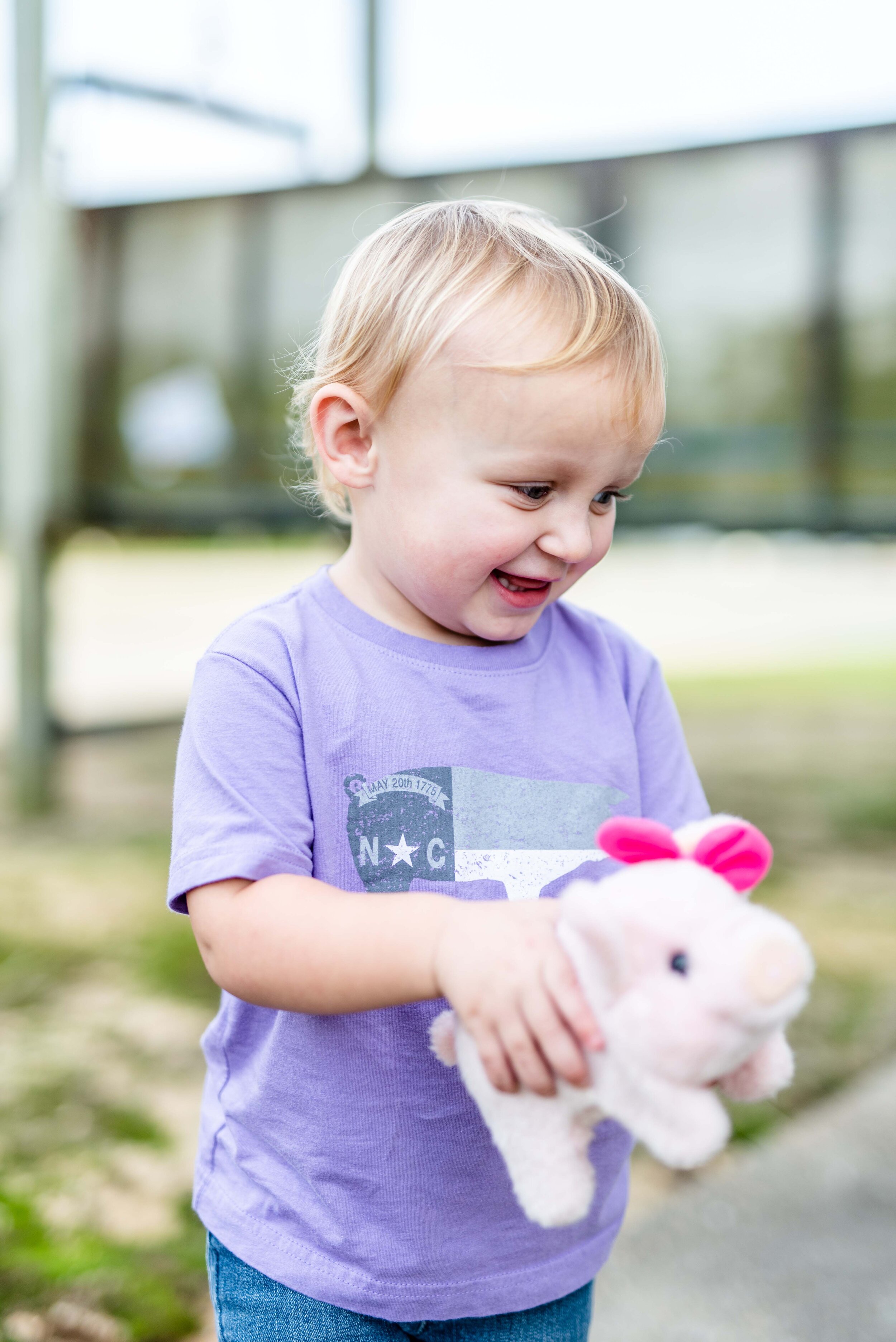
While Tessa is too young to show just yet, it doesn’t stop her excitement for the pigs. Spate’s favorite show pig was named Oreo, and for Tessa, all the pigs are Oreo. As she walks the hog houses, holding her favorite toy pig, she points with delight at all the pigs, yelling “Oreo, Oreo!”


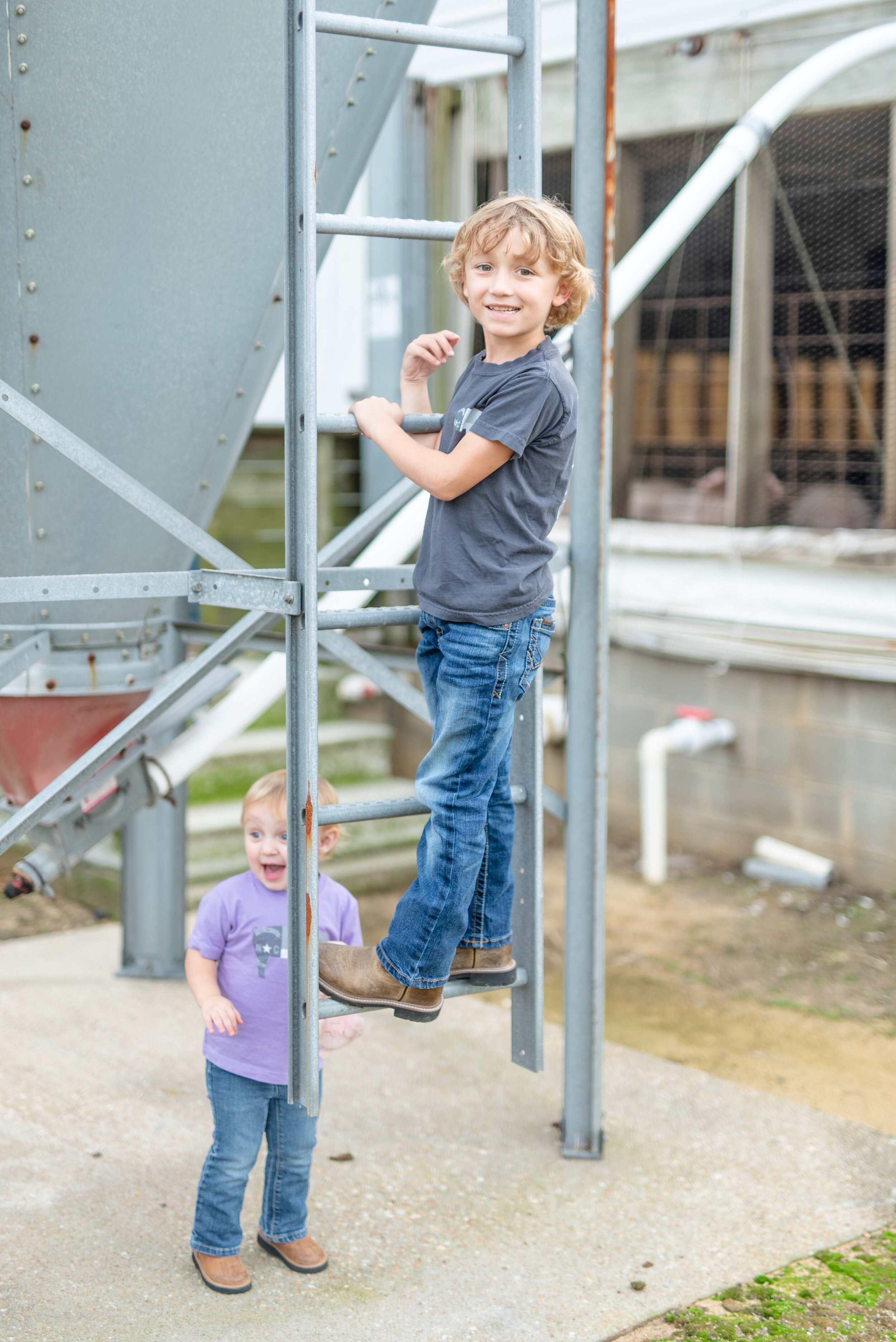
The Sanderson kids aren’t just passionate about pigs, they have a passion for other farming subjects as well. To be clear, Spate is a green tractor guy—not red.

Farming isn’t all pig shows and green tractors, though. It’s both stressful and fulfilling. For Andrea, the hardest part about being a farmer’s wife is not being able to help like she’d like to. She hates seeing Matt stressed and struggling. Although she’d like to do more, Andrea does quite a bit on the farm. When she’s not homeschooling Spate, she is doing farm paperwork, records, moving equipment, hauling grain, scouting crops, helping with placing pigs, doing feed reports, checking irrigation, getting parts, and helping wherever else she can. Both Matt and Andrea are certified waste applicators, PQA certified and have their pesticide licenses. Farming is stressful, but by working as a family, they get the job done.
Together, as a couple, they continue a legacy that has been passed down for generations. Together, they are trying new things (raising hogs and growing peanuts). Together they are raising the 5th generation to appreciate and understand the land and farming. Together, they are chasing their dreams. Together, they are a North Carolina Farm Family, and that is a blessing for them.

“I feel that we are very blessed because our children are able to know what the land is and the importance of the land and feeding people of the world.”—Andrea Sanderson

Photos by: M. See Creative