

Farmkeepers Blog
The Farmkeepers is the official blog of NC Farm Families. It is here that words will flow, our voice will be heard, a stand will be made, and the farm families of North Carolina will be protected. In these posts, we'll set the record straight. You'll see the faces of the families who feed us. Here, you'll receive all the updates and news. It is here that we will fight for farmers and be the keepers of the farm in NC. We hope you'll join us. Follow along on social media and by joining our email list.
Firing back against another attack on the pork industry
Another media outlet — funded by activists who oppose animal agriculture — has taken aim at North Carolina’s pork industry. The Food & Environment Report Network (FERN) and The Guardian published an article from a freelance reporter decrying the relatively low number of complaints filed against North Carolina hog farms and implying that complaints had “vanished.” (The News & Observer and The Charlotte Observer subsequently jumped at the opportunity to run another negative article about hog farmers.)
The article reports that North Carolina received only 33 public complaints against livestock operations from 2008 to 2018, while other hog states registered “literally thousands” during the same time period.
An interesting theory, perhaps, but one that is factually wrong.
State records, publicly available and posted online, show that there were at least 474 complaints in North Carolina during that 10-year period. Not 33.
That’s still fewer than a state like Iowa, which had 2,393 complaints (assuming that data is accurate) during those ten years.
A good reporter might ask “why is that?” and do a little digging. He might, for example, consider that Iowa has three times as many hog farms as North Carolina.
Or, a good reporter might explain that North Carolina has one of the nation’s most stringent regulatory programs for hog farms, including mandatory on-site inspections of every hog farm in the state — every year — to ensure they are complying with the rules and regulations.

That means that, during that 10-year period, there were more than 24,000 on-site inspections of our hog farms. A good reporter might consider the idea that a rigorous inspection program leads to fewer complaints. Rather than attack state regulators, he might praise them.
Instead, this freelance reporter jumps to his own conclusion and speculates that complaints simply vanish into thin air — despite no evidence to support that claim.
To bolster his argument, the reporter points to a sudden rise in complaints from November 2018 to April 2019.
The state received 138 complaints related to animal agriculture during that time-frame, resulting in 62 violations. Only 11 of those violations involved hog farmers.
Two reactions:first, it’s worth noting that fewer than half of the complaints resulted in any type of violation. Farmers have often been upset about unfounded allegations that are made against them.
Second, if there were 11 violations against hog farms, that means there were 51 violations (82%) that involved something other than hog farming. So, why did the reporter direct his attack at hog farmers?
We all know the answer. Because hog farming is constantly in the cross-hairs. And activist organizations that want to do away with animal agriculture are often involved in directly funding this type of “reporting.” (Read more about that from the North Carolina Pork Council.)
The bias is clear.
Here’s one example: The article featured comments from Rene Miller, from Duplin County, who lives near a hog farm. Here’s what she says about living near a farm: “it smells like a body that’s been decomposed for a month.”
The reporter initially failed to mention that Miller is a plaintiff in the ongoing series of nuisance lawsuits filed against Murphy-Brown and thus had a clear motivation for making such outlandish, ridiculous and unbelievable comments.
But it sure did make a great quote! The Guardian actually used her quote as the headline for its story.
The reporter went on to dutifully highlight a litany of allegations against the pork industry, including unsupported claims of health issues and false accusations about the demographics around hog farms.
The NC Pork Council provided detailed rebuttals to both “studies” — providing factual data about who lives near North Carolina hog farms and a report from a PhD that outlines serious problems with the health study mentioned in the article.
The reporter gave scant attention to those objections, mischaracterizing the Pork Council’s concerns and failing to explain why it believes the studies are flawed.
This type of reporting about our industry is disappointing, but not surprising. Our farmers have been under constant attack and there are no signs of it letting up. NC Farm Families will continue to stand up for our farmers and fight back against these blatant mischaracterizations of our industry.
Following the Footsteps of a Farmer--The Coombs Family
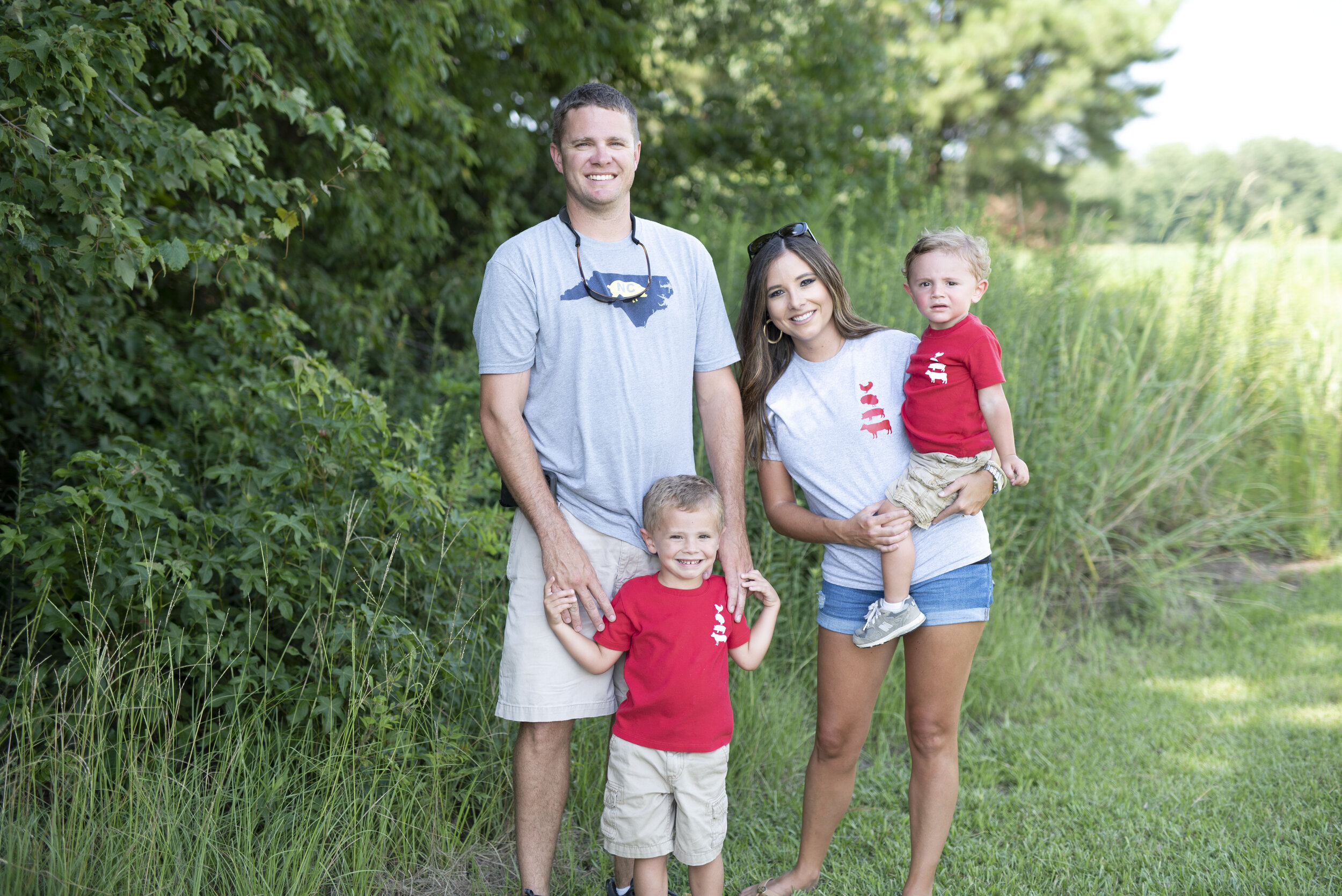
The love of farming is, in many cases, passed down from generation to generation. Each new farmer carries on the legacy of previous farmers from years past. While they may work towards expanding the farm, or making improvements in various ways, they tend to have one thing on their mind—make them proud. The them is the generations of farmers that came before. For Joshua Coombs, generations of his family have passed down the love of the farm, and it doesn’t seem that it will stop with him.
Josh’s great-grandaddy grew hogs on the ground where soybeans are now planted on the Coomb’s farm. His dad built hog houses in 1995 to be able to take the pigs from the ground and move them inside.

“My great-grandaddy started it and my granddaddy expanded it. Then, my dad built upon that expansion,” said Josh, “I was here when they built those first four houses. I was here during the whole process. I knew I never wanted to leave,” he continued.
And he hasn’t left. Josh is continuing in the footsteps of previous generations in many ways. He is not only a farmer, but he is also a paid fireman with the city of Clinton (a role he’s played for 16 years), something his dad also did. Working nine, 24 hour shift days a month, Josh serves the citizens of Clinton, Sampson County and anyone commuting through Clinton. Josh is a captain for Clinton Fire, he is an EMT, and he is a pig farmer. Perhaps the two biggest reasons Josh has taken on these roles is his love of helping others and being inspired to be like his dad.
“My dad was a fireman. He started the farm. He also made it to fire captain. I’m basically following his footsteps and doing what Dad did,” said Josh.
When it comes to the farm, Josh is making his own stamp on things. Josh is an avid outdoorsman and loves to fish and hunt. His love for the outdoors is one reason why protecting the environment is so important to him. He protects the environment in many different ways like following regulations. He has also worked with the NC Forestry Service to manage the wooded areas on his farm. When it was time to clear-cut acres of timber from the farm, Josh thought it was important to not just let the areas grow back with brush, so working with the Forestry Service and guys who specialized in planting trees, he planted 166 acres of Loblolly pine to provide habitat for wildlife. He hopes to do the same thing to other tracks of land on the farm.
“ I see a lot of wildlife here. Just about every afternoon, my boys and I will watch the deer around the bean field and the hog houses. They’re so busy munching on the soybeans, they don’t even care that we are there,” said Josh about the wildlife he sees on the farm. He also sees turkeys, quail, dove, and more on the farm. Farms are many times a quiet, peaceful place with open spaces for wildlife to enjoy.
Being a farmer isn’t just about enjoying the outdoors or carrying on the heritage of generations to come, for Josh, it is also a great place to raise a family. Josh and his wife Jessica, have two little boys and just recently announced a third baby on the way!

“I love raising the family on the farm. It’s relaxing. It teaches my little boys to have a good work ethic and it also teaches them the values of life like how to be a good neighbor, how to be a friend, that hard work pays off, and always put God first-- family second,” said Josh.
The Coombs boys love being on the farm. They are full of energy, and the farm gives them wide open spaces to run around. They also love to check on the pigs and watch for wildlife with their daddy.


The Coombs’s farm family extends beyond just Josh, Jessica, the kids and immediate family, though. It also includes their integrator, Prestage Farms, and the entire pork industry. In 2017, Josh had to have open heart surgery. Many people called to check on Josh and offer to help on the farm, even though they didn’t have to. But, that’s just how the farming world works. We are one big family.
Today, you can find Josh at the fire department, at home, or on the farm. He’s doing what he loves—helping others, feeding others, and leaving a farming legacy for others. Who knows, in a few years, we may be interviewing those little Coombs boys in the pictures here, and they say, “I followed in dad’s footsteps. I’m a farmer too.”

The Truth About NC Farm Families and China
One of the most important things we do at North Carolina Farm Families is try to change the way people think about farmers. There are so many misconceptions, and downright falsehoods, out there about how we operate, and our job is to set the record straight and put a face on our family farmers.

So, when I got a message several weeks ago from a national reporter who said he wanted to take a fresh look at how the nuisance lawsuits had impacted our community, I decided it was worth the chance. I invited this reporter to my family farm in Duplin County, hoping I could show him what it’s like to live and work on a farm that’s been in my family for nearly 250 years.
I should have been suspicious right from the start when this Chicago reporter showed up at my farm, dressed in all black from head to toe, on a warm May morning. I sat at my kitchen table and told him a little bit about NC Farm Families and how we had formed to fight back against unfair attacks from the Waterkeepers and others. Then, I took him on a tour of my farm, showing him the barns where we raise pigs, the lagoons, the works.
I explained that our family is centered around this farm. Not only does my family live here, but so does my father, many aunts and uncles, and several cousins. All told, we have about nine homes located right by our farm.
Toward the end of our visit, the reporter made a few bizarre comments about the Chinese’s purchase of Smithfield Foods. At the time, I didn’t think much of it. It’s common for reporters to ask about the long litany of falsehoods that our critics throw our way. The line that North Carolina farmers are working hard to raise pigs for China is a common attack — and one of the easiest to refute.
Here are the facts:
North Carolina exports less than 25% of the pork we produce each year. Most of it goes it our neighbors in Mexico and Canada — Mexico accounts for the largest volume of pork exports and Canada ranks third. China is our fourth largest export partner. According to the latest USDA statistics, China imports about 70 percent less pork than Mexico. (Full disclosure: Exports to China will likely increase this year because they are dealing with an unprecedented outbreak of African swine fever that has resulted in the loss of millions of pigs.)
What’s interesting is the type of pork products we traditionally send to China — it’s mostly what we call “variety meats” and by-products that largely consists of things that no one in America wants. Think pig bladders, kidneys, snouts, uterus, tails, tongues, and the like. I say, let ‘em have it.
As for the fear that we’re going to start supplying a majority of China’s pork, consider this nugget from the NC Pork Council:
“Last year, about 96 percent of the pork consumed in China was produced by … drum roll, please … Chinese hog farmers.”
It goes on to explain that farmers in China produce about 450 million hogs each year. For comparison sake, North Carolina’s entire hog and pig population is about 9 million. And most of the pork that China imports comes from the E.U., not the U.S.
I say all this because, low and behold, that Chicago reporter published his story this week at an online site called Real Clear Investigations. The headline: “Here, Hog Farming’s as American as Chinese Food.”
Don’t ask me what in the heck that means. I have no idea. But the gist of his story is that when it comes to North Carolina hog farming, the Chinese are calling the shots. He even includes references to Chairman Mao and the Chinese Communist Party.
Go ahead… take a moment and let out a laugh.
My favorite part of the story — his allegation that NC Farm Families is “brought to you in part by the Chinese.” I’ve been on the job for almost a year now, and I’ve had conversations with lots and lots of people across North Carolina who care about our family farmers.
I’ve talked with equipment dealers, insurance companies, and car dealers who have rely on farmers for their business and have generously contributed to support our efforts. I’ve met with large integrators and local farmers who want to be involved in our cause. And I’ve spoken with small businesses and local residents who are concerned about how our farmers are being unfairly attacked.
One group of people I haven’t spoken with since joining NC Farm Families: the Chinese.
There are two quotes in the story that demonstrate the absolute absurdity of this “investigation.”
The first, from a Wichita State professor who studies Chinese business, says this of our friends at Smithfield: “Everybody will march to Chinese orders.”
The second quote is from Robert F. Kennedy Jr., who founded the Waterkeeper Alliance and served as its president for many years. Just seven months after 9/11, Kennedy declared that “large-scale hog producers are a greater threat to the United States and U.S. democracy than Osama bin Laden and his terrorist network.”
As a family farmer from Iowa so eloquently said at the time, “You have to be a complete wandering idiot to make that statement.”
I couldn’t agree more. It certainly puts into perspective the type of outrageous people our family farmers are dealing with here.
I guess it should come as no surprise that some reporter who spent a handful of days in eastern North Carolina thinks I’m taking my marching orders from Shanghai, or wherever WH Group is headquartered, instead of our elected board of directors. It is complete nonsense.
It’s a shame that I couldn’t get this reporter to tell the truth about our farmers, but I won’t stop trying to share our story every day. And I’ll continue to live the American values that have made me proud to call myself a North Carolina family farmer.
