A Farmers Biggest Challenge: Overcoming Perceptions
Although many are concerned with how living next to a hog farm can adversely affect a person (there’s even lawsuits over it), for the Overman family and many others, living next to a hog farm isn’t a nuisance or a concern. It is, as Lorenda Overman says, “the perfect spot for a home.” Not only that, but they are healthy and happy.

“We live here on the farm, and we are not sick. We work in the hog houses. We get lagoon water on us almost daily. We drink well-water that’s right here next to this farm, and we are not sick,” said Lorenda.
After raising three children on the farm, and now grandchildren, Lorenda can confidently say that “it’s not toxic to live on a farm.”
For Lorenda, the hardest part about farming isn’t just dealing with weather and markets, the hardest thing is the public’s perception. She is concerned that many do not understand how healthy and happy they are living on the farm. It isn’t just living on the farm, though. It’s also about being a farmer and what a farmer does.
“The hardest thing right now is probably the public’s perception of what we do is somehow wrong when we are trying very hard to do what’s right and make the best possible food source for our neighbors and for ourselves and our community and the world,” said Lorenda, echoing what many farmers are feeling these days.
In North Carolina, nuisance lawsuits have put family hog farmers out of business. That is scary for every farmer across the state and even nation. The agriculture community is anxious as attacks on farmers continue to come.
“I just feel like there’s a big x on our back. I feel like I constantly have to defend myself, and that takes a lot of energy and a lot of emotion. I’m just like they are. I’m just trying to make a living and do my very best,” said Lorenda who has been watching current events closely.
Farmers don’t have to do anything wrong. They may adhere to every regulation and restriction placed on them (NC hog farms are among the most regulated industries) and still be deemed a nuisance and be sued. It is a very frustrating time in North Carolina agriculture that has left farmers fearful, hurt, and confused.How is it that farmers like the Overmans can live years, raising children on the farm and have no complaints. Why would their children make the decision to move back to the farm if it was a nuisance? The Overmans have groups come out to their house for pool parties, and they don’t notice a thing. How can that be? It doesn’t make sense.
“I want people to understand that in my backyard is just like your backyard. Just because there’s a hog house behind there doesn’t mean that my backyard living is less enjoyable than their backyard,” said Lorenda.

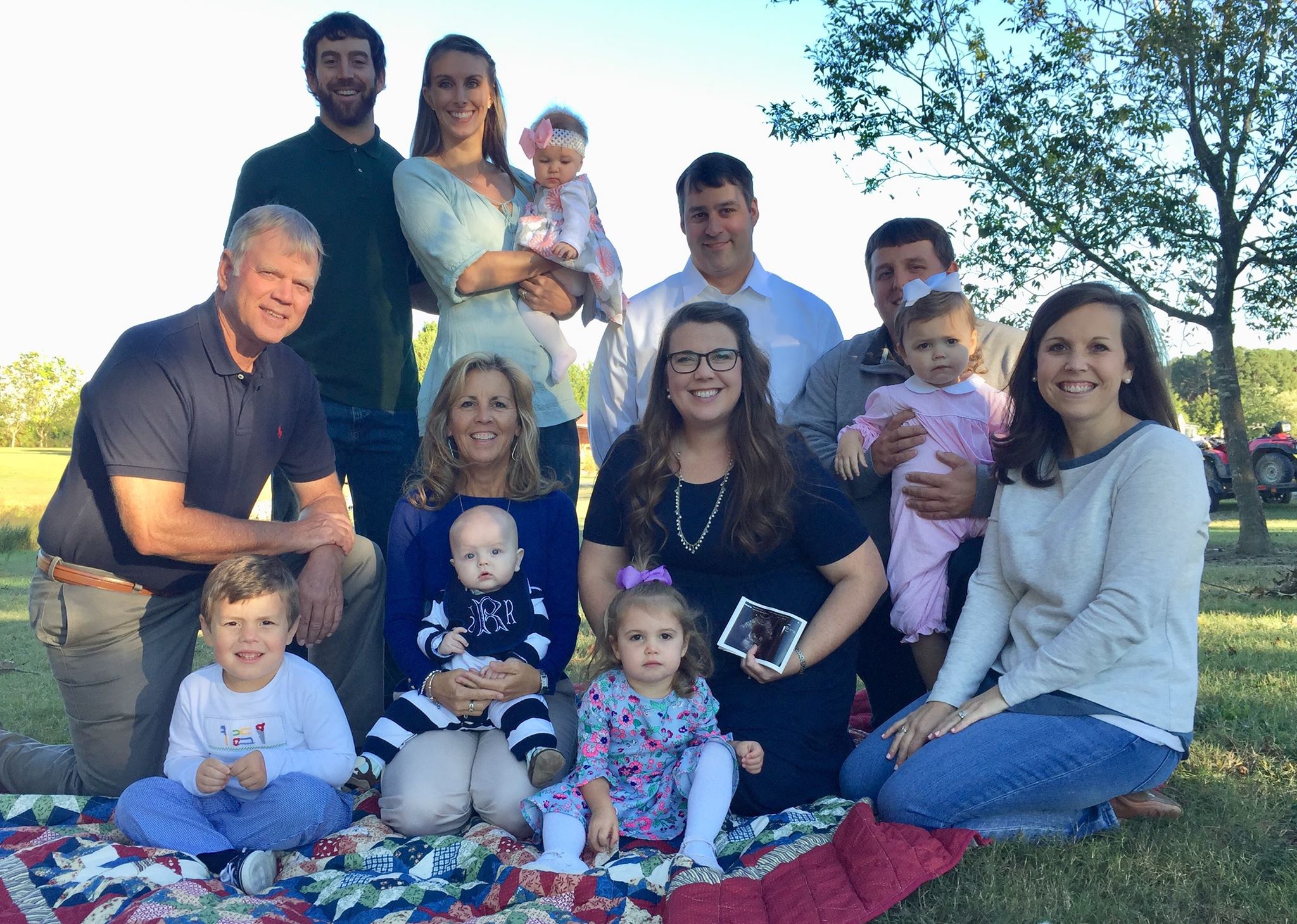
Lorenda Overman in her backyard that overlooks their hog houses. Her pool and grandchildren's swingset is off to the right of the photo. Many evenings are spent enjoying their backyard with family and friends.
With another nuisance lawsuit approaching, eyes are on a Raleigh courtroom. The outcome is yet to be seen, but prayers once again go up for a positive outcome.
It isn’t hurricanes, droughts, malfunctioning equipment, or low markets that is the hardest part about farming. These days, the hardest part about farming is overcoming perceptions.
You can read about the Overman's story by clicking here.
NC Farm Family Faces: A Heritage and a Future
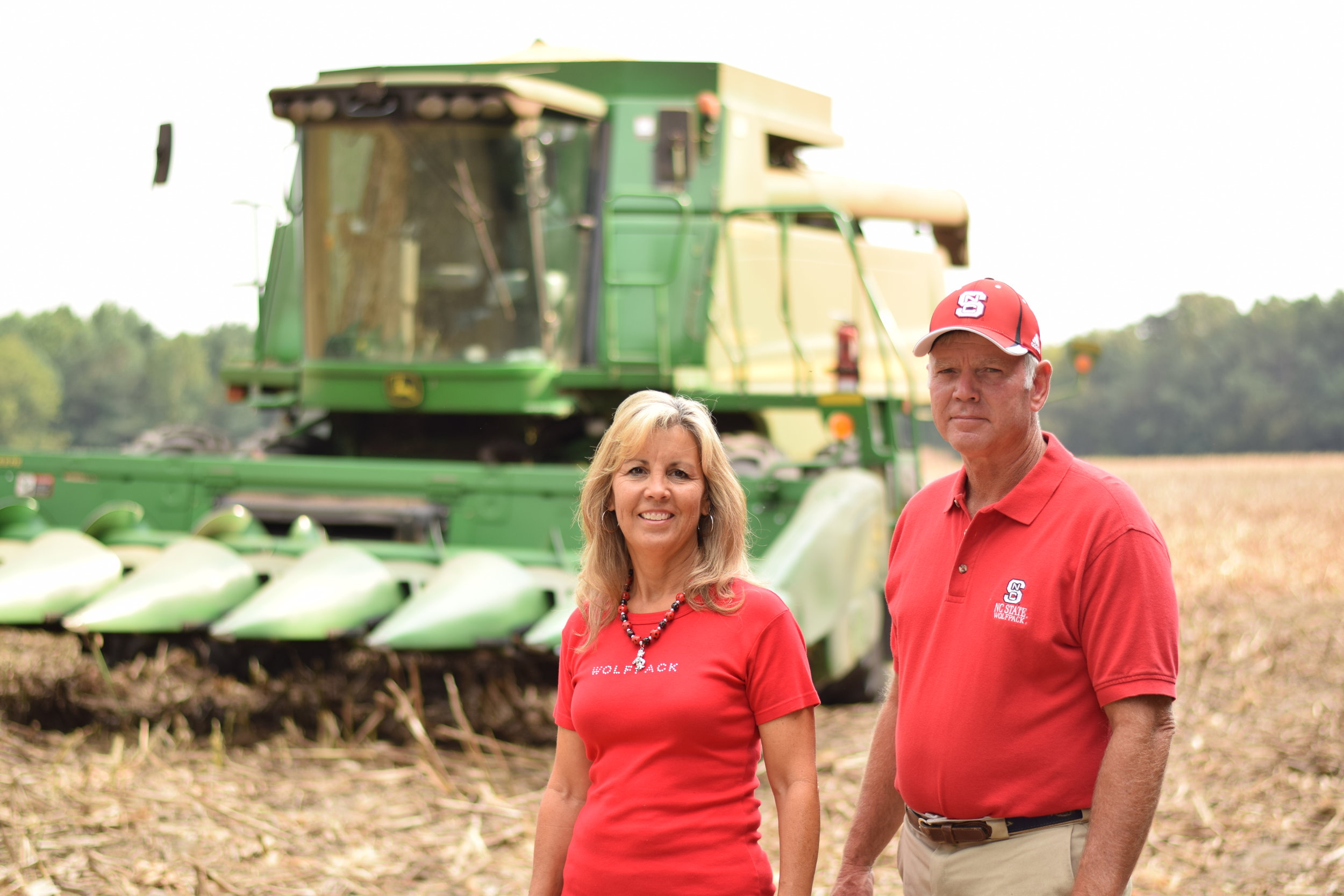
With an agriculture heritage that dates back to the Revolutionary War, you could say that the farming roots run deep for the Overmans. Well, for Harrell Overman at least. His wife, Lorenda, didn’t grow up on a farm. For her, the farm was the wilderness, although she grew up just down the road from her husband. They met in school and went to church together growing up. Despite living close to the farm and growing up with her husband, coming to live on the farm was an adjustment.
“It was a very different world for me. It was a big learning curve. [My] daddy got up, went to work, and was home by supper time and everyone had dinner together. Agriculture is not like that,” said Lorenda
Lorenda had to adjust to a life that didn’t always mean supper at a table. Supper could be in a combine. However, the farming lifestyle also allowed she and her husband to work together during the day and problem solve as a team. Moving on the farm wasn’t without its challenges, but Lorenda sees it as quite the blessing.
“I love agriculture, and I’m probably one of its biggest advocates now because I see the value in ag,” said Lorenda.
Although Lorenda was a marine biology major in college, she had no hesitation coming to the farm. While she can’t exactly be a marine biologist on their Wayne County farm, she still likes to go to the beach and get her salt water fix every now and again. In the end, Lorenda says that they are happy that they made farming their career and calling.
On their farm, the Overmans tend 1,400 acres of soybean, wheat, and corn. They also have a 2,000 head sow farm where they wean 900 pigs a week and a 7,500 head finishing floor. Harrell is a 6th generation farmer. After serving in the US Army, Harrell’s father got four sows and and two boars. That’s how it all started. Overtime, it grew to 20 sows in the woods. Harrell would walk the hot wire fences and make sure water wasn’t frozen in the winter time. In 1970, they built their first indoor hog facility. Their last building was built in the early 90’s. They remained independent growers until the early 2000’s when they made the choice to partner with an integrator.
“When we made the leap with this farm, we had sick sows and we couldn’t get a hold of a veterinarian. We were losing pigs like crazy,” said Lorenda about one reason they chose to switch to the integrator system.
Another reason the Overmans decided to make the switch was because prices bottomed out.
“When you sell hogs for 8 cents a pound and it takes 45 cents a pound to grow a hog, that hurts,” said Lorenda.
After talking with the integrator, they felt like it would be a positive move for their farm. Not only would income be steady, but the Overmans would be able to access more resources to better take care of their pigs. The Overmans say that their relationship with the integrator has been very positive. They currently grow for Goldsboro Milling.
A lot has changed on the Overman's farm over the years. From just a few pigs in the woods to a much larger operation, their farm looks a bit different now. What hasn’t changed, though is that it is still a family operation. Harrell and Lorenda have three children who grew up on the farm and currently, two of them are raising their families on the farm too.
“We have 5 grandchildren [with one more on the way], and they are all on the farm and they love our environment,” Lorenda said.
The oldest grandchild who is four, loves to ride the combine and any tractor. He also likes to help his daddy with the cows. The oldest granddaughter walks to the hog house everyday with her mom and little sister to look at and talk to the hogs.
While the grandkids all have their own interests, the adults all have their special jobs on the farm. The men tend to be the manual workers, while the ladies do more of the office work.
“I do all the record-keeping. The hog lagoon records are done by our daughter. The three men do the grunt work. They also do the harvesting, although our daughters do hop in the combine and help out there,” explained Lorenda.
All in all, everyone jumps in where they are needed to get the job done. Their favorite part about farming is being able to do it together, working on a common goal. They love not just working on the farm, but living there too. Harrell and Lorenda chose to build their house on the farm, overlooking the hog barns. One of their daughters built her house less than a quarter of a mile from the hog houses, and their son is in the process of building a house across the street. Harrell’s mother has lived on the farm her whole life too.
They chose to build on the farm because “it’s beautiful. It’s a lovely spot. It’s quiet and peaceful. I love to watch the sun set over the hog houses. It was heritage also,” said Lorenda.
The Overmans have a long farming history, but it isn’t just about their heritage. For them, they are looking to a future of farming as a family.
“We have a heritage, but we also have a future because our children are working with us and our grandchildren are living on our farm, so we see ourselves being in agriculture for years,” said Lorenda.
The Importance of Voting for Agriculturalists
This is a true story: One day, two doctors were talking about politics. The younger doctor said, I’m not interested in politics. And the older doctor replied, The problem is politics is interested in you.
Hog farmers have learned the hard way that politics is interested in us. Political groups attack us, like the Waterkeepers and Policy Watch – and the same groups fight to stop important legislation that helps farmers, like the Farm Bills that have been passed by the General Assembly.
And, of course, those same political groups want to see candidates elected who agree with them on farming issues, and who will oppose legislation like bills to protect farmers from frivolous lawsuits.
Learn who voted Pro-Ag on recent legislation by looking at bills like HB 467 and SB 711.
Yes, politics is interested in hog farming. And that’s why, next Tuesday, on Election Day, your vote matters. Vote. And vote Pro-Ag.

Farmkeepers Blog
The Farmkeepers is the official blog of NC Farm Families. It is here that words will flow, our voice will be heard, a stand will be made, and the farm families of North Carolina will be protected. In these posts, we'll set the record straight. You'll see the faces of the families who feed us. Here, you'll receive all the updates and news. It is here that we will fight for farmers and be the keepers of the farm in NC. We hope you'll join us. Follow along on social media and by joining our email list.
Featured posts:


Our Sponsors