

Farmkeepers Blog
The Farmkeepers is the official blog of NC Farm Families. It is here that words will flow, our voice will be heard, a stand will be made, and the farm families of North Carolina will be protected. In these posts, we'll set the record straight. You'll see the faces of the families who feed us. Here, you'll receive all the updates and news. It is here that we will fight for farmers and be the keepers of the farm in NC. We hope you'll join us. Follow along on social media and by joining our email list.
Are hog farms at fault for a contaminated church well? Facts for your consideration
Agriculture may be North Carolina’s largest industry, but the farmers who produce our food remain under constant attack.

There’s a coordinated effort being led by groups that want to shut down our farms. A key part of their strategy involves paying for “news stories” that portray our industry in a negative light.
The Southern Environmental Law Center is one of those groups. Its latest “sponsored story,” in an obscure online publication, takes aim at North Carolina hog farms, blaming the industry for contaminating water in a church well.
Dozens of these stories have been published over the years. Many of them begin with a dramatic story, containing a tiny sliver of truth, that is designed to spark outrage among readers.
For many years, these stories featured a Duplin County woman claiming that hog waste was being sprayed eight feet from her kitchen window. It would be horrible if it were true.
In reality, there was a 100-yard forest between her home and the nearest sprayfield. Also worth noting: the farmer hadn’t used that sprayfield in years. Nevertheless, she continued to show up in article after article with complaints of constant, unbearable odor and claiming her house was sprayed with lagoon water from the sprayfield.
Now, a new story — also false — is starting to appear in attacks on North Carolina hog farms.
This one takes place at a church in Sampson County. There’s a well on the property with contaminated water. The preacher claims a nearby hog farm is most certainly the culprit.
But there’s no evidence whatsoever to support that claim. And the church isn’t interested in finding the truth.
The folks at Smithfield Foods, which operates the nearby farm, were concerned. They studied the situation and made an important discovery: the church is located at a higher elevation than the hog farm. Which means any waste coming from the farm would have to travel uphill to reach the church.
Based on physics, it seemed unlikely that the farm is responsible for any issues with the church’s well water, but they wanted to be sure. So, they wrote the preacher a letter.
We’d like to meet with you to discuss the situation, they said. And we’d like to pay for a forensic study of the groundwater to pinpoint the cause of the contamination, they told the preacher. We’ll reimburse you for the cost of the new well if we are at fault.
He didn’t respond. So, Smithfield sent another letter. The preacher’s failure to respond surprised them.
He declined their offer to meet. Apparently, he didn’t want to talk with them about the issues with the nearby farm. And he wasn’t interested in a study that would shine a light on where the contamination was coming from. However, he continues to malign the hog farms in the media, always tied to an article sponsored by an activist group. One of which, his daughter happens to work for.
Maybe that’s why he’s not really interested in the truth.

Answering Your Questions About Renewable Natural Gas (RNG) on Hog Farms
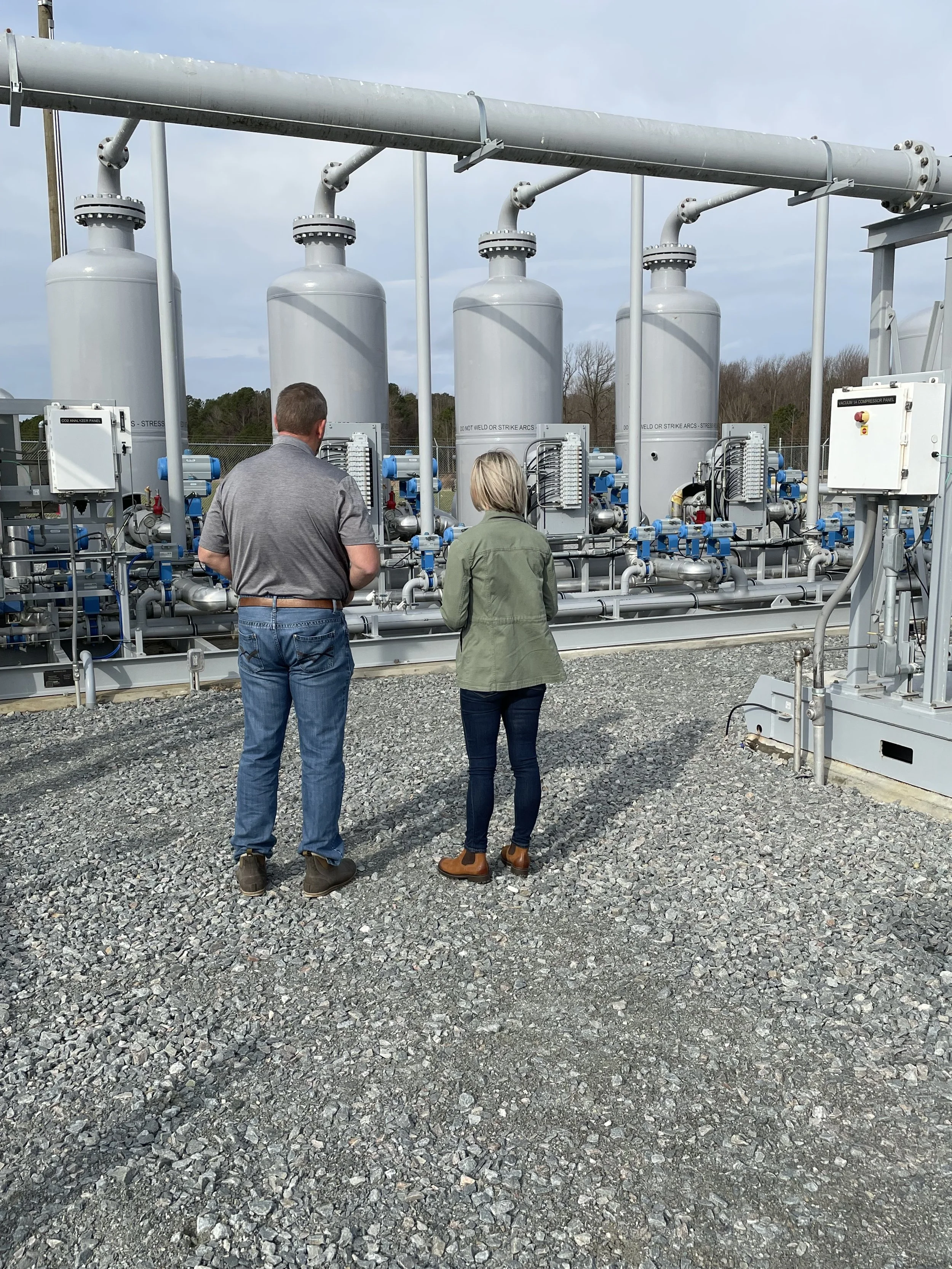
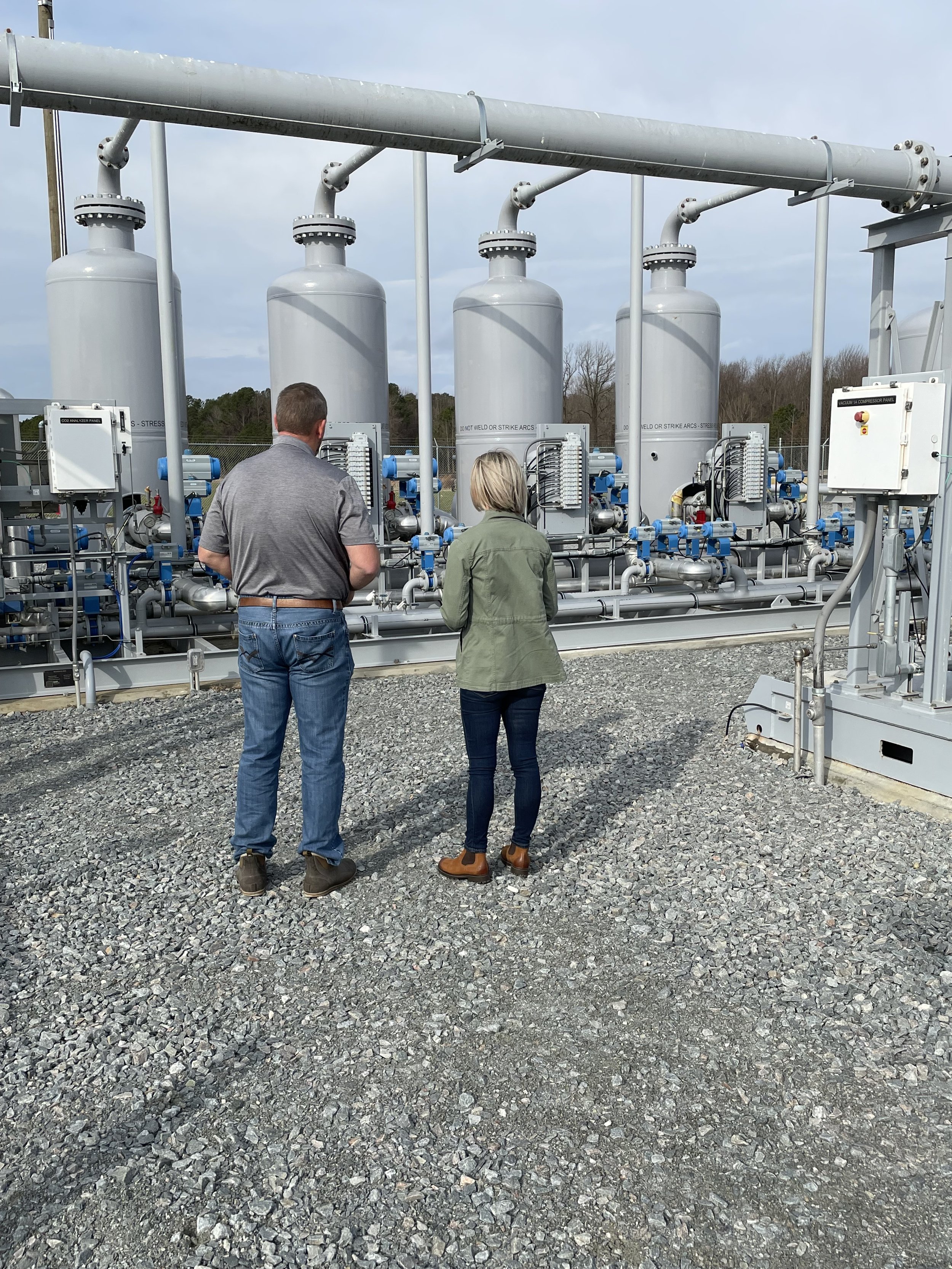
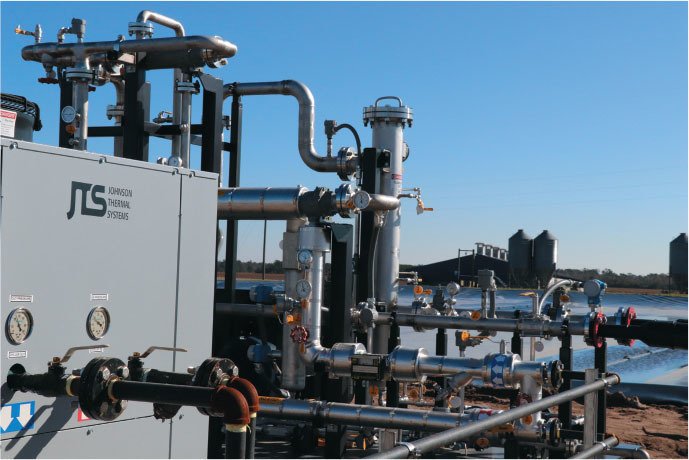
Change can be scary. At the vary least, it can raise a lot of questions. With the opportunity to implement renewable natural gas projects on some of North Carolina’s hog farms, there have been many questions raised—questions of safety, impact, and simple curiosity.
While most are excited about the opportunity for NC to become a leader in RNG, there are those that have reservations. And so, we wanted to provide answers to some frequently asked questions. Whether you are a skeptic, a sucker for new technology, a community member, a farmer, or a consumer, we hope this answers some of your queries.

FAQ’s
-
No. Ammonia levels are dependent on the number of pigs. The size of farms, nor the amount of nitrogen on the farm is changing.
-
No it doesn't. Farmers will still be fertilizing crops with wastewater. However, GHG and other farm emissions will be reduced and treatment and storage capacity will be enhanced. The lagoon/sprayfield system is still highly regulated, designed by university professors, and is non-discharge. Learn more about lagoons and spray fields here.
-
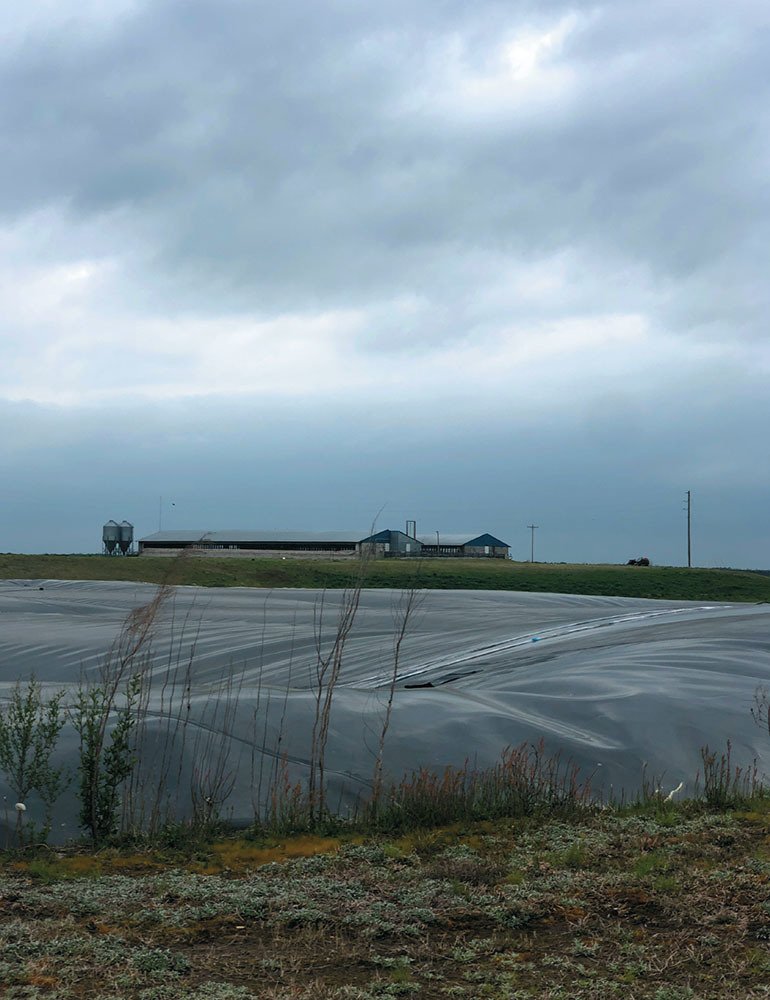
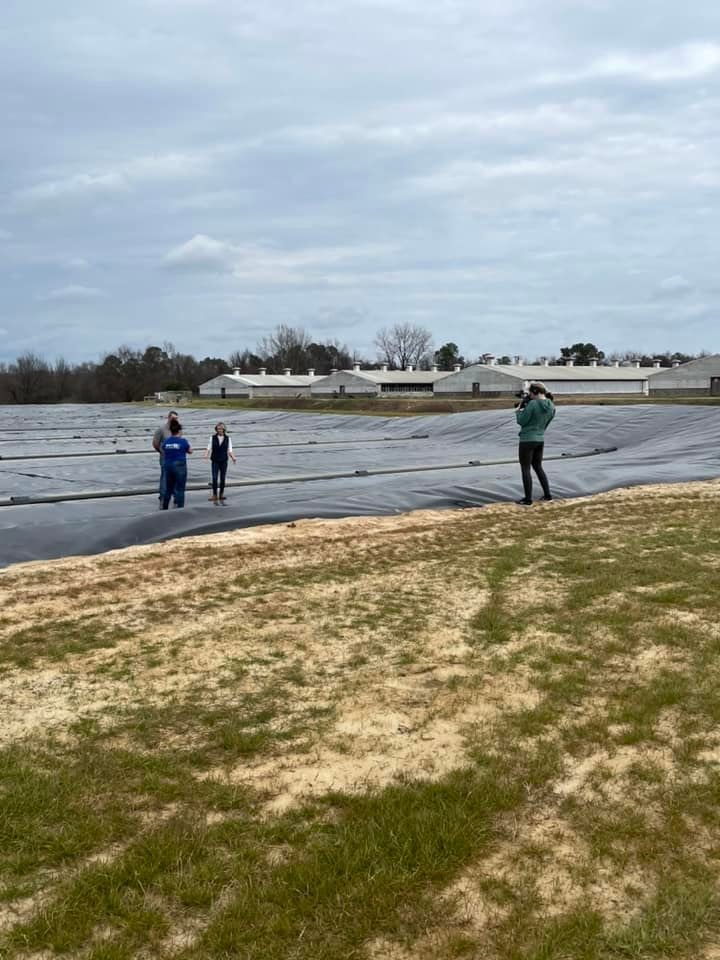
Covering lagoons will decrease odor as the emissions from the breakdown of manure will be removed from the farm.
-
Farmers have long been the adopters of innovation. RNG is the next innovative frontier. RNG allows farmers to add another source of income that mitigates manure management costs, while being better stewards of the environment.
-
No. Biogas is the only thing that will leave the farms.
-
The biogas that will be transported through the gathering lines is 30-40% CO2, which is what is in a fire extinguisher. In addition, the pressure in the gathering lines will be very low, less than what is in a car tire. In these conditions, the gas is not explosive.
-
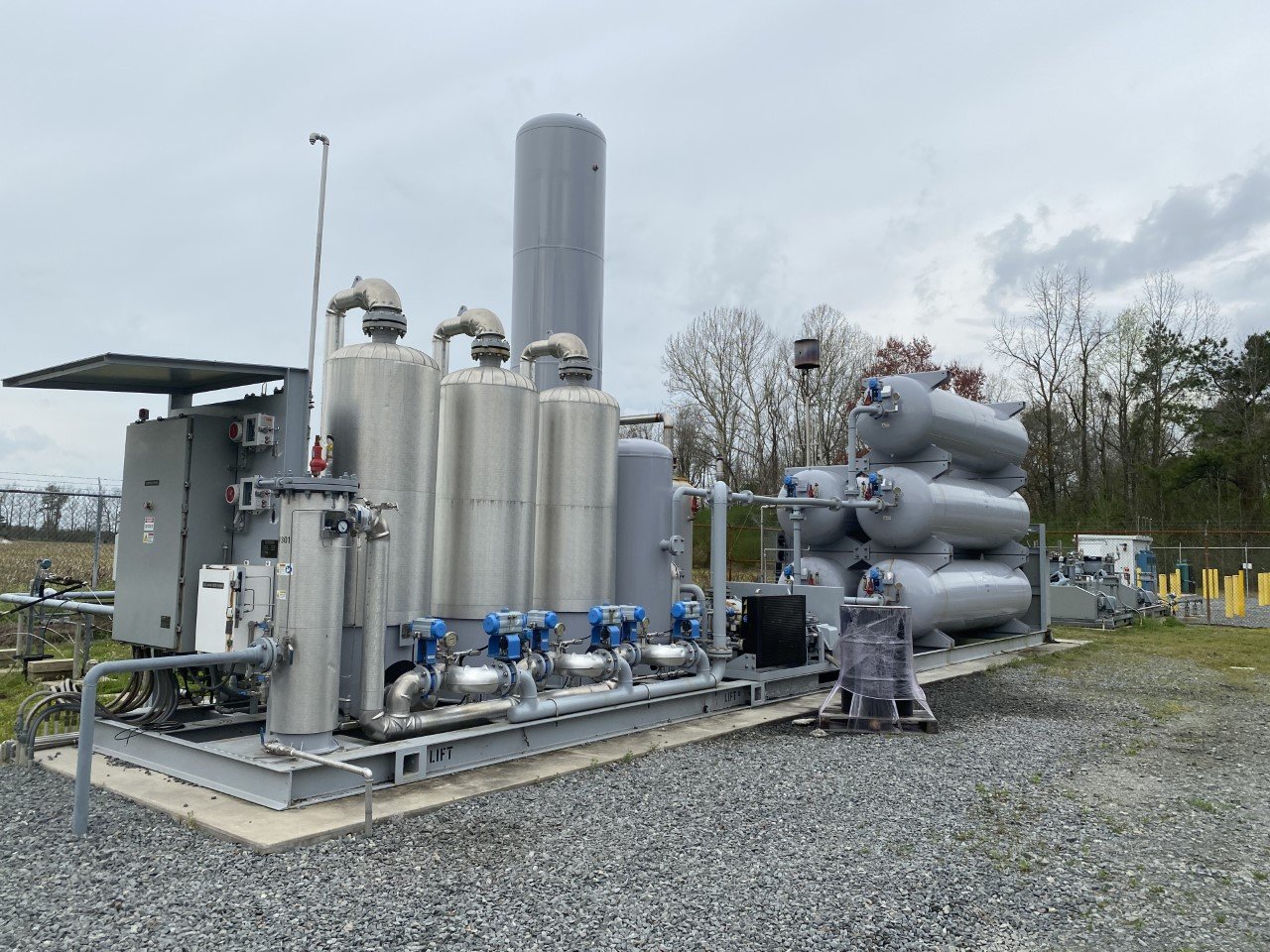
No. The only thing being added is digesters.
-
No new hog farms have been allowed to be built in NC since 1997. RNG does not change this. A modification to current Swine Permits are required to build RNG on existing farms.
-
No. DEQ found that the Swine Permit "did not discriminate on the basis of race, color, or national origin on its face, in its implementation, by its impact, or in any other way." In addition, digesters and RNG are good for the environment as described, so any impacts would be positive.
-
Simply, they have. You can see a map of these farms here. In addition, farmer’s participation is voluntary. As farmers chose to participate, they will apply for permits, and their choice to participate will be known.
-
We think there are different reasons for opposing this innovative technology. 1) people may have misconceptions about RNG. We're trying to provide answers and information to put those misconceptions to rest. 2) Sometimes people just want to be critical and would love it if pig farmers didn't exist.
-
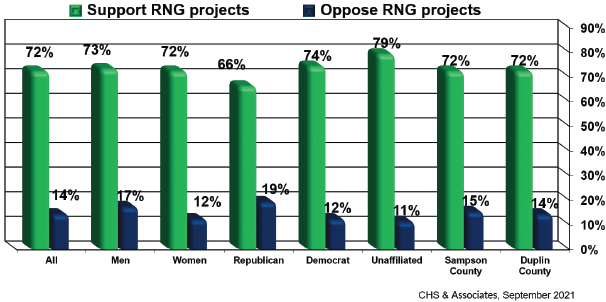
Yes! A recent survey showed that residents strongly support RNG programs

"NC Hog Farmers Important" say Activists | Contradict Statement with Actions
“Although we understand that the pork industry is important…”
Words said by activists opposing North Carolina hog farms and their efforts to implement innovations.
They say that they understand that the NC pork industry is important, but do they really?
Do they comprehend what 44,000 jobs looks like?
Do they understand what $10 billion does for the state’s economy?
Do they know that our hog farmers feed 20 million people every year?
Do they realize just how important the pork industry is to NC families and communities?
The same families and communities they are supposedly advocating for and protecting.
Saying “we understand that the pork industry is important,” while suing us, filing legal complaints against us, attacking us, blocking efforts to implement innovative technology, and even effectively causing farms to shut down — saying we’re important while simultaneously scorning us is a backhanded compliment that no one is falling for.
They don’t believe we are important. They only say that to save face and bolster credibility. To them, we are a scourge to this state. We cause egregious injustices, pollute the environment, and are greedy. We are not important. It would be just fine if we were run out of town.
And even if they do mean what they say and understand the positive impacts the pork industry has on North Carolina communities, their actions and words tell a different story.
Here are two examples:
(1) “Although we understand that the pork industry is important, researchers have repeatedly found that pollution from the state’s industrial hog operations disproportionately affect African Americans, Hispanics, and Native Americans in a pattern that they concluded, ‘is generally recognized as environmental racism.’’’—Robert Moore, president of the Duplin County Branch of the NC Conference of the NAACP.
The research that they refer to is flawed and inaccurate. Hog farms do not disproportionately affect these groups. The pork industry does not impact communities in such a way that is to be considered environmental racism. Whatever importance they see in the pork industry is clearly nullified by their opinion of the affect hog farms incur on certain communities. What’s more, their incessant need to use bogus and negligent research shows they are not interested in truly recognizing the benefits the pork industry offers.
(2) During the nuisance lawsuits against hog farmers, covered lagoons were highlights as an example of a better, more sustainable option than the current lagoon system. But when the pork industry made efforts to implement covered lagoons that would create renewable energy, the opposition was fierce. Why are these activists trying to stop farmers from implementing sustainable and innovative technology that is good for the community? Because they don’t truly believe the pork industry is important.
Long story, short, when these groups say that the pork industry is important, it rings hollow and untrue. It’s an effort to play the good guy. They don’t believe it, not really.
Farmers are humble, hard-working people who don’t like to shout about our importance. But we know our worth. We just wish these groups did, too.