The Truth About Farmers

Truth, be damned: Demographics of who lives near NC hog farms

You’ve heard us say it many times before — repeat a lie often enough and people will believe it. The Fayetteville Observer is the latest media outlet to fall victim to spreading false allegations about North Carolina’s hog farms and the people who live near them with no regard for the facts.

In a recent story about the opposition to renewable natural gas projects, the Observer repeats a long-debunked claim from activist: that hog farms “are located in or around communities made up of mostly Black, Hispanic or Latino and Native American people."

It’s a claim that fits neatly into the narrative of environmental racism, but there’s one small problem: it’s simply not true.

The state’s four leading hog producing counties are Sampson, Duplin, Bladen and Wayne counties. Click on the links and take a look at the demographics of those communities. A majority of the population is white.

In Sampson and Duplin counties, the state’s two largest hog producing counties and the communities closest to the Align RNG project, white residents outnumber black residents by a margin of nearly 2-to-1. 

This data is consistent with a study commissioned several years ago by the NC Pork Council to examine the demographics around every permitted hog farm in the state. The study found that 68% of hog farms in North Carolina are in areas where black residents make up 30 percent or fewer of the population.

The chart below shows who lives near our hog farms:

a.png

We shared this information with the reporter, to no avail. NC Farm Families will continue sharing the facts about our farms and highlighting the proven environmental benefits of biogas projects that reduce greenhouse gas emissions and general renewable energy.

Pig farmers reduce environmental impact | Activists push back

Greenhouse gas emissions (GHG) are a national (and global) concern, with blame being directed everywhere from fossil fuels to cow farts. Included in the blame game, at least in North Carolina, are pig farms.

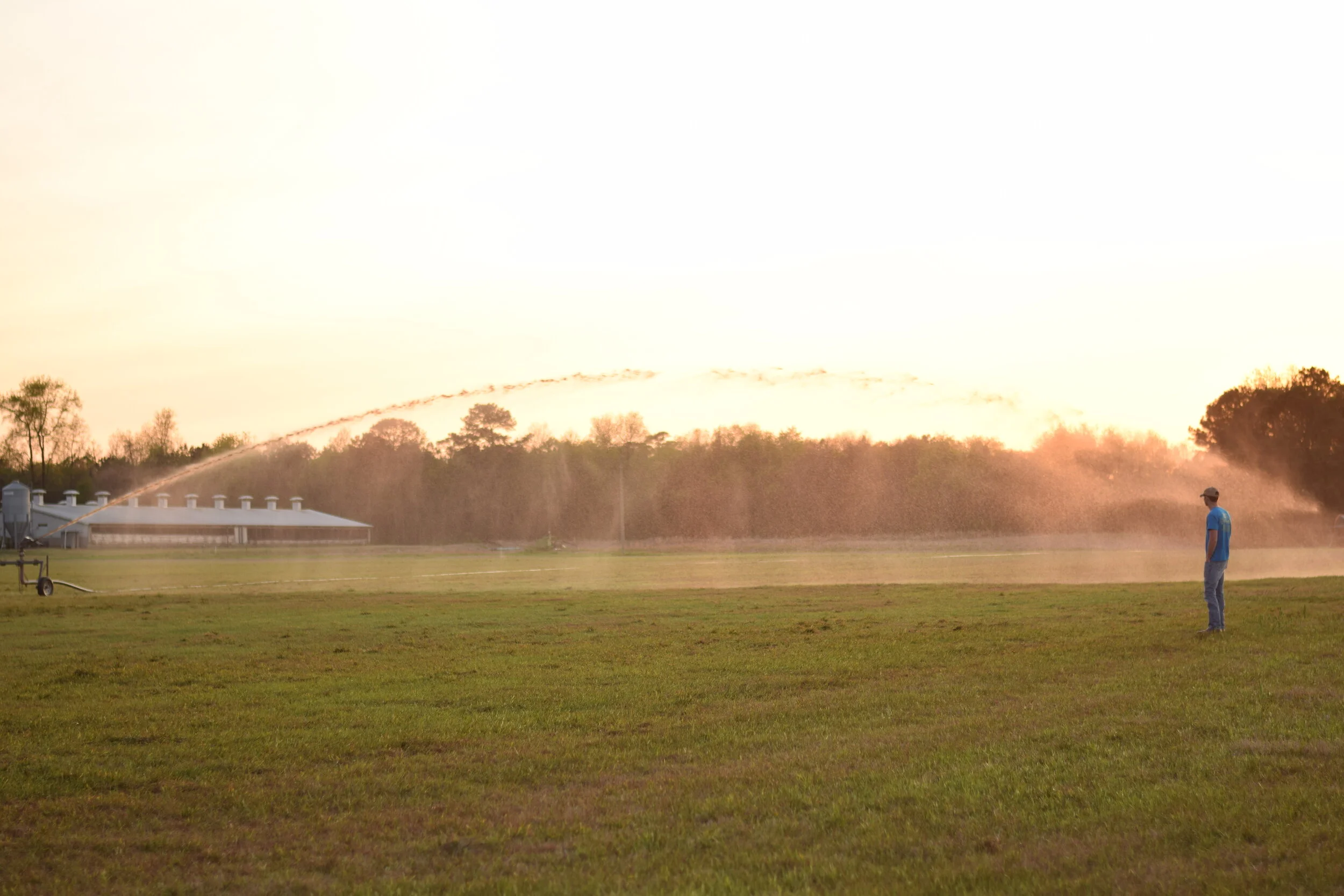
Terms like “toxic,” “polluters,” and “cesspools” have been used to describe pig farms in North Carolina. According to activists, they really have a problem with how we handle manure. They view the lagoon and spray field system as an “antiquated” method that needs to be abolished. Activists have sued over “odor” and effectively shut down several farms. In these lawsuits, they never requested a change in the system (just millions of dollars) but did highlight alternatives that could be implemented.

Fast forward to recent months. Farmers have been working together with Dominion Energy and Smithfield Foods to implement years of research to cover lagoons, capture methane, and turn it into renewable natural gas, which in turn, produces electricity. Note, this was one of the alternatives encouraged by activists in court. Now they oppose it, with claims that it may make things worse.

Confused? Get ready to become more so.

total-ghg-2020-caption.jpg

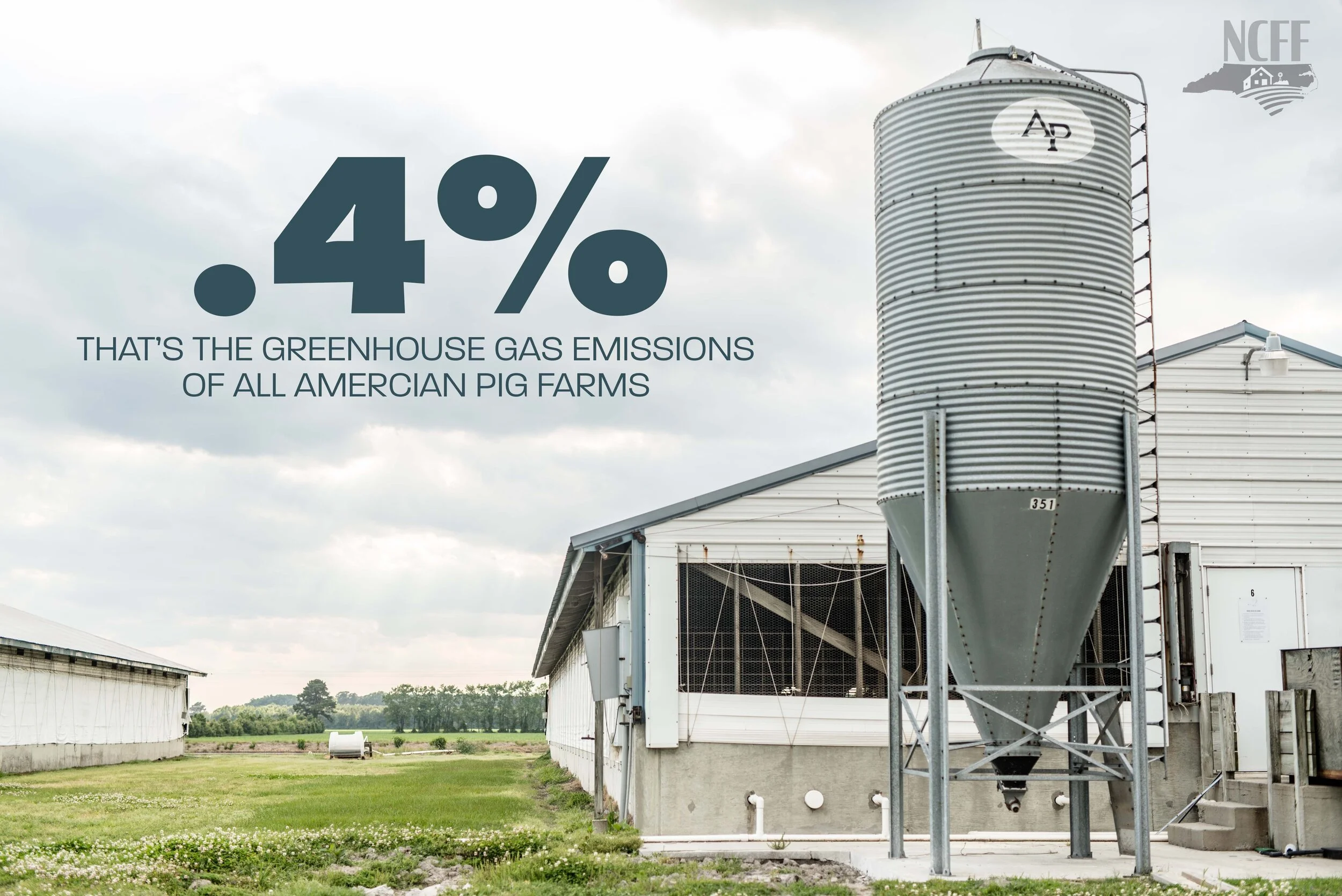
Greenhouse gas emissions in America are caused by several things, the least of these, though is agriculture. According to the EPA, only 10% of GHG are caused by agriculture, with less than 4% caused by livestock. Swine emissions come in at a whopping .4% of total GHG emissions. That’s less than half of a percent.

Yet, .4% is not low enough. They want you to stop eating bacon for four-tenths of the total GHG emissions. Seriously.

Even so, hog farmers and the pork industry are actively working together to reduce that less than half a percent even further.

It gets better. According to the EPA, emissions can be reduced by:

  • Controlling the way manure decomposes to reduce nitrous oxide and methane emissions.

  • Capturing methane from manure decomposition to produce renewable energy.

  • Storing manure in anaerobic lagoons to maximize methane production and then capturing the methane to use as an energy substitute for fossil fuels.

Did you catch that? The EPA suggests capturing methane to produce renewable energy—the exact thing pig farmers are trying to do in North Carolina. But activists still oppose this EPA-recommended tactic. The EPA says, “Capturing methane and using it as an energy sources has a positive impact on the environment, as it avoids methane emissions and displaces conventional fossil fuels.”

Do you know what else the EPA recommends to reduce GHG emissions? “Fertilizing crops with the appropriate amount of nitrogen required for optimal crop production.” North Carolina pig farmers are required to test the nitrogen content of the manure they spread on crops before application to make sure they are not just following North Carolina regulations, but also following EPA recommendations.

The bottom line: activists are blaming us for GHG emissions, while also preventing us from reducing our impact. (We’re confused, too.)

ghg.jpg

What we do know is that farmers have been doing more with less for a long time. The U.S. swine industry has decreased emissions by 18% since 1990, largely in part because of their determination to always improve and willingness to adopt new technology. Over the past 17 years, North Carolina hog farmers have significantly increased their feed efficiency, resulting in reductions of nutrient content in manure lagoons at farms by 35%-78% and ammonia level reductions of 22%-54%, according to NPPC.

Let’s stop blaming pig farmers (or any farmers) for being the cause of all the GHG emissions. You know the old saying — when you point a finger at someone, there’s three more pointing back at you.

Activists should remember that, especially when flying around in their airplanes to take photos of pig farms. Transportation is the largest contributor to GHG emissions in America and aircraft rank near the top of the list. Who’s the real polluter here?

doing more with less.jpg


Revisiting Elsie Herring and the law of propaganda

At a Glance:

  • Anti-agriculture activists continue to repeat the same inaccurate claims, but repetition doesn’t make them true.

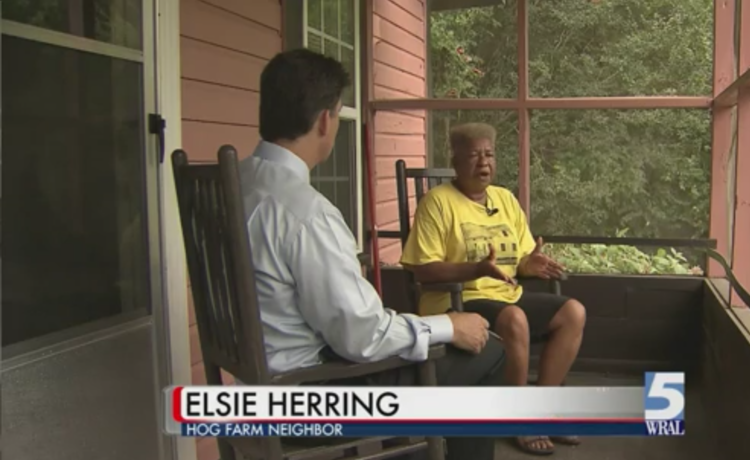
  • Elsie Herring, a Duplin County resident, continues to lie about the neighboring hog farm as seen in a recent Grist article

  • Herring claims her house is 8 feet from the spray field, when in fact, it is 200.

  • A thick buffer of trees was planted between the farm and Herring’s home 20 years ago.

  • Herring complains of constant, unbearable odor, but the hog farmer hasn’t sprayed on the field closest to Herring in more than 4 years.


President Franklin D. Roosevelt once famously said, “Repetition does not transform a lie into a truth.”

But that’s seems to be the strategy of the anti-agriculture activists who continue to repeat the same inaccurate and untrue claims about North Carolina hog farms.

 An article published by Grist.org earlier this month resurrected the story of Elsie Herring, a Duplin County woman who lives next door to a small hog farm. The story wrongly claims that hog manure is being sprayed onto fields located just eight feet from her home — “bringing with them a constant, unbearable odor.”

That would be awful — if it were true. It is not.

 NC Farm Families examined this issue several years ago and it’s worth revisiting the facts. Watch this video and read this blog post:

Note: because the farmer has not used the field in the video for years, the distance between Ms. Herring’s house and the closest sprayfield is now 900 feet. To read more, visit the blog above.

What do the facts show?

More than twenty years ago, the farmer moved his irrigation equipment further away and stopped spraying close to her home. A grove of trees was planted between her home and the farmer’s fields. Today, those trees have grown into a thick forest that creates a barrier — the length of a football field — between her home and the fields.

And the farmer’s detailed records show that he hasn’t sprayed — not one single time — on the field closest to Ms. Herring’s house in more than four years. Yet she continues to complain in media reports that there is a constant, unbearable odor. It defies logic.

After Ms. Herring testified before a Congressional committee in November 2019, the farmer responded to her allegations. This video shows how these activists will manipulate images and distort the truth to make their case against hog farming:

 This is the exact type of propaganda President Roosevelt was concerned about when he addressed the nation in October 1939. It was shortly after the start of World War II and he was concerned about the “shameless and dishonest” attempts to influence public opinion surrounding the war.

But FDR also had faith in the American public. People were learning to discriminate “between the honest advocate who relies on truth and logic and the more dramatic speaker who is clever in appealing to the passions and prejudices of his listeners,” he said.

“We Americans begin to know the difference between the truth on the one side and the falsehood on the other, no matter how often the falsehood is iterated and reiterated. Repetition does not transform a lie into a truth.”

FDR encouraged Americans to rely on “an unbiased and factual chronicle of developments.” We urge you to do the same.