

Farmkeepers Blog
The Farmkeepers is the official blog of NC Farm Families. It is here that words will flow, our voice will be heard, a stand will be made, and the farm families of North Carolina will be protected. In these posts, we'll set the record straight. You'll see the faces of the families who feed us. Here, you'll receive all the updates and news. It is here that we will fight for farmers and be the keepers of the farm in NC. We hope you'll join us. Follow along on social media and by joining our email list.
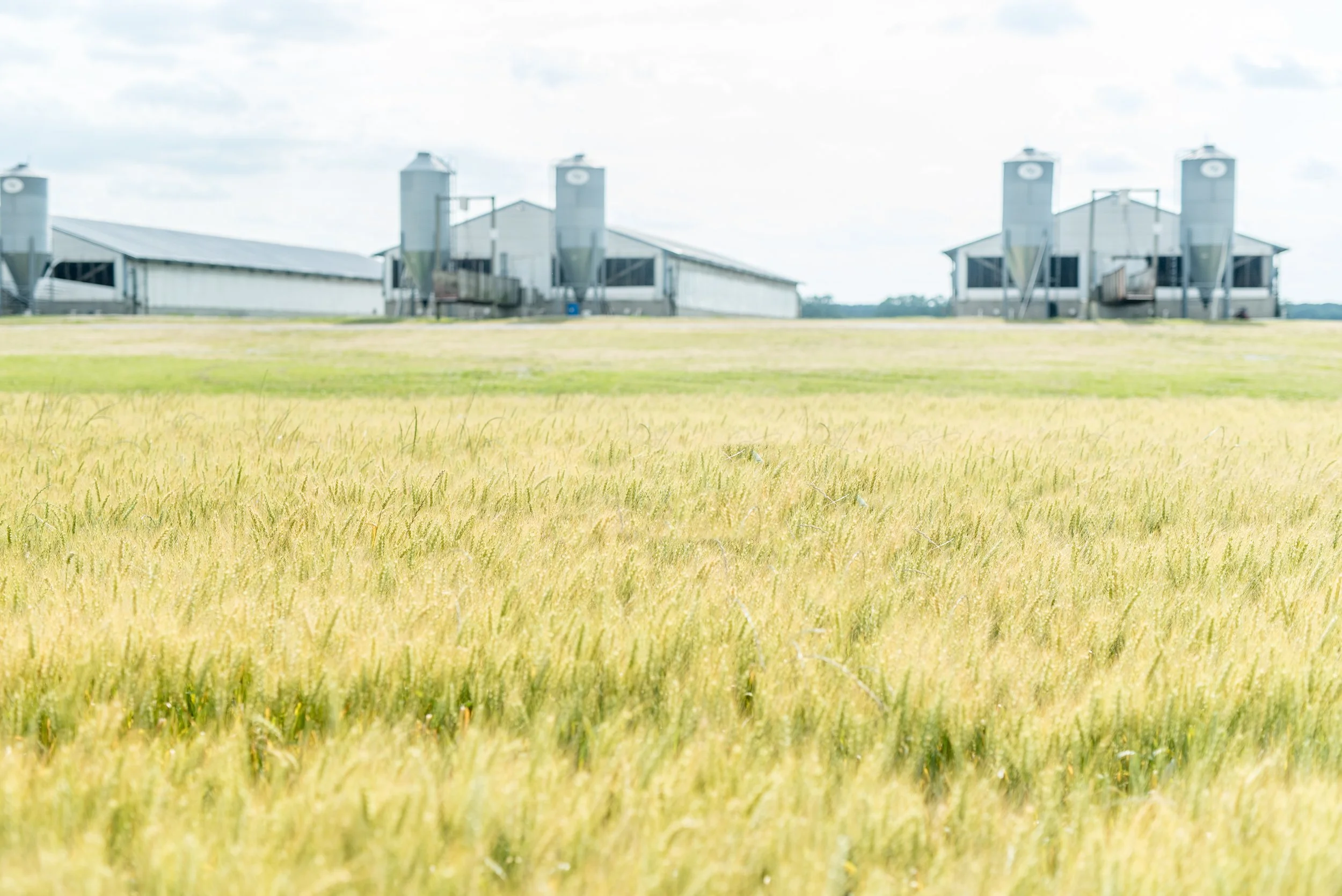
Make your voice heard: Comment on the new state permit for NC hog farms
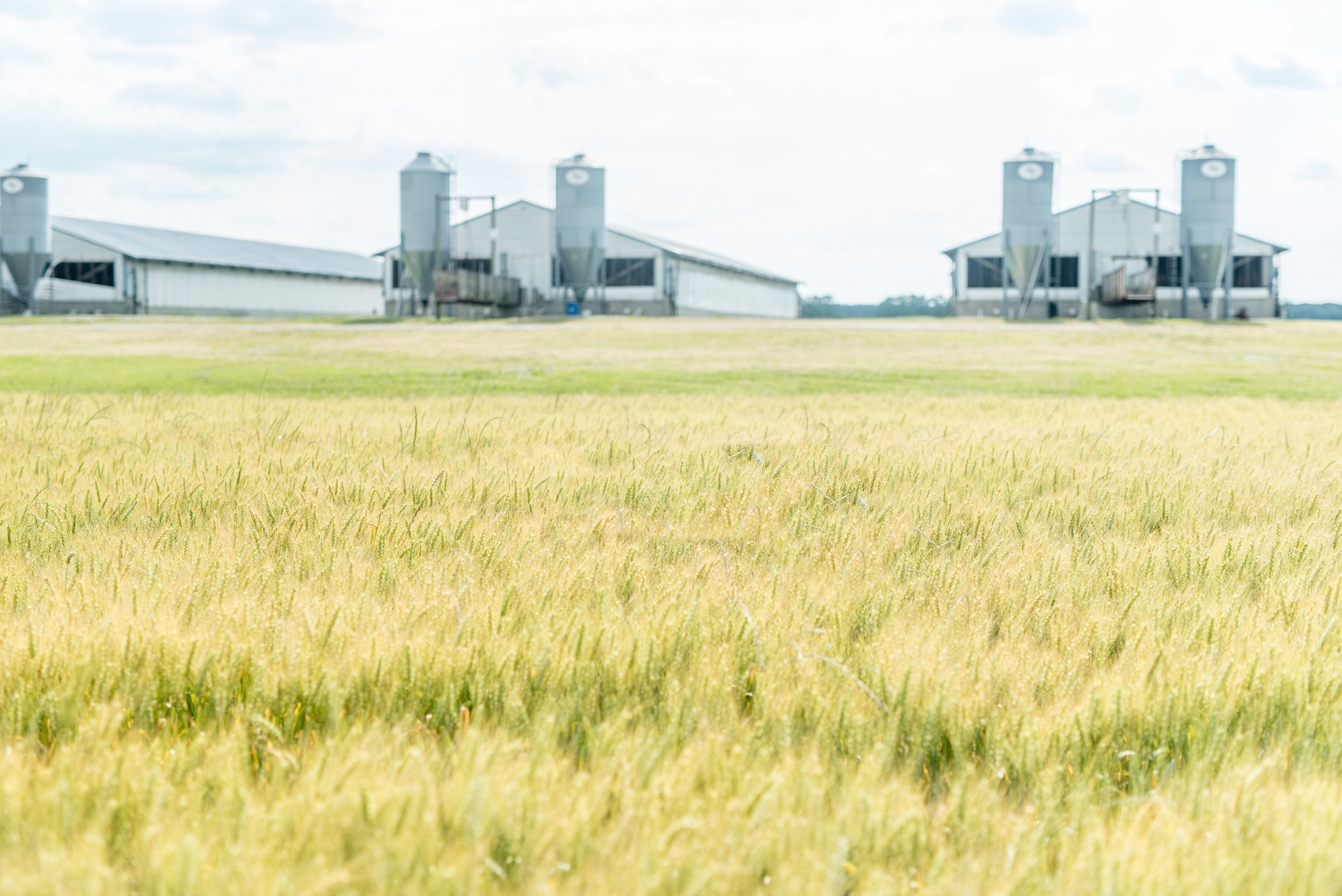
North Carolina hog farms operate under some of the most stringent regulations in the nation. Every hog farm in the state that raises more than 250 pigs a year must receive a general permit issued by the NC Department of Environmental Quality (DEQ) and adhere to the permit conditions.
Every five years, DEQ reviews the permit and can change the permit conditions. The 2024 general permit is currently under development, as well as a new permit for farms that use digesters to generate renewable natural gas. The drafts of the swine general permit and digester general permit were released in late July, and the state is accepting public comments via email until Friday, November 3. In addition, the state will gather feedback at four public hearings, including one at James Sprunt Community College in Kenansville on Thursday, October 5 (6:00 pm) and one at Wayne Community College in Goldsboro on Tuesday, October 10 (6:00 pm).
We know that state regulators will hear repeatedly from the activists who want to make it more difficult for our family farmers to raise pigs, poultry and cattle. These groups will continue to push for burdensome and unnecessary regulations that help further their agenda.
If you support North Carolina agriculture, it is critical that we make our voice heard and speak out against adding new regulations to the swine general permit and digester general permit. Here are three things you can do to help:
Plan to attend the public hearings in Kenansville (Oct. 5) or Goldsboro (Oct. 10). There is also a virtual, online meeting planned for Thursday, October 26. You can sign up here to speak at the virtual meeting.
Send an email to DEQ with written comments about the permit. Click here to add your name to a pre-drafted letter or send comments directly to DEQ at publiccommentsDWR@deq.nc.gov.
Share this post and encourage friends and families to provide comments.
This is an important opportunity to have a say in what regulations our hog farms must follow until 2029. The new permit will take effect on October 1, 2024.
Learn more:
DEQ website: 2024 Animal Feeding Operations General Permits (public hearing schedule, draft permits, etc.)
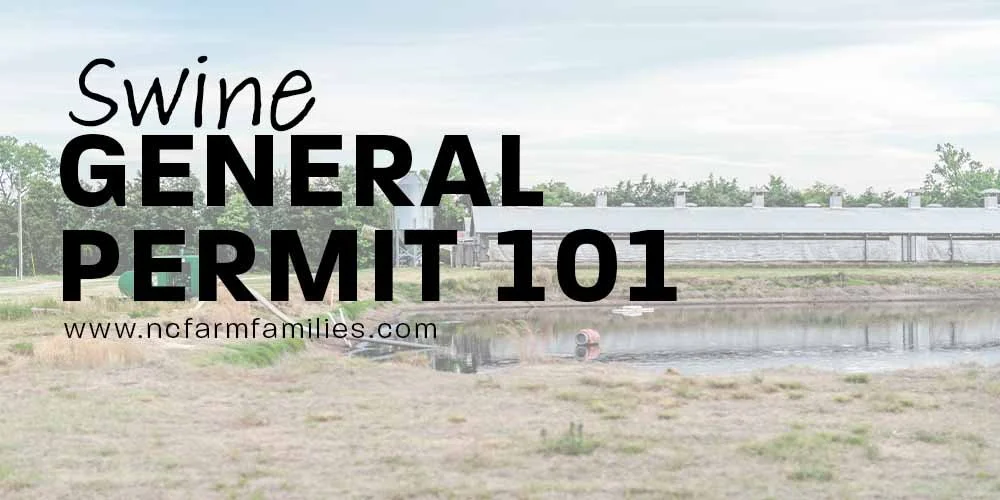
General Permit 101 | What is the general permit and why is it important?

General Permit 101
The NC Department of Environmental Quality will soon issue a new draft Swine Waste Management System General Permit. This permit regulates how hog farms in North Carolina are allowed to operate.
With the upcoming release of the draft permit, here are some important facts about the permit:
-
A General Permit is required for all North Carolina farmers who raise more than 250 pigs a year and aren’t already covered under a federal water quality permit. There are currently more than 2,000 permitted hog farms across North Carolina.
Description text goes here -
Farmers need to obtain a new permit every five years. Hog farmers will need to apply for a new permit in 2024.
-
The General Permit includes several provisions designed to protect public health and the environment. Among the provisions:
— Farms must be personally inspected each year by state officials.
— Farms may not discharge any waste into local streams or rivers.
— Lagoons are required to maintain enough available storage space to withstand severe floods. This includes adequate storage for a 25-year, 24-hour storm event, plus one additional foot of structural freeboard.
— Farms must develop a detailed waste management plan and keep comprehensive records every time manure is applied to fields. Allowable levels of land application are based on a detailed analysis of the farm’s soil and the nutrients in the lagoon.
— Waste must be managed in a way that protects public health and the environment. The permit includes extensive regulations regarding lagoon design, construction and operation; land application of manure; mandatory setbacks from neighbors and waterways; and more.
— Each farm must have a designated “Operator in Charge” responsible for waste management. This individual must take a class, pass a test, and receive continuing education to maintain the license. -
The Department of Environmental Quality has been holding stakeholder meetings across the state with a variety of interested groups, including major integrators, the NC Pork Council, NC Farm Bureau, and NC Farm Families, as well as groups that are opposed to our industry, including Riverkeepers, SELC, REACH, and other activist groups that want to make it more difficult for us to raise animals. These stakeholders provide suggestions and feedback on what changes, in any, should be included in a new permit. DEQ will also consider public comments provided in response to the draft permit.
-
The 2019 General Permit included three new provisions that are currently being challenged in court. The requirements:
— Farms must electronically file an annual report each year detailing its management
— Farms located in the 100-year floodplain must conduct groundwater monitoring
— Farms must conduct tests using the NC Phosphorus Loss Assessment Tool (PLAT)
The NC Farm Bureau and others appealed these provisions in the 2019 permit, claiming that adding new conditions like this must go through the rulemaking process with the NC Environmental Management Commission. Although the case remains unresolved in the courts, it is likely that DEQ will once again include these provisions in the General Permit. -
The new permit takes effect on October 1, 2024.
-
North Carolina has the most stringent regulations in the nation for hog farms. The Department of Environmental Quality agrees, stating on its website that “North Carolina has the strongest permit program for concentrated animal feeding operations in the country and is one of the only states that requires annual inspections of every facility.”
-
The State of North Carolina is required to issue a General Permit every five years. The last permit was issued in 2019. Read the 2019 General Permit.
-
The State of North Carolina has regulated animal operations, including swine, since 1992.
The 2024 draft permit is expected to be released in early August. Public comments will be accepted for 90 days after the draft permit is issued and a series of public hearings will be scheduled. We’ll discuss the public hearing process and the importance of making your voice heard in future communications.
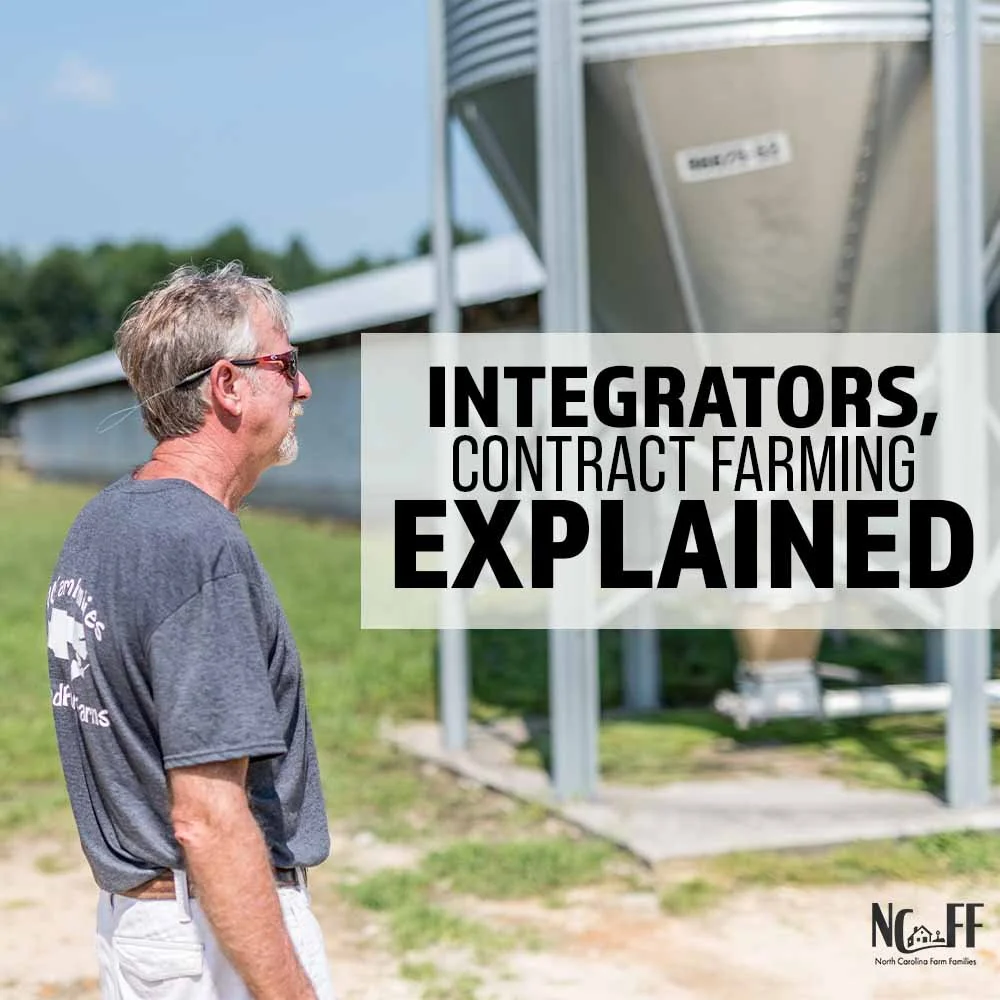
What is Contract Farming?
In the world of agriculture, you often hear terms like “contract farming” and “integrators,” but many people don’t have a good understanding about what these words mean or how these farms operate.
In North Carolina, most farms are operated by family farmers. Many of these families have been growing crops and raising livestock for generations.
Beginning in the late 1980s and early 1990s, the concept of “contract farming” began to gain popularity. This is a system where family farmers sign an agreement to raise animals — typically pigs, chickens and turkeys — for companies such as Smithfield, Prestage Farms, or Butterball. These are typically larger companies, known as “integrators.” The name stems from the fact that the entire process of raising animals and selling the final product is integrated and controlled by the company that owns the animals.
For larger companies that sell nationally to large supermarket or retail chains, they have to provide a product that is consistent and uniform. It’s hard to do that if each farmer is feeding their animals different diets or using different breeds of pigs. So these companies are integrated in that they own the pigs and control the genetics, diet, and veterinary care to ensure that the final product is a consistent one for customers.

How Contract Farming Works
Although the integrator owns and controls the big aspects of production, it’s the contract farmers who make the process work. In the simplest terms, integrators provide the animals and the resources they need, while farmers are entrusted to raise the pigs, chickens, and turkeys in a safe and responsible way until they are ready to go to the processing plants.
The family farmers provide the land, the barns, and the labor needed to properly care for the animals. The integrators provide feed, access to veterinary care, and guidance on how to raise animals most efficiently.
Contract farming is a team effort, with both sides operating under more predictable conditions while sharing the benefits and risks associated with livestock production.

Why Choose Contract Farming?
Many family farmers choose the contract farming model because it provides a predictable income regardless of changing market conditions. The farmers are free to focus on what they do best — raising healthy animals in a safe and responsible way — without worrying about the buying feed, accessing veterinary care, or issues unrelated to raising the animals.
When market conditions are volatile — like when corn prices are high and market prices are low — it can be a stressful time for independent farmers. Contract growers don’t have to worry about those type of market fluctuations. They raise the animals, and the integrator takes it from it there.
Integrators benefit from greater predictability, too. They take comfort in knowing that their animals are being raised in a similar environment, consistently receiving the same feed and benefiting from expert veterinary care.
While integrators may have preferences in how animals are raised, family farmers still enjoy flexibility in how they operate their farm. The farmer has the ultimate responsibility for managing the farm and raising the animals.
The contract farming model has worked well in North Carolina for decades, but it is not without risk. Challenging market conditions have forced some integrators to reduce their operations or cancel contracts. That can create challenges for farmers who have grown accustomed to a predictable cycle of raising animals.
Contract farming has led to great strides in how we raise livestock through the years. While we don’t know exactly how this system will continue to evolve, North Carolina’s farm families are resilient. Our love for the land and our commitment to the animals we raise remain the foundation on which North Carolina’s agriculture industry stands.
