

Farmkeepers Blog
The Farmkeepers is the official blog of NC Farm Families. It is here that words will flow, our voice will be heard, a stand will be made, and the farm families of North Carolina will be protected. In these posts, we'll set the record straight. You'll see the faces of the families who feed us. Here, you'll receive all the updates and news. It is here that we will fight for farmers and be the keepers of the farm in NC. We hope you'll join us. Follow along on social media and by joining our email list.
Misleading. Mistaken. One-Sided-- Just a Typical Hog Farm Article , so Here's the Other Side
The latest misleading, mistake-filled attack on North Carolina’s family farmers comes from Vox, an online news outlet with a mission to “explain the news.”
After listening to a 30-minute podcast that takes aim at how we raise our pigs, it seems like we’re the ones who need to explain a few things to Vox.
The podcast, eloquently titled “pig poop lagoon,” features the same cast of activists, making the same tired arguments about our farms. This piece takes particular issue with the lagoon and sprayfield system and features plenty of complaints about odor.
As farmers, we’re the first to admit that farms have an occasional smell. But some people claim the odor is always present, or that it is so overpowering that it’s nearly impossible to leave home.
We know what it’s really like to live next to a hog farm.
But don’t take our word for it. Look at the results of an air quality study conducted in Duplin County this year by the NC Division of Air Quality. They collected 15 months of data and found that there was no significant air quality issues.
You can also read how people with no agenda describe the smell on our farms.
When a reporter visited a Bladen County farm in 2017, here’s what he said: “Upon stepping out of a vehicle, the first thing one might notice is the absence of something — an aroma. There was no odor. Of any kind. None.” Other reporters have described odor as “almost negligible” or as “a light barnyard smell.”

To make its case, the Vox podcast dredges up an old study on odor that was conducted by a UNC professor who described himself as a “committed activist.” It spends two full minutes talking about the study but fails to give listeners the most important piece of data — the participants reported no odor or very faint odor more than 80 percent of the time and strong or very strong odors only two percent of the time.
This is what the data collected by our harshest critics found. (Click here to read more about the flaws with that study.)
Vox is a Latin word meaning “voice,” but this podcast represents only one voice. That of the activists who want to put an end to animal agriculture.
Over the course of the 30-minute podcast, Vox devotes a grand total of 22 seconds to the viewpoint of our farmers and our industry. No surprise that they failed to adequately capture our perspective.
One example: Vox notes that the pork industry took issue with a study about the demographics of who lives near North Carolina hog farms, but fails to tell listeners the truth of the matter: Census data shows that 68 percent of hog farms in North Carolina are in areas where African-American residents make up 30 percent or fewer of the population, and only 13.5 percent of hog farms are located in communities where a majority of residents are African-American.
The podcast also tries to raise health concerns about living near hog farms. But you don’t hear from any medical experts, and certainly no one like Dr. Keith Ramsey, the medical director of infectious disease control at Pitt County Memorial Hospital and former chairman of the Pitt County Board of Health.

Dr. Ramsey has conducted studies involving residents across eastern North Carolina and specifically looked at any association between health outcomes and our farms. His conclusion: “I have observed no indication that living near a hog farm causes any increased risk of infection by antibiotic-resistant or any other bacteria... The real health threats needing attention in eastern North Carolina are diet and lifestyle... not hog farms.”
We could go on and on, but we need to get back to the farm. We have pigs to raise and millions of families to feed. And we’ll continue to do it in a caring and responsible way.
The Legacy of a Pig Farmer

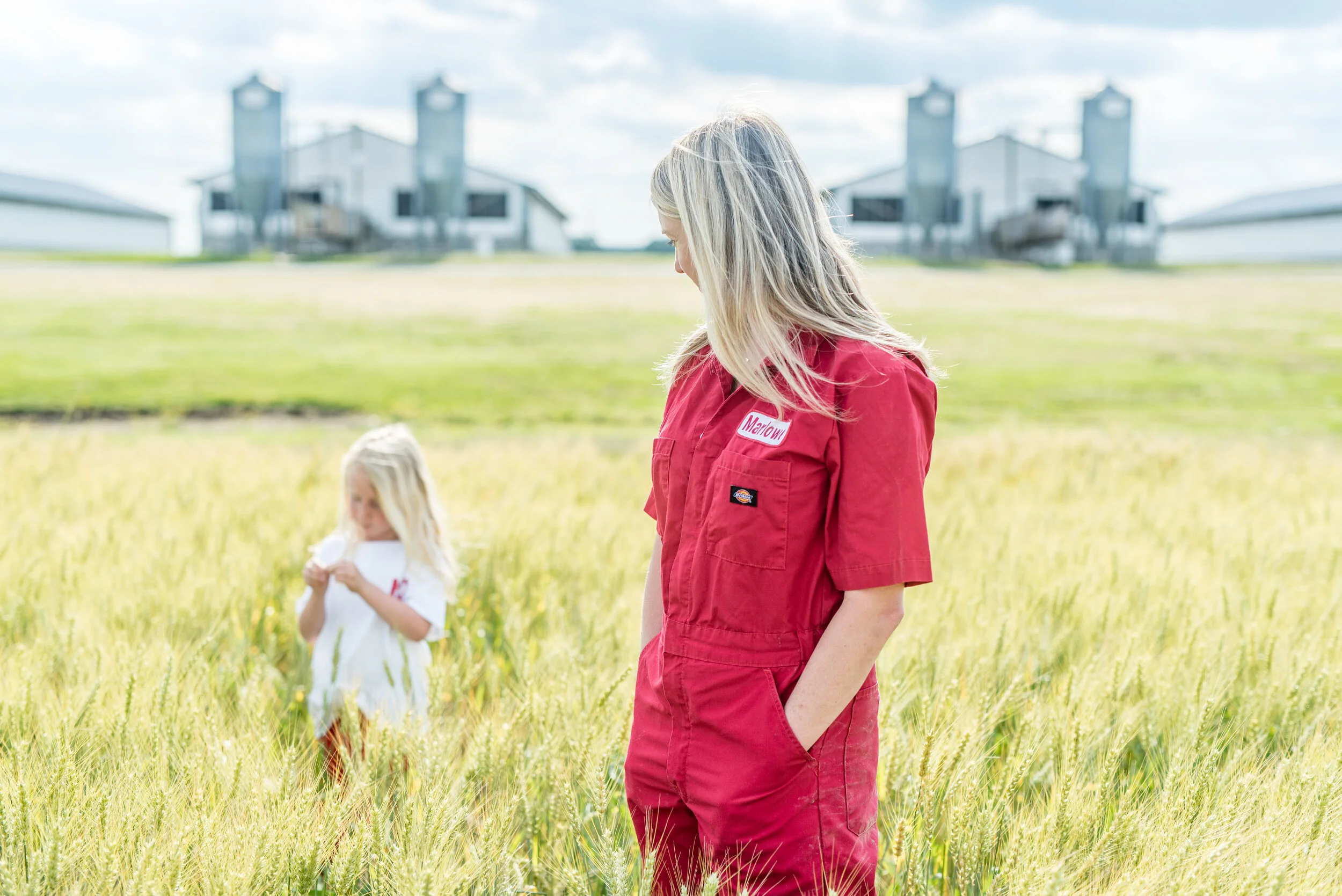
On one of her two pig farms, Marlowe Ivey Vaughn changes out of her “good clothes” into her “farm clothes”—her signature red coveralls and a pair of boots. She then turns her attention to a mini Marlowe—her 7 year old daughter, Kivett, who also gets a wardrobe change before heading into the pig barns.

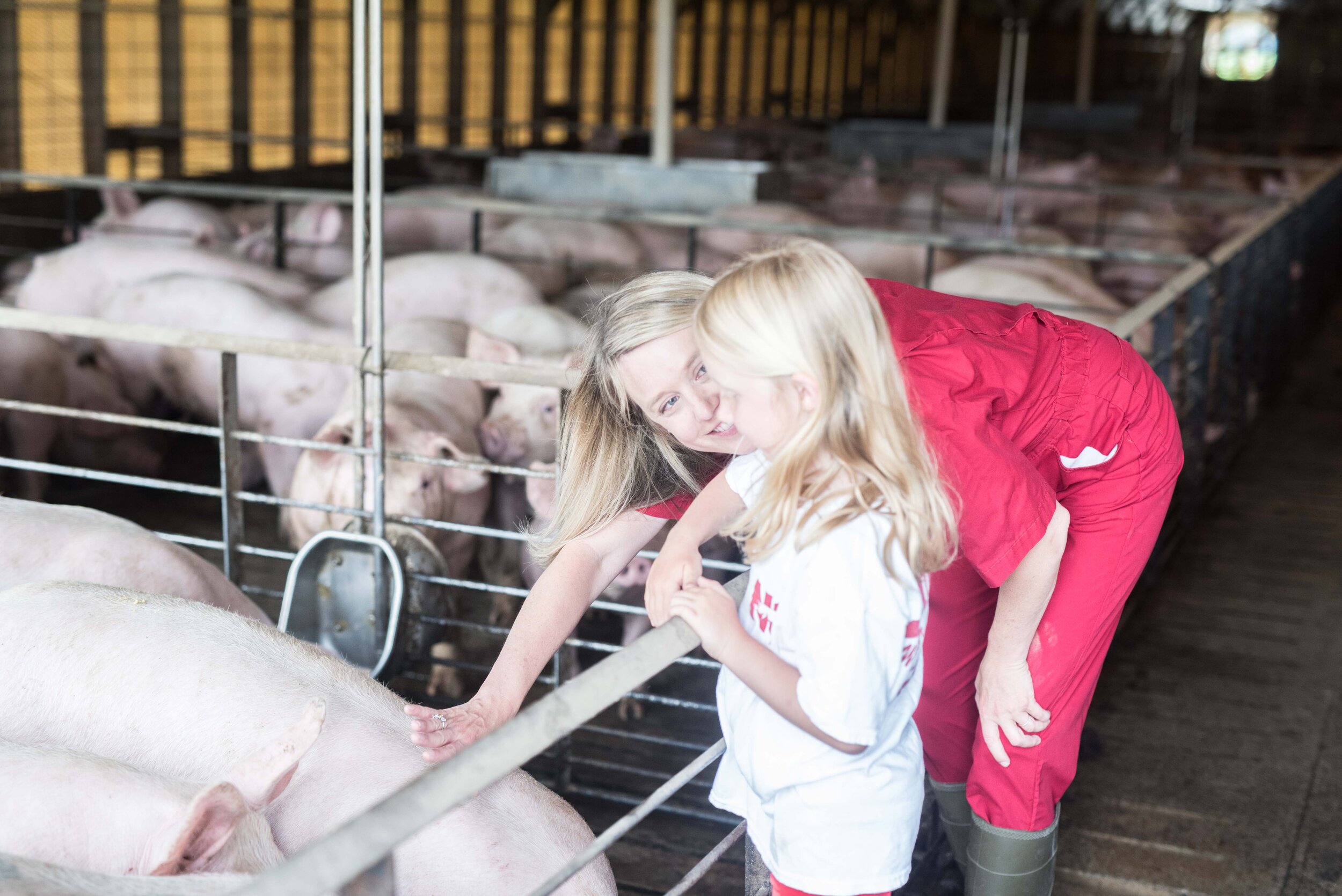
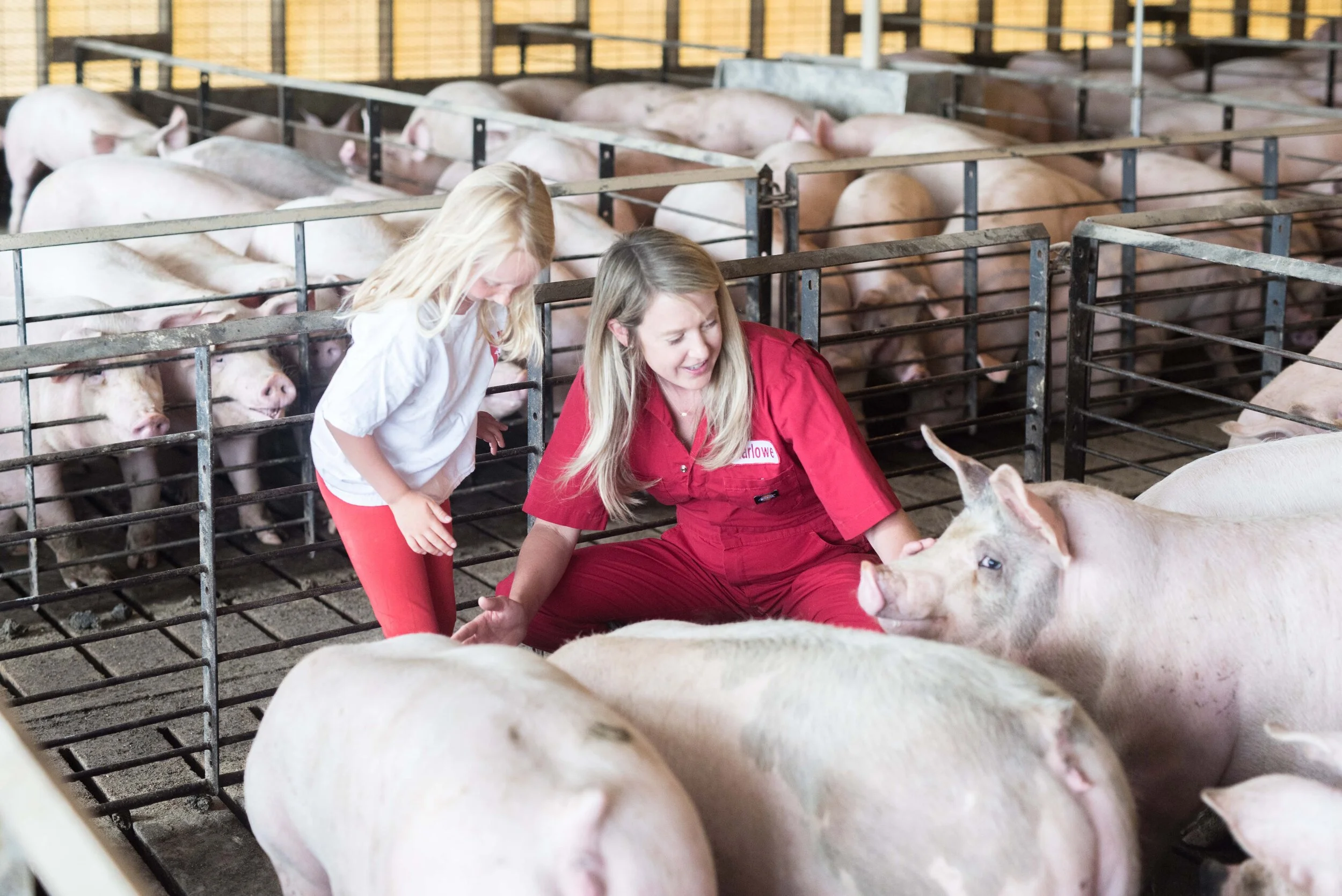
Together, they walk hand in hand down the dirt path to one of the hog houses. They greet the pigs, giving high fives, or rather letting the pigs give them a snout to the hand. The visit isn’t just about socializing, the mother and daughter make sure all the pigs are doing well, have feed, and the water is fresh. Much to the pigs, and Kivett’s delight, Kivett gets to spray the pigs down with the water hose for a bit of fun too.


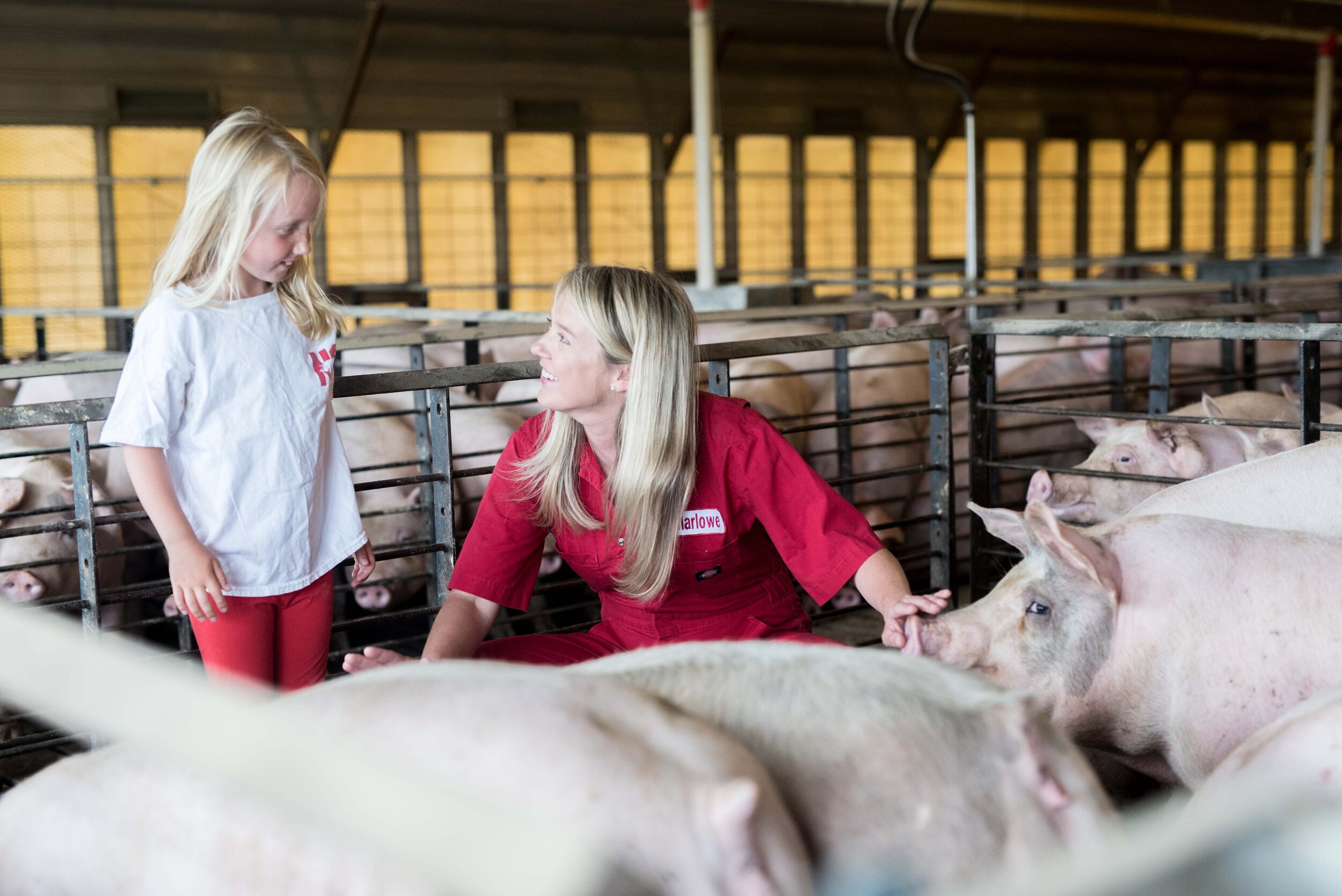
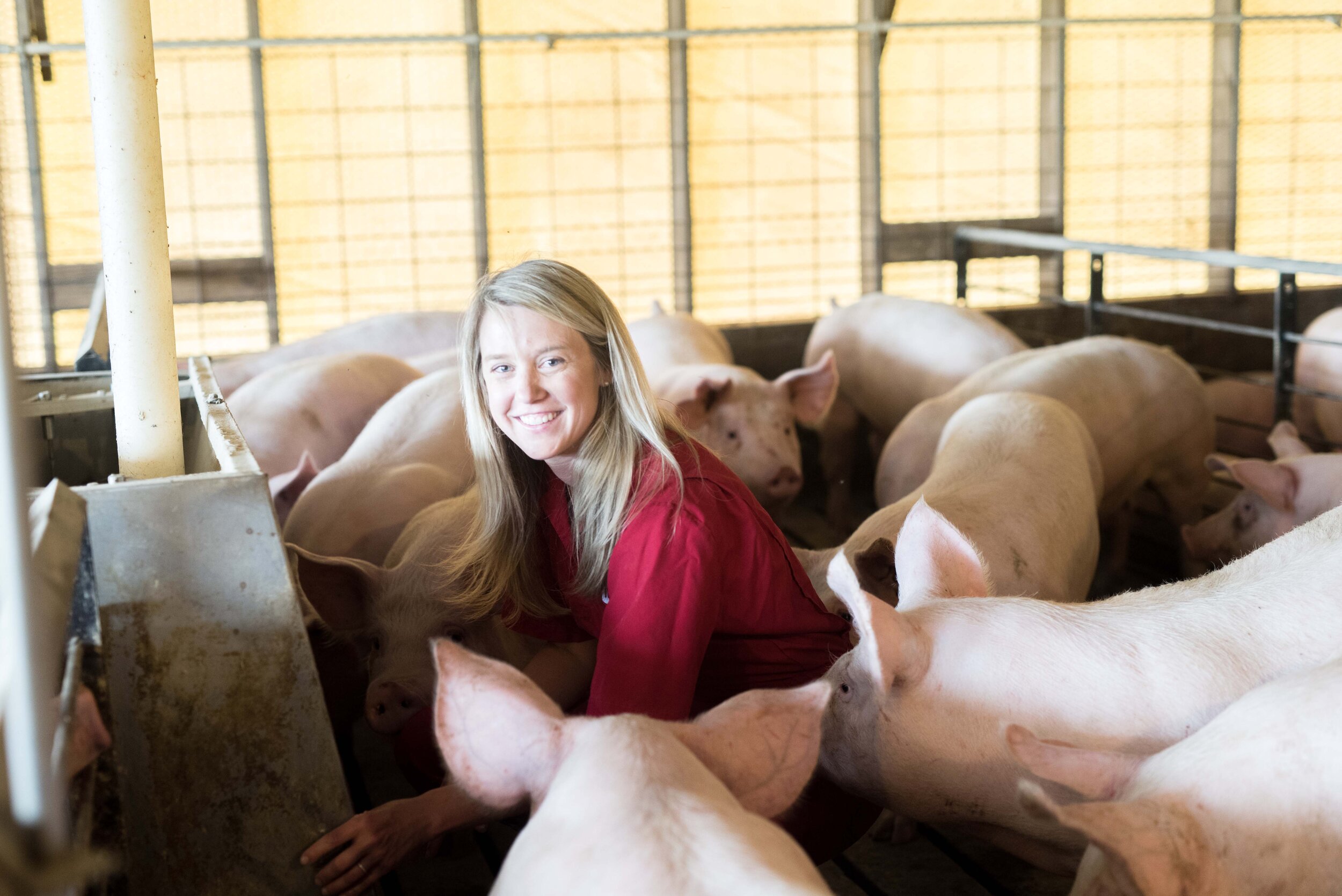
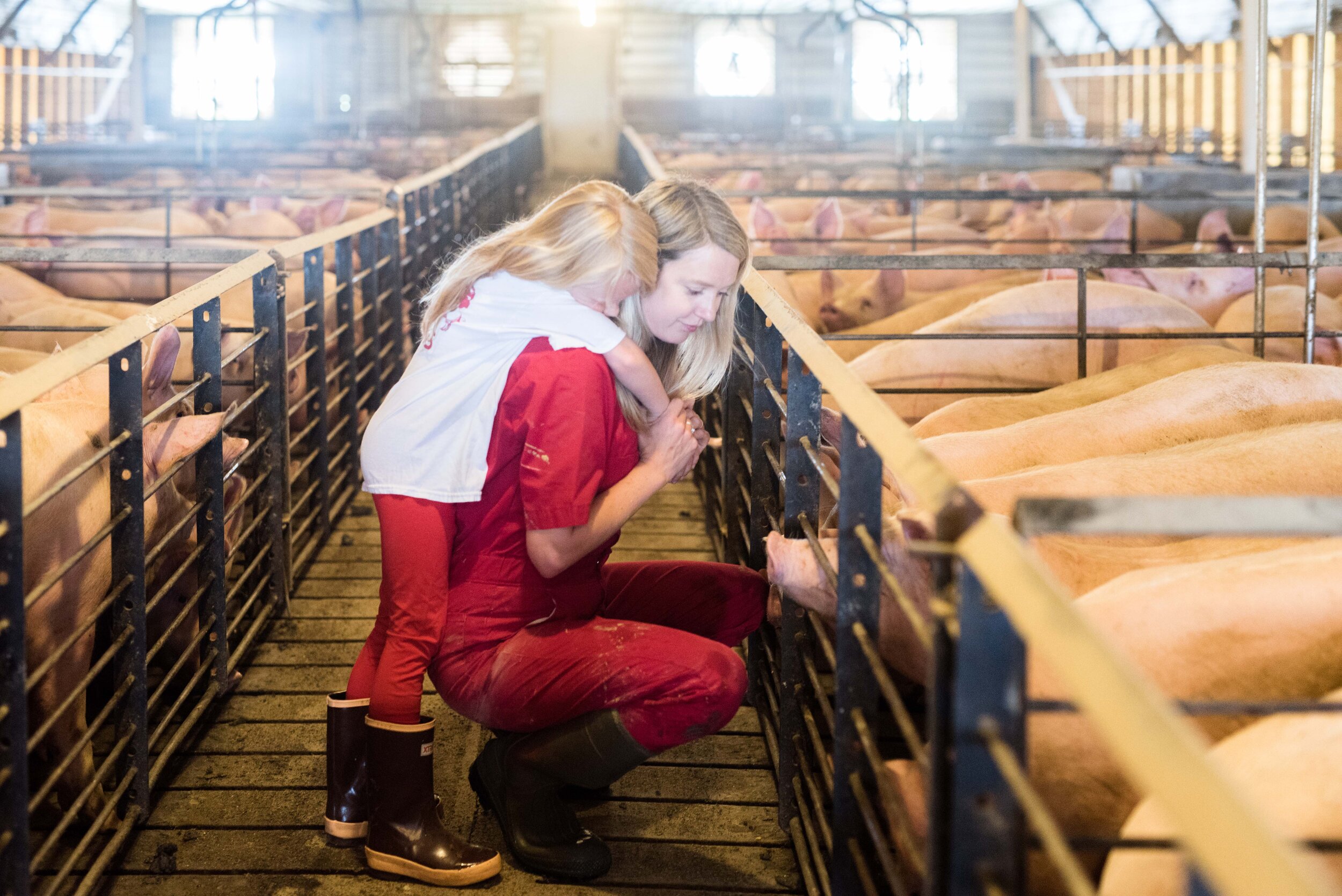


After visiting the pigs, they check on the fields of corn and wheat that are adjacent to the hog farm. Between the two, the corn is Kivett’s favorite. At the time, the wheat reaches Kivett’s shoulders while the corn hits her hip. Soon, though, the corn will tower over Kivett.
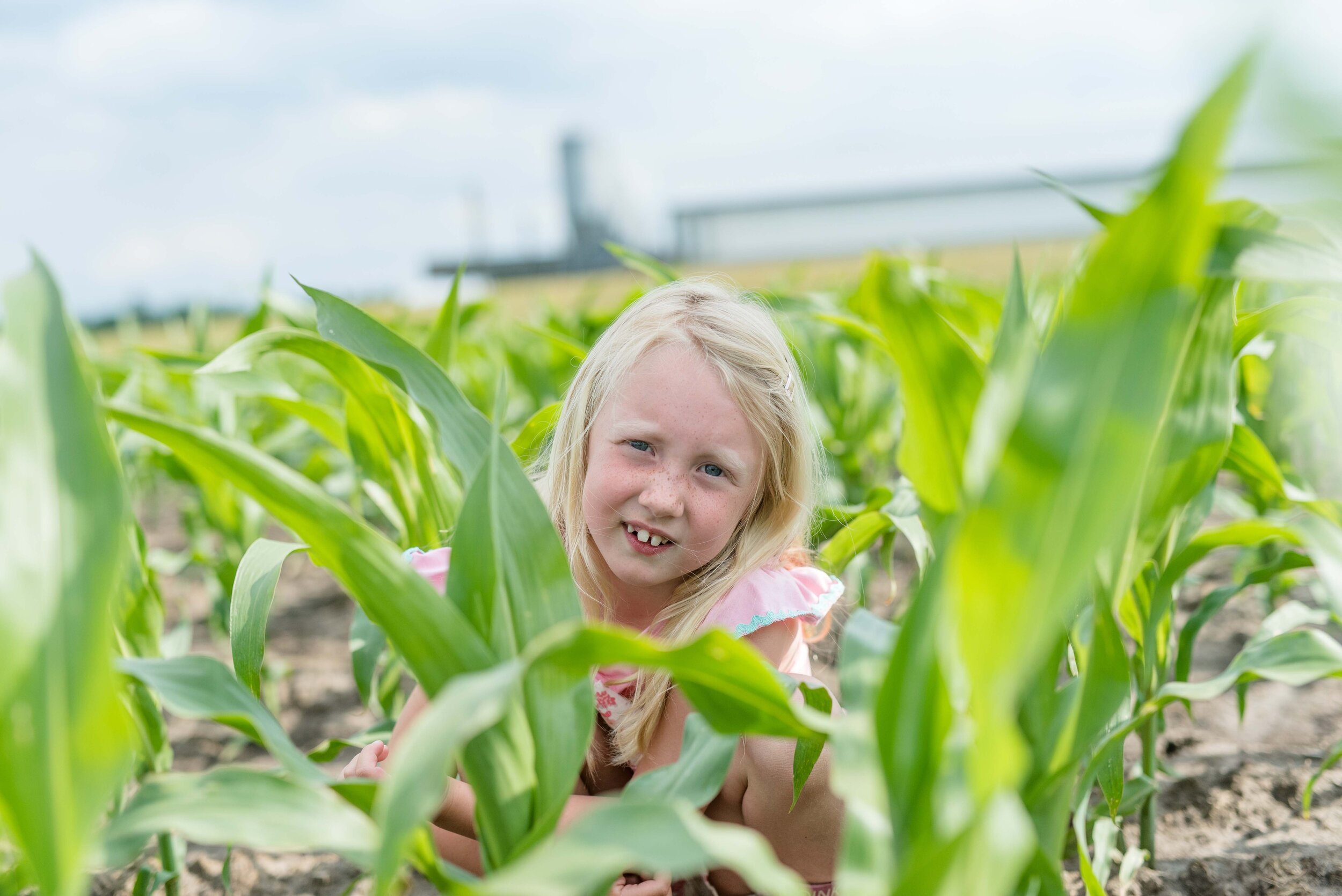


By the end of the day, it is Kivett getting sprayed off by the hose, not the pigs. She’s done what any good farm kid would—played in the dirt and mud.
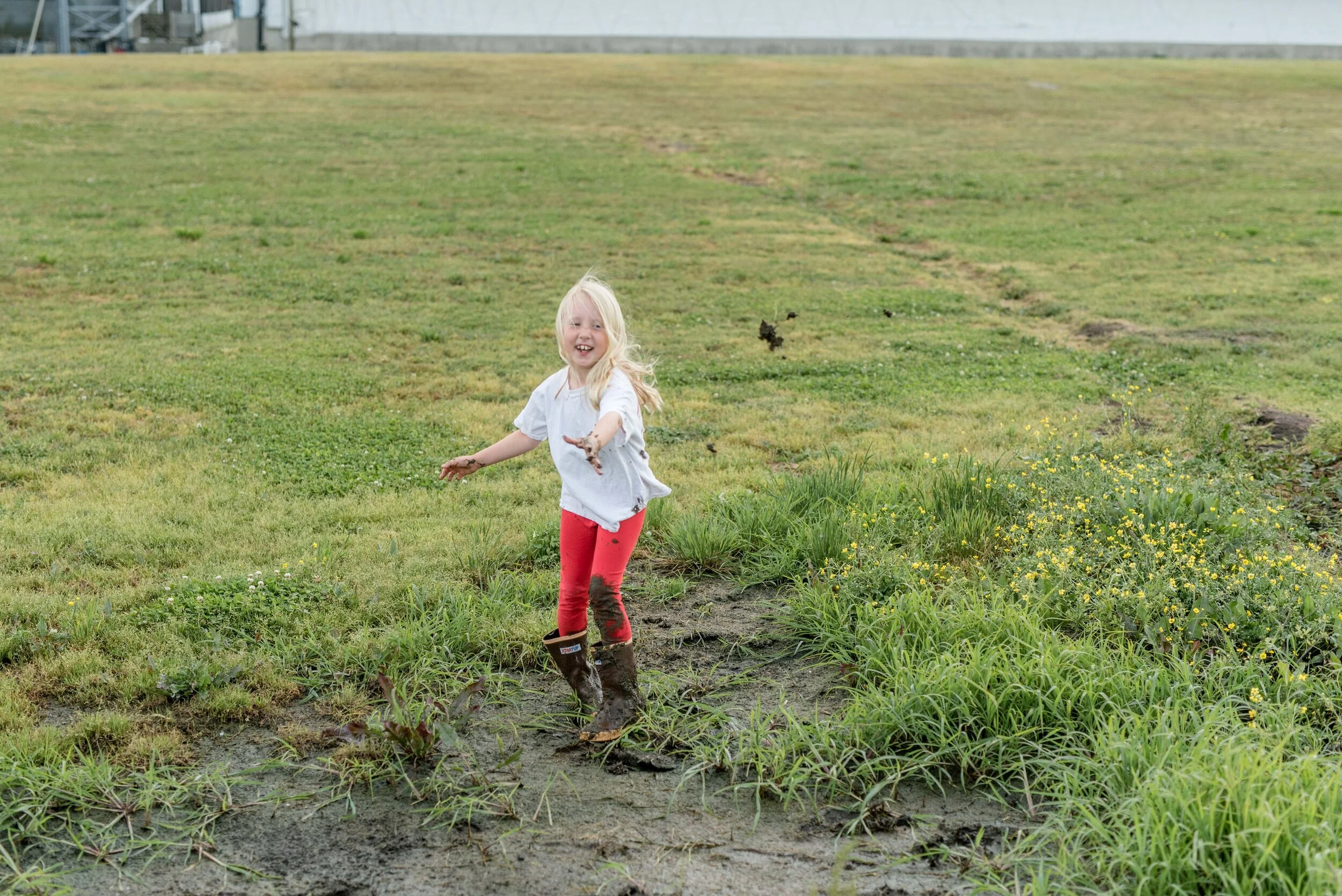

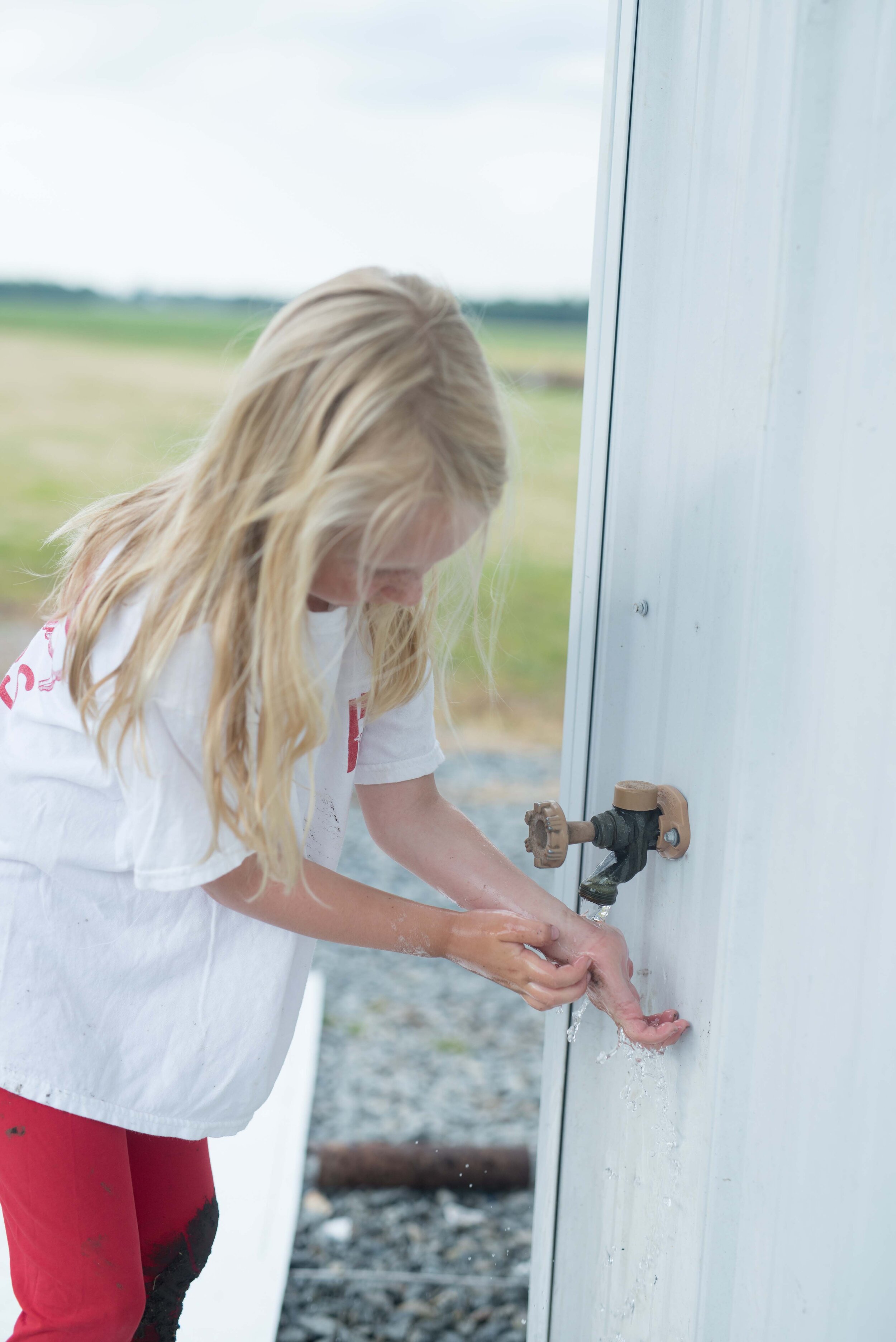
Marlowe, not entirely thrilled with the thought of putting a muddy child in the car (there may or may not be pig poop mixed in there too), tries to hold back a smile. Because, although currently covered in mud, Kivett is more than her spunky, muddy daughter. Kivett is the future. She like Marlowe, is the daughter of a farmer, and has emphatically said that she too wants to be a pig farmer when she grows up.
In Kivett, Marlowe sees a legacy continue, a legacy that she continued from her dad. Marlowe once walked the barns with her dad, now she walks them with her daughter.

Marlowe didn’t always want to be a farmer. She thought about being a vet, and she tried some other things too, but agriculture and the farm pulled her back. Being a pig farmer is Marlowe’s passion, an identity, and a legacy.

Of course, pig farmer isn’t the only hat Marlowe wears—mom, wife, daughter, friend, executive director… Marlowe juggles a lot. In addition to raising two kids (Kivett has a little brother who just turned a year) and raising pigs, Marlowe raises awareness. Serving as Executive Director of Feed the Dialogue, a non-profit that seeks to start conversations surrounding NC agriculture, food, and farmers. Beyond her work with Feed the Dialogue, Marlowe also advocates for agriculture from her personal social media platforms, sharing daily life as a farmer. She battles misconceptions, shares the real reel, and has even weathered attacks from activists.
“I do this for them,” Marlowe said. “the other farmers who are too busy or don’t have the opportunities to advocate like I do, I do this for them, and I will never stop fighting for them.”
Marlowe is passionate about continuing not just her family’s legacy, but the legacy of agriculture as a whole.
Building a Different Legacy
Her legacy was that she loved with all she had…
The COVID-19 pandemic has brought considerable disruption and change to just about everyone this year, and pig farmers are no exception. The latest sign of that change came in early August when Maxwell Foods announced that it is shuttering its hog operations by mid 2021.

After 31 years, Maxwell Foods said it was a difficult, but necessary, decision. “The Maxwell family recognizes the enormity of this decision and it was with great difficulty that it was made,” the company said in a statement.
As a contract pig grower for Maxwell Foods, Marlowe is one of about 150 pig farms across the state impacted by the news. Working with an integrator is a partnership where each brings important aspects to the table. Overly simplified, the integrator (Maxwell Foods in this case) provides the pigs and resources, while the farmers provide the barns and care for the pigs.
It’s a situation that has farmers like Marlowe filled with uncertainty.
“I’m worried. I’m concerned about the future,” she said. Her connections with Maxwell Foods run long and deep — her dad, Bob Ivey, helped start and build the company three decades ago. She has been a grower for Maxwell Foods from the beginning.
“These are people who I’ve known my entire life — who are a part of who I am… Maxwell Foods is a part of who I was,” Marlowe said. “I want to save everybody. Not all of us are going to get saved.”
For Marlowe, and many others, the closing of Maxwell Foods represents the end of an era.
“I was proud of the legacy Dad built for me and the pig industry. It’s not that the legacy is gone, but it is sad to see the stress that it is under. It’s not stable anymore,” Marlowe said.
For now, farmers like Marlowe are waiting to see how everything shakes out. They are hopeful, but their hearts hurt. They are keenly aware of the challenges that may lie ahead.

Marlowe fears that some people will lose their farms. A loss of farm, is a loss of identity. For farmers, farming is a way of life. And the thought of losing one’s farm is more painful and more personal than losing a job or a piece of real estate. It is a loss of self, legacy, and heritage. It is a loss of a piece of one’s heart.
Agriculture remains the number one industry in North Carolina, with an economic impact of $92.7 billion. And the pork industry is a big part of that — contributing more than $10 billion a year to the state’s economy. Whenever a major agriculture business closes, it has an impact that is felt beyond the individual farms that are affected.
While many like the NC Pork Council remains optimistic that sustainable options will be found for contract farmers in the Maxwell Foods system, it is still a time of uncertainty and change for our farming community.
Marlowe’s daughter, Kivett, will grow up with a different legacy than her momma did. Although she won’t be a third-generation grower for Maxwell Foods, the hope is that Kivett will follow in Marlowe’s footsteps and carry on the family’s legacy of pig farming.


No matter what happens, though, Marlowe says that she will “build a different legacy,” and she will never stop supporting her fellow farmers who are like family.
One part of Marlowe’s legacy, however, remains firmly intact: that she loves with everything she has. She loves her family. She loves her farm. She loves her pigs. She loves her fellow farmers. And she continues to love despite it all.

How you can help: Farmers often say that the two biggest challenges in farming are the weather and misconceptions. There are many more challenges, of course, but these are the greatest. Misconceptions can easily be eliminated if everyone takes the time to understand their food and those who grow it. Marlowe encourages everyone to learn about the pork industry’s history and heritage, with a focus on what the future holds. There’s history in that porkchop that many never stop to consider.
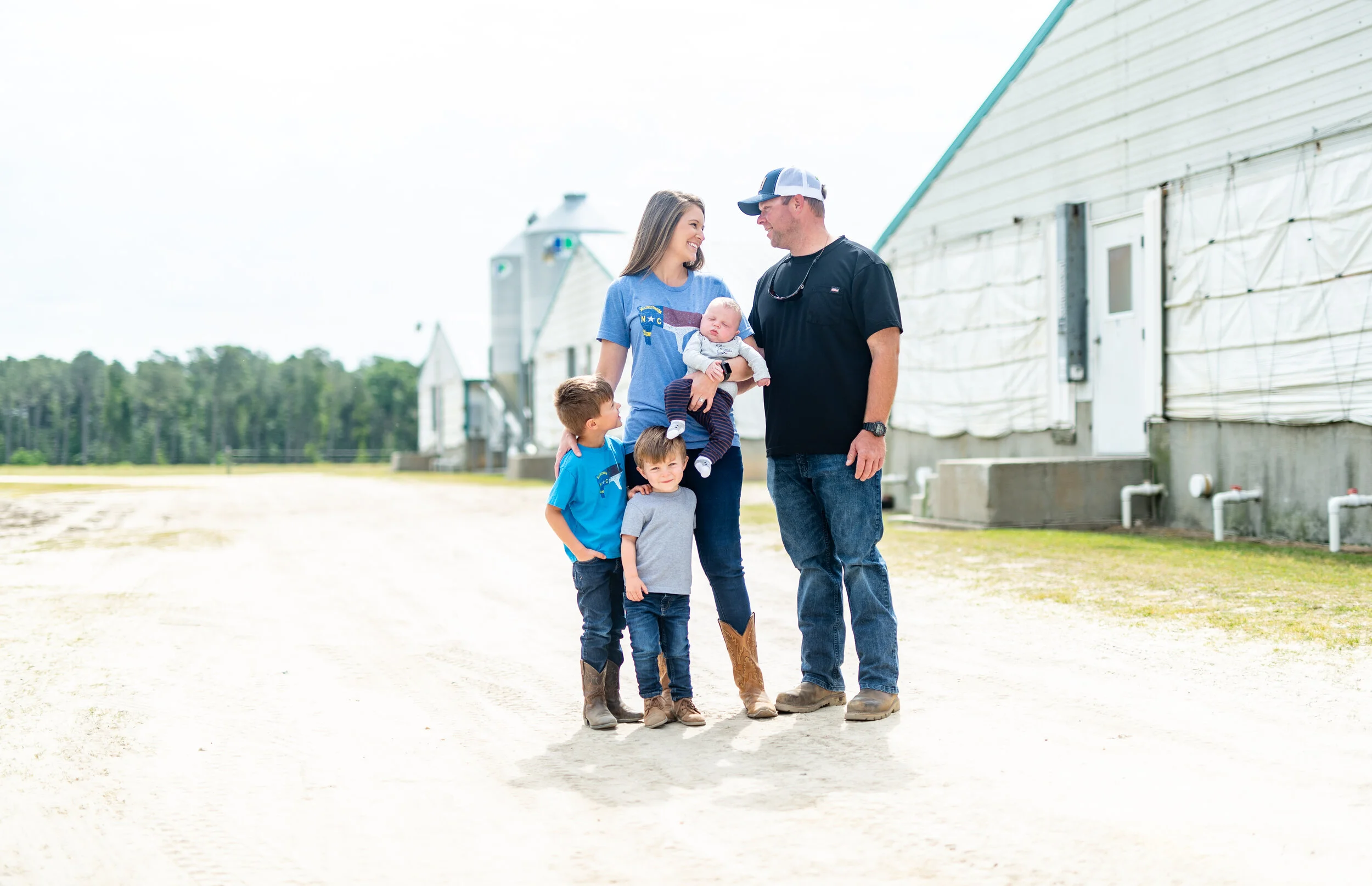
The Bass Family: Raising 3 Sons on the Farm

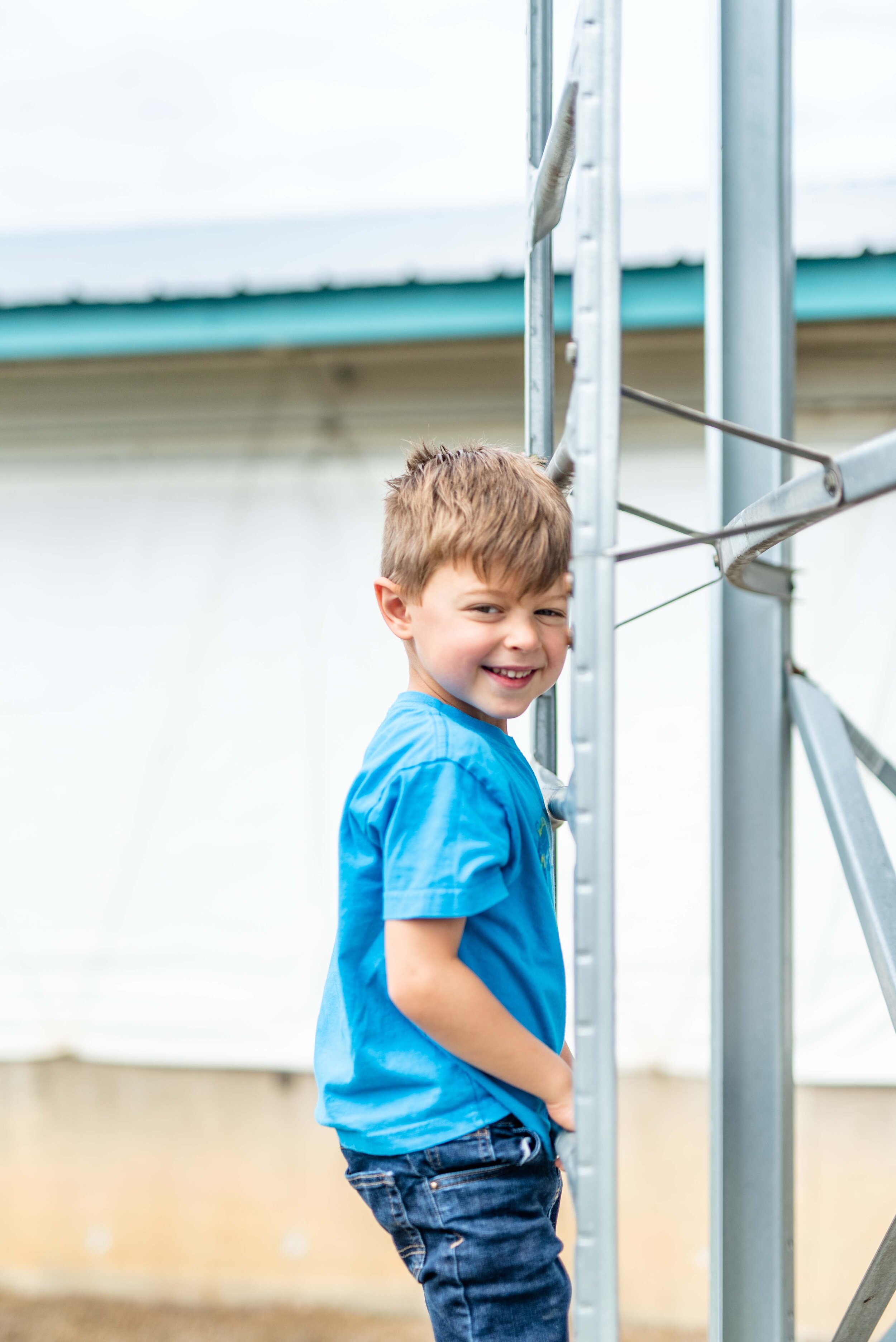
Knox and Crawford Bass race down the dirt path that runs in front of their family’s hog houses. Crawford, who is currently 5, outruns his younger brother who is almost 3. Not winning any races any time soon is baby brother Zane who is only a few months old.

The Bass boys are right at home on the hog farm—racing, playing in the dirt, checking on the pigs, climbing feed bins. For them, this is what they’ve grown up with and know. This is their element. What they don’t realize, however, are the lessons they’re learning on the farm. Their parents, though, are hopeful that between the dirt path races, tractor rides, and farm play, something bigger is happening in their sons’ lives.


Tyler and Janna Bass met in college at NCSU. Tyler majored in agronomy, while Janna studied business and marketing. Tyler had a clear plan of his future—farming. Janna’s future didn’t have farming in it; that is until she met Tyler.
“When I met Tyler, he said ‘I’m a farmer,” and I remember thinking that I really didn’t know much about that lifestyle and I had no idea what it took to run a farm and the business aspect behind the operation,” Janna recalled.
Janna grew up right outside of Raleigh in an urban area, and the move to the farm in Sampson County was an adjustment. Even after being married for 10 years, there are times where it is still an adjustment. That’s not to say that she doesn’t like the farm life. She has embraced the farm and the farming community. She actually works with farmers now as the Marketing and Financial Service Manager with Cape Fear Farm Credit, an agricultural lender.
“We assist farmers of all shapes and sizes, new farmers or farmers who have been farming for generations, and we help them obtain the financing they need to start, continue or grow their operation and to ensure its success for the future,” said Janna.
Janna loves her job and working with the agricultural community. She also loves watching the passion her husband has for his job and feeding the world.
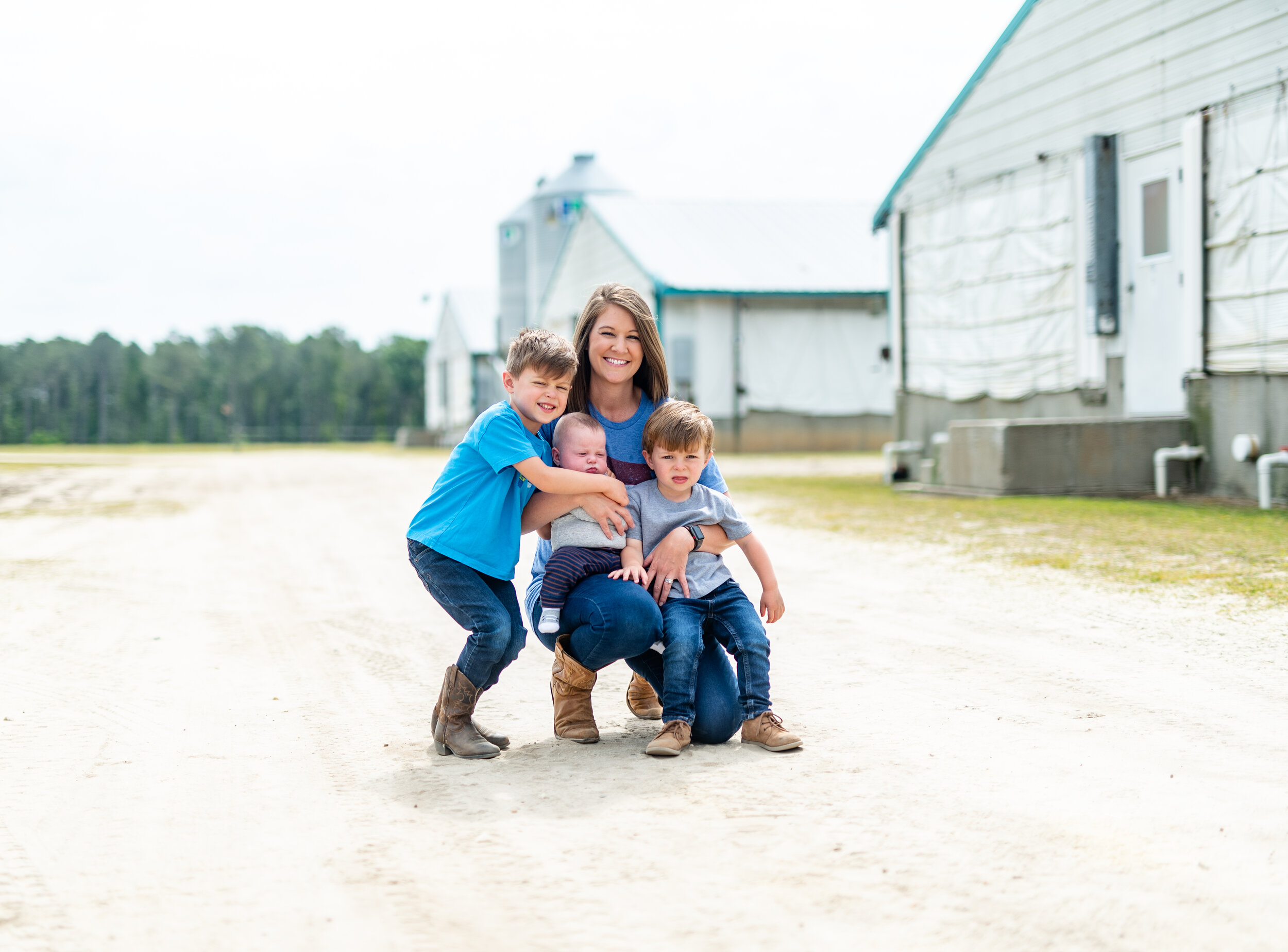
The Bass farm was started by Tyler’s grandad, and later taken over by his dad and uncle. After college, Tyler knew exactly what he wanted to do—come back to the farm. He had always wanted to be a farmer, after all.
“I’ve always wanted to farm ever since I was a little boy. I can remember playing in dirt paths with my trucks and tractors,” Tyler said.
After college, Tyler started to build chicken houses and bought hog houses since then as well. The Bass farm currently grows and raises crops, produce, chickens, cattle, and hogs. Tyler’s favorite part about being a farmer is being outside, watching things grow, and knowing he is helping feed others.
His least favorite part about farming is also Janna’s least favorite aspect—the time it can take away from family. Farming is 24/7, especially when livestock is involved, and the sun-up to sun-down hours can be hard.
“Many a night during planting or harvesting season we are sitting around the table, and he’s not able to be there, or I tuck the children in bed and he’s not home yet because he’s still in the field,” shared Janna.
Janna and Tyler aren’t trying to downplay the good in farming. They are simply acknowledging the hardship that is their reality. And yet, in that hardship and challenge, is a lesson for their sons.
With the long hours and hard work, their sons get a front row seat to lessons on a good work ethic. While it may seem that they are simply playing, young children tend to notice more than we realize.
“I hope they observe the work ethic behind what goes into a farm, the dedication, and just the humility that comes along with it,” Janna said. “Farmers are humble and honest, but they really put serving others in front of themselves. I hope my boys see that and apply that to every aspect of their lives.”

Whether or not Crawford, Knox, and Zane choose to become farmers, they are learning values that transcend the farm. Humility, hard work, dedication, and service are all traits that any parent hopes their child will learn.
And if the Bass brothers want to become the fourth generation to farm, well, the farmers that came before them have and are putting in the work, sun-up to sundown, to make sure that the farm is able to welcome the next generation on to it’s lands.
“If my boys choose to farm, I hope ag will still be able to sustain them and their families in the future. I hope I can continue to build on the farming foundation my dad and granddad set for me, to pass on to my boys – if that God’s plan for them,” said Tyler of what he hopes for his sons.
The farm is filled with lessons, and for those who are lucky enough to grow up on the farm, they may not even realize that they are learning at the time. It is doubtful that Knox, Crawford and soon Zane Bass realize that as they check on pigs or ride the tractor with their dad that they are learning life lessons.
While family farms are about providing food, fuel, and fiber for the world, they are also all about raising the next generation. Tyler and Janna Bass are striving to do their part, to raise Godly, kind, humble, hardworking boys on the farm.
And perhaps in 20 years, the Bass brothers will remember a time where they raced down a farm path and climbed feed bins, smile and realize that they learned so much on the farm.

