

Farmkeepers Blog
The Farmkeepers is the official blog of NC Farm Families. It is here that words will flow, our voice will be heard, a stand will be made, and the farm families of North Carolina will be protected. In these posts, we'll set the record straight. You'll see the faces of the families who feed us. Here, you'll receive all the updates and news. It is here that we will fight for farmers and be the keepers of the farm in NC. We hope you'll join us. Follow along on social media and by joining our email list.
NC Farm Act contains no loopholes for industry expansion.
In politics, people often attempt to “twist the facts” in hopes of persuading others to support their views. Other times, they just flat out tell mistruths.
That’s exactly what we saw in a recent WRAL opinion column about the NC Farm Act, which was signed into law this week. The article, written by a Duke law professor who is a frequent critic of North Carolina’s pork industry, falsely claimed that the legislation would allow pig farms “to expand for the first time since 1997.”
That’s simply not true.
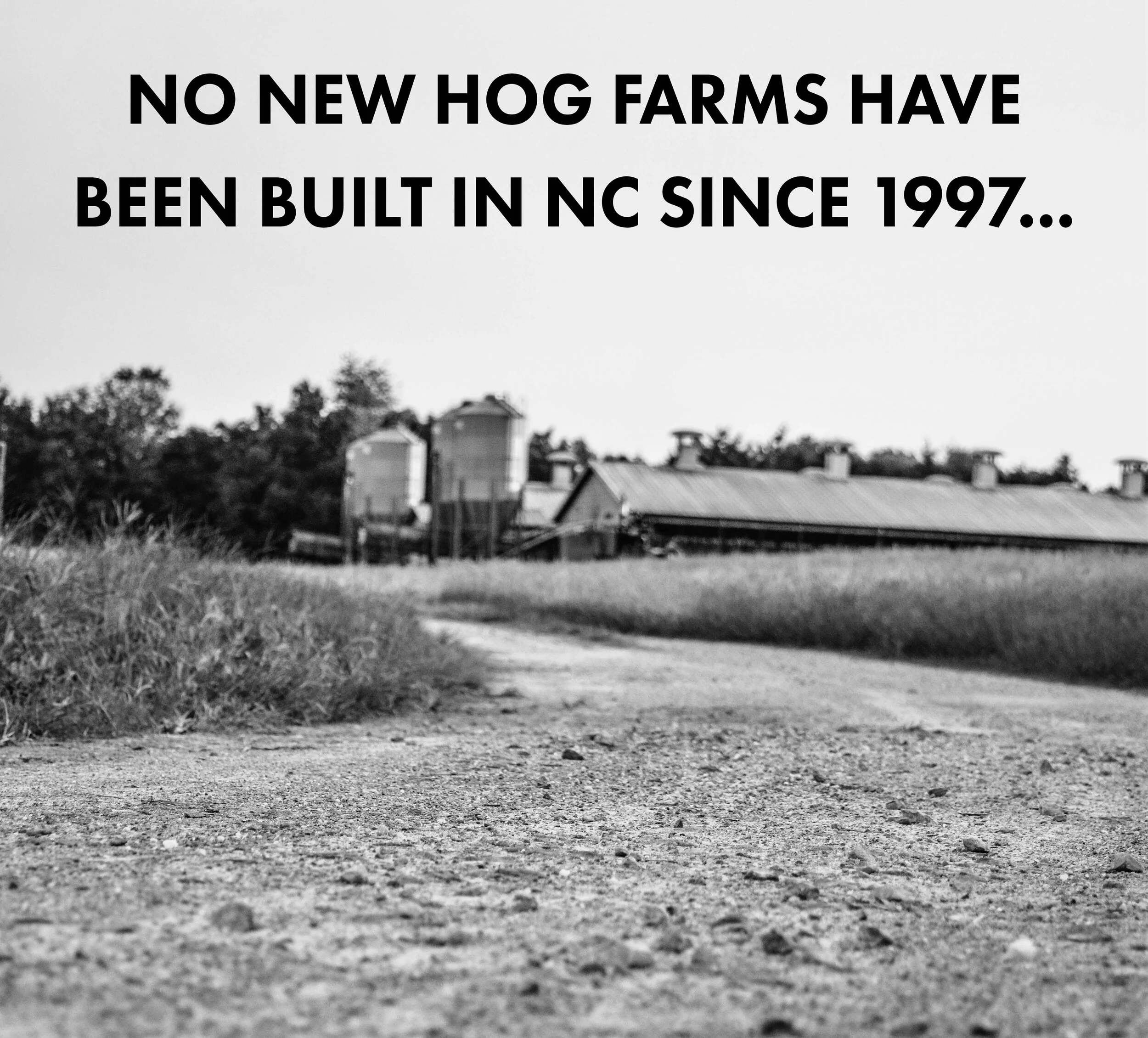
Let’s start with some background. The legislature imposed a moratorium on new or expanded pig farms in 1997. That moratorium became permanent in 2007. As a result, no new hog farms have been built in North Carolina in the past 23 years.
Nothing about this year’s Farm Act changes any of that.
What the Farm Act does do is allow pig farms to cover existing swine manure treatment lagoons or replace their lagoons with a methane digester. The purpose: to capture biogas that can be used to generate clean renewable energy.
These actions represent an advancement in manure management that should be celebrated by environmental groups.
Instead, they are trying to stoke fears with false accusations.
The legislation is clear. It specifically prohibits the construction of new farms or the expansion of existing pig farms that don’t meet strict environmental performance standards.
This legislation simply codifies into law what the NC Department of Environmental Quality has already been doing. Since 2011, the department has issued more than 20 permits for pig farms to cover their treatment lagoons or install methane digesters.
These new technologies are being adopted by more farmers across the state, representing an innovative step in how pig manure is managed. It is an advancement that should be encouraged.(The professor also tried to attach pig farms to an issue reporters care deeply about: public records. A separate provision in the bill aligns local and state privacy concerns with existing federal law. It has very little to do with pig farms, which account for only about 3% of the records at issue.)Sadly, some folks just can’t acknowledge there are positive steps being taken by family farmers and pork producers. They contort themselves into odd positions just to oppose progress — because they oppose modern agriculture.
Sadly, too, they toss aside facts and disregard the truth.

While Farmers Continue Efforts to Feed Communities, Waterkeepers Launch Baseless Attack

Here they go again…
When Cape Fear Riverkeeper Kemp Burdette launched another baseless attack on North Carolina’s pork industry last week, our Executive Director Chad Herring didn’t hesitate to call him out.
“You have to hand it to the activists attacking North Carolina’s pork industry — they never let a crisis go to waste,” Herring wrote in a letter to The News & Observer. “First, it was the hurricanes. Now, they are using the COVID-19 pandemic to keep attacking our industry.”
Burdette wrote a guest column taking aim at hog farmers and pork processing plants, including claims that our farms pollute the air and water. But let’s take a look at the facts.
The NC Department of Environmental Quality (DEQ) recently collected 15 months of air quality data in Duplin County. After taking measurements of hydrogen sulfide, ammonia and particulate matter, the Division of Air Quality concluded that the results “do not constitute a significant air quality issue in the study area.” They determined that no additional testing is needed.
Burdette also specifically accuses our farmers of creating water quality problems during hurricanes. But we’ve seen time and time again that you simply cannot trust the claims these activists make — especially during hurricanes and other crisis situations.
As Herring explains in his letter, “When a crisis hits, our family farmers don’t attack others. We look for ways to help. We protect our animals, feed our neighbors, and strengthen our communities.”
It’s a shame the Waterkeepers refuse to do the same.

Letter to the Editor
You have to hand it to the activists attacking North Carolina’s pork industry — they never let a crisis go to waste. First, it was the hurricanes. Now, they are using the COVID-19 pandemic to keep attacking our industry.
The latest example: Cape Fear Riverkeeper Kemp Burdette’s May 10 op-ed.
He repeats a long list of vague, misleading claims about the impact of hog farming on air and water. Burdette also unfairly attacks our state’s processing plants, which are operating at significantly reduced capacity to protect workers and keep our nation’s food chain up and running.
When a crisis hits, our family farmers don’t attack others. We look for ways to help. We protect our animals, feed our neighbors, and strengthen our communities.
Chad Herring, Mount Olive
Executive Director, NC Farm Families
Who Really is Essential? A Farmer's Perspective
The last few weeks have been insane with the activity, or lack thereof, associated with the COVID-19 pandemic. Our normal way of life has been turned upside down on its head.
These unprecedented times have brought many changes—a lack of toilet paper and hand sanitizer, but a plethora of news stories, opinions, and comical memes.
Farmers and those involved in agriculture have been deemed “essential” to the country and our battle of this pandemic. This is something that I personally am humbled by and do not take lightly.
Being deemed “essential” does not mean that I am more essential than the next person. It simply means that my profession cannot stop for the virus.

As a farmer, I know our jobs are essential to the health and well being of not only this nation, but other nations as well. I don’t do it for fame nor fortune. I do it for many reasons, one of which is that I believe we are ALL ESSENTIAL. Your health and well being is just as important as mine, and I can assure you that each and everyday when I head out to care for our livestock, my number one responsibility is producing safe food. That safe and nutritious food is the fuel that makes the people of this great nation carry out their essential daily activity. Whether it be your local volunteer firefighter, farmer, grocery store worker, pastor or even a movie star, we are all essential to making this nation great.
As a farmer, I’m an essential worker. I’ve made a commitment to make your food my priority. That commitment was made years ago when I became a farmer. Amid this pandemic, I maintain that commitment. Know that I do not think of myself as any more important than the next. I believe we are all essential. I’m just doing what I love and keeping a promise—provide safe food and feed families.
Stay safe. Stay well. Thank you for supporting farmers. Thank you for believing in us.
-Chad Herring