

Farmkeepers Blog
The Farmkeepers is the official blog of NC Farm Families. It is here that words will flow, our voice will be heard, a stand will be made, and the farm families of North Carolina will be protected. In these posts, we'll set the record straight. You'll see the faces of the families who feed us. Here, you'll receive all the updates and news. It is here that we will fight for farmers and be the keepers of the farm in NC. We hope you'll join us. Follow along on social media and by joining our email list.
Busting Myths About Pig Lagoons
A group of agriculture students from University of Mount Olive recently visited a farm in Duplin County to learn more about hog farm lagoons and how they work. It was interesting to hear from the students and get a better sense of what they knew — and didn’t know — about how our farmers manage waste responsibly.
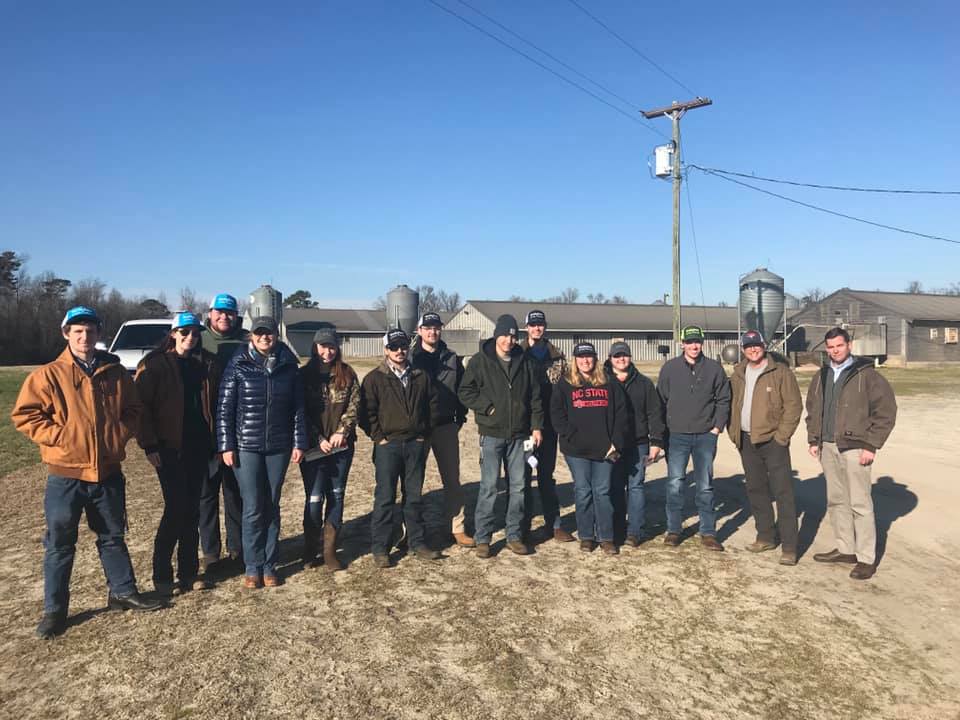
We want to spread that understanding to everyone in North Carolina and have put together the following information to educate people about how these waste management systems work.Let’s start by correcting a few common misconceptions about lagoons:
Hog farmers developed the lagoon system. Wrong. The idea of using storage ponds to treat waste has been around for decades. Today, there are dozens of municipalities in North Carolina, as well as several business operations, that use holding ponds to store waste.
Lagoons are an antiquated system and should be replaced with new technologies. Wrong. The system most commonly used by North Carolina hog farmers was perfected by scientists and researchers from N.C. State University — and is still widely considered to be the most efficient way to manage animal waste on our farms.
Farmers are constantly spraying waste on surrounding fields. Wrong. Every hog farmer in North Carolina must implement a comprehensive nutrient management plan set forth by the NC Department of Environmental Quality that is customized for their farm. The plan helps determine how many animals a farm can raise, where they can apply nutrients, and how often they can apply. Most farmers apply only a few times a month, for a few hours a day, on a variety of different fields. The notion that farmers can apply wherever they want, whenever they want is completely untrue.
Lagoons are full of nothing but animal waste. Wrong. While lagoons are used to store animal waste, the vast majority of the liquid in lagoons is water — and the waste in the lagoon is treated with naturally-occurring bacteria that breaks down the waste. You’ll often see turtles or geese swimming in lagoons.

Lagoons are nothing more than cesspools of toxic waste. Wrong. Lagoons, as just mentioned, are filled with mostly water. Farmers often get the waste on their clothes and body. Some have even fallen in (oops!). It isn't toxic. It is simply organic materials that farmers use as fertilizer to help their crops grow, and the lagoon safely contains the material. Contents of the lagoon are also tested to make sure their nutrient levels are just right!
Lagoons always flood during big storms and hurricanes. Wrong. When Hurricane Matthew dumped more than 8 trillion gallons of water on North Carolina in 72 hours — the biggest rainfall event our state has ever seen — more than 98 percent of the lagoons operated as intended. There are 3,300 active hog lagoons in North Carolina; six farms had structural damage to the lagoons and 28 farms filled to the point that some amount of liquid spilled out.
We'll be covering how lagoons work in another blog post. Stay tuned to learn why lagoons are pink and how they help farmers!
Positive Outcomes Have Eluded Farmers in Recent Lawsuits--What Went Wrong?
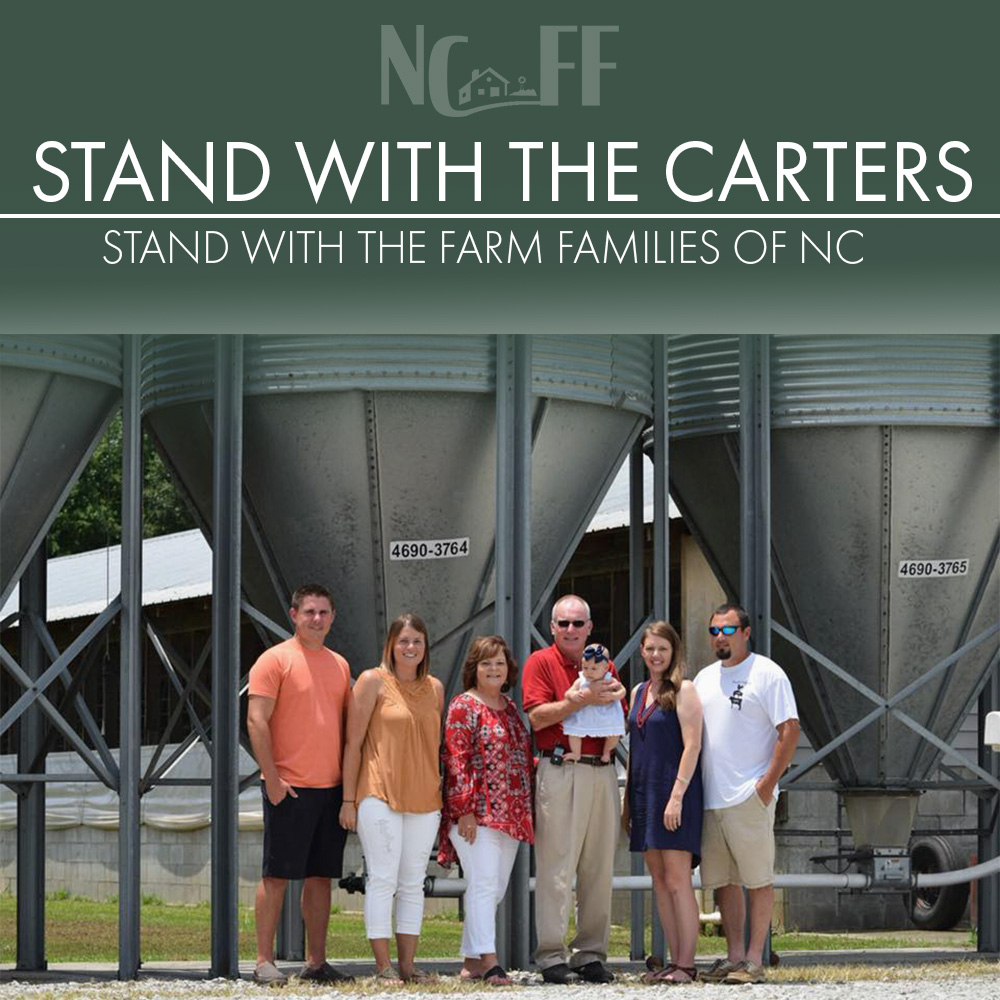
When lawyers went door to door signing up clients so they could sue Smithfield Foods two of Joey Carter’s neighbors signed up.
At the trial four other neighbors of Joey Carter testified for him. One told the jury: “It’s not what they say. There is not an odor, and I live so close to the farm I can hear the feeders run out in the hog house.” Another said: “We live next door. My wife and kids, we walk on the farm and near it. There’s no issue, no concern, no odor.” A third testified what was being said about Joey Carter’s farm did not make sense. And a fourth testified: “I hate to feel like an innocent man is going down.”
A fifth witness, the local postwoman, told the jury, “I can’t tell you the last time I’ve smelled odor from the farm.” Day in and day out, that postwoman had delivered mail to Joey Carter’s farm and she couldn’t recall the last time she smelled odor.
In addition, a respected scientist who’d done studies at Joey Carter’s farm had found no objectionable odor.
So how did Joey Carter’s farm end up on the losing end of the lawsuit?
First, the jury never heard the respected scientist’s testimony about odor. The lawyer suing Smithfield Foods filed a motion to block her testimony and the judge agreed.
Second, the jury never heard about lawyers promising the two neighbors who sued Joey Carter that they’d make money if they won the lawsuit. The lawyer who filed the lawsuit made a motion to block that testimony as well and the judge agreed.
Third, the jurors were never allowed to visit Joey Carter’s farm because the judge blocked that too.
And, finally, at the trial the jurors were told the lawsuit wasn’t against Joey Carter – it was against Smithfield Foods. That statement was technically true. But the hard fact is the jury’s verdict – it awarded the two people who sued $25 million – put Joey Carter out of business.
You have to wonder: How could these things happen in an American courtroom? They shouldn’t. But that’s why Americans have the right to appeal unfair verdicts to higher courts. And that’s where the road to justice leads for Joey Carter: Straight to the Court of Appeals.
This is the sixth part to a six part series.
A Jury of Peers? Who Decides the Fate of Farmers in Hog Nuisance Cases?

Every person has a right to a trial by a jury of their peers. That legal theory is simple but, sometimes, in a courtroom it turns out to be complicated.
The hog farm trials against Smithfield Foods have been tried in a federal courthouse in Raleigh. And most of the jurors have been from suburban areas around Raleigh – while the farms being sued are in rural areas. In all likelihood, most of the jurors had never set foot on a hog farm.
Why does that matter? It means most of what the jurors knew about hog farming, when they reached their verdict, they’d learned in the courtroom in Raleigh. And what they believed was true about hog farming probably boiled down to which lawyer made the most persuasive case. On the other hand, a jury made up of people from rural areas – the actual peers of farmers – would have had first-hand knowledge about hog farming to help them judge whether what the lawyers were saying was true.
Early in the trials, Smithfield Foods lawyers made a motion – they said, we’d like to take the jury to the hog farm that’s being sued so they can see it for themselves. The lawyers who were suing Smithfield Foods didn’t like that idea at all. They didn’t want jurors to see the farm. And the judge agreed with them. Which is hard to understand. The lawyers suing Smithfield Foods say the farm is atrocious and stinks and the lawyers for Smithfield say, well, let’s take the jurors down there and let them see for themselves – but then the judge says, no way.
So, in the end, a jury – with people on it who’ve probably never set foot on a hog farm – decided the fate of a rural farm. So, was telling a farmer no, you can’t take these jurors to see your farm, a step towards or a step away from justice?
This is part 5 in a 6 part series