blog-1.jpg

Farmkeepers Blog

The Farmkeepers is the official blog of NC Farm Families. It is here that words will flow, our voice will be heard, a stand will be made, and the farm families of North Carolina will be protected. In these posts, we'll set the record straight. You'll see the faces of the families who feed us. Here, you'll receive all the updates and news. It is here that we will fight for farmers and be the keepers of the farm in NC. We hope you'll join us. Follow along on social media and by joining our email list.  
Faces of NC Farm Families Marisa See Faces of NC Farm Families Marisa See

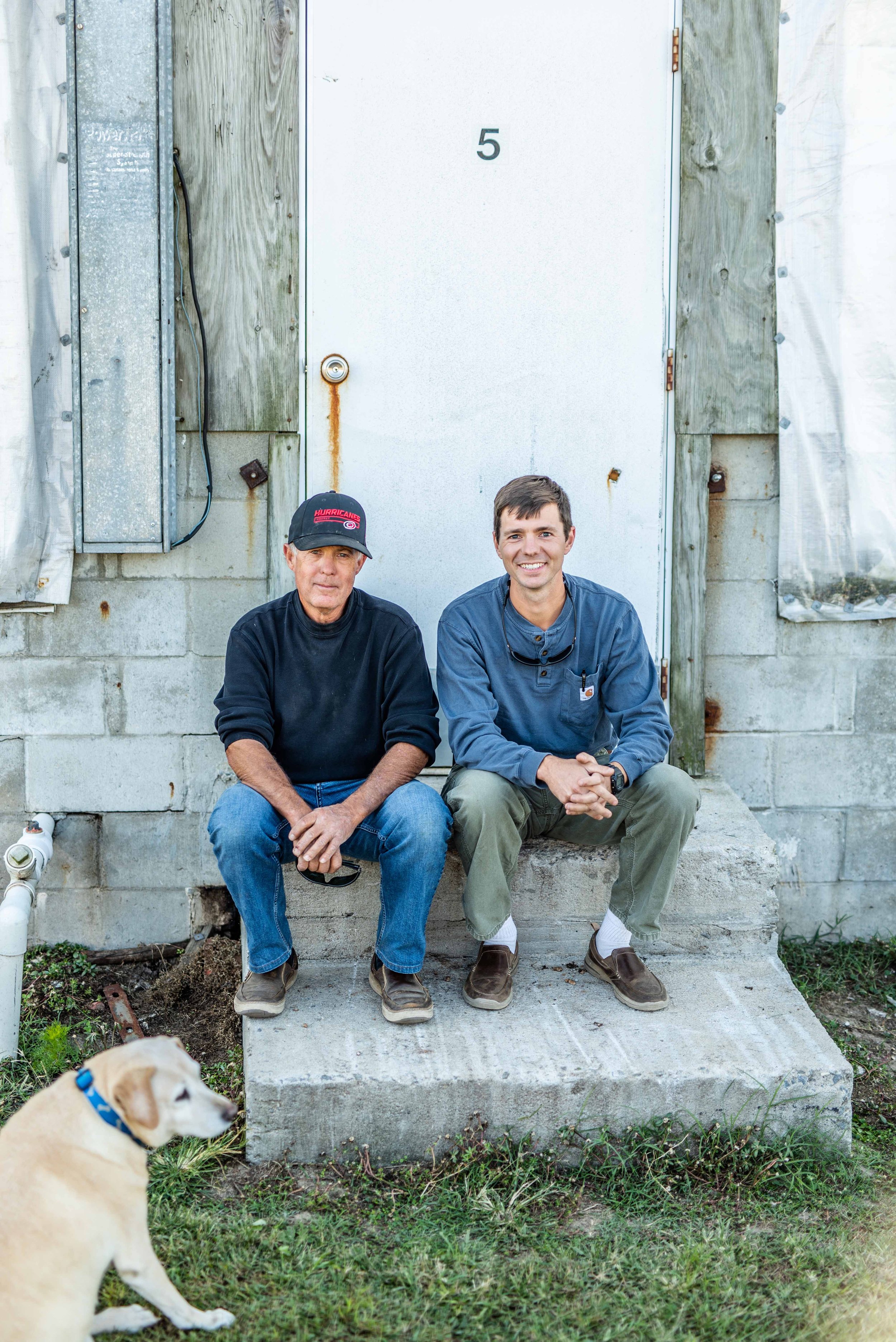
"Farming is Who I Am": The Smith Family's Story

“Farming is kind of who I am. It’s about heritage. Dad has always done it. It’s what I’ve always wanted to do.”

—Jeb Smith

So often, farming is more than a profession. It becomes an identity, a way of life. It is a flame passed on through the generations. It isn’t always this way, but often it is. For Jeb and Steve Smith, it is.

In 1994 Steve Smith began building hog barns in Albertson. In January of 1995, he sold his first pigs. Like many in eastern North Carolina, pigs were a chance to get out of the tobacco business. By 2000, Steve had completely gotten out of tobacco and put all his efforts into caring for and managing his pig farms.

Steve’s father would come to the farm most mornings until he couldn’t at the age of 90. For Steve, his dad provided a lot of support.

“He was a lot of support and a lot of help,” Steve said with emotion. “Really, he helped me get in the pig business.”

The support and lessons Steve received from his father, were passed down to Steve’s son, Jeb who grew up on the farm helping his dad.

“Jeb’s built a good work ethic. He grew up knowing how to work,” Steve said.

While Steve raised his son on the farm, he never expected Jeb to make farming his life. It was never something he pressured him to do. For Steve, if Jeb is happy with what he’s doing, that’s all Steve wants.

But for Jeb, farming is all he’s wanted to do. He loves being close to home and enjoys working with his dad.

“We work well together. We have our moments like everybody, but not a whole lot,” Jeb shared. “If something does come up, in 30 minutes, we’ve forgotten about it. We’ve moved on.”

Steve said that he and his dad also worked well together—yet another trait being carried on to the next generation.

In addition to working on the farm, Jeb also works with the county’s Soil and Water as a Soil Conservationist. He checks pigs at 5:30 or 6 every morning before heading to work. For Jeb, working with Soil and Water has reinforced his desire to be a good steward of the land.

“Be good to the earth, and it will be good back to you. I’ve always tried to live that way, even before I went to work there,” Jeb said.

Caring for the land is important to the Smith family. Some of their land has been in their family since the 1750’s. Not only do they live on the land that they farm, but they are keenly aware of how the farm is woven into the community.

“It’s nice to have hogs and farm in the same community where we live. We’re the closest hog farm to where we go to church. We can hear the church bells at 12 o’clock at the farm every day,” Steve said.

 Additionally, Jeb serves on the local fire department. His wife, Jaiden, is a social worker in Duplin County. Community for the Smiths is something they care about.

When the lawsuits came to their community, it was a hard time. The lawyers came to town, and tensions and divisiveness arose in a normally peaceful, friendly community. Perhaps the best description for the situation was heart-breaking. Friends the Smiths grew up with were sitting in court rooms, facing the loss of their farms.

“It was hard hearing about it as a hog farmer, but it was just as tough listening to it as a person and friend hearing about what they went through,” Jeb said.

Hitting so close to home (one sued farm was 15 minutes away), seeing the toll on farmers and the community first-hand, and even experiencing being sued themselves (the farm was dropped from the suit), the Smiths feel fortunate.

Like many farms, they’ve never received a complaint. Their goal is to not inconvenience others, but with more people moving to the country and farmland disappearing, as Steve said, “we’re running out of room. We’re running out of everything except hungry people to feed.”

Since the farm was built almost 30 years ago, there have been changes, many for the better. While change can be hard for Steve, he says that “we’ve got to accept change.”

Some things, though, don’t change. Community remains important and farming is still what the Smith men want to do, and to do it well.

“It gives you a sense of satisfaction. You try to do a good job,” Steve stated.

And for this farming life that the Smiths have chosen to carry on, they continue to be supported by their family, friends, and the generations that came before.

Jeb and Jaiden got married in 2020.

Steve and wife Kim. Steve said: Kim has always been supportive of what I do. When you have someone who does that, who supports you. It’s really nice.

Read More
News Article Marisa See News Article Marisa See

NC Farm Family Faces: A Heritage and a Future

With an agriculture heritage that dates back to the Revolutionary War, you could say that the farming roots run deep for the Overmans. Well, for Harrell Overman at least. His wife, Lorenda, didn’t grow up on a farm. For her, the farm was the wilderness, although she grew up just down the road from her husband. They met in school and went to church together growing up. Despite living close to the farm and growing up with her husband, coming to live on the farm was an adjustment.

“It was a very different world for me. It was a big learning curve. [My] daddy got up, went to work, and was home by supper time and everyone had dinner together. Agriculture is not like that,” said Lorenda

Lorenda had to adjust to a life that didn’t always mean supper at a table. Supper could be in a combine. However, the farming lifestyle also allowed she and her husband to work together during the day and problem solve as a team. Moving on the farm wasn’t without its challenges, but Lorenda sees it as quite the blessing.

“I love agriculture, and I’m probably one of its biggest advocates now because I see the value in ag,” said Lorenda.

Although Lorenda was a marine biology major in college, she had no hesitation coming to the farm. While she can’t exactly be a marine biologist on their Wayne County farm, she still likes to go to the beach and get her salt water fix every now and again. In the end, Lorenda says that they are happy that they made farming their career and calling.

On their farm, the Overmans tend 1,400 acres of soybean, wheat, and corn. They also have  a 2,000 head sow farm where they wean 900 pigs a week and a 7,500 head finishing floor. Harrell is a 6th generation farmer. After serving in the US Army, Harrell’s father got four sows and and two boars. That’s how it all started. Overtime, it grew to 20 sows in the woods. Harrell would walk the hot wire fences and make sure water wasn’t frozen in the winter time. In 1970, they built their first indoor hog facility. Their last building was built in the early 90’s.  They remained independent growers until the early 2000’s when they made the choice to partner with an integrator.

“When we made the leap with this farm, we had sick sows and we couldn’t get a hold of a veterinarian. We were losing pigs like crazy,” said Lorenda about one reason they chose to switch to the integrator system.

Another reason the Overmans decided to make the switch was because prices bottomed out.

“When you sell hogs for 8 cents a pound and it takes 45 cents a pound to grow a hog, that hurts,” said Lorenda.

After talking with the integrator, they felt like it would be a positive move for their farm. Not only would income be steady, but the Overmans would be able to access more resources to better take care of their pigs. The Overmans say that their relationship with the integrator has been very positive. They currently grow for Goldsboro Milling.

A lot has changed on the Overman's farm over the years. From just a few pigs in the woods to a much larger operation, their farm looks a bit different now. What hasn’t changed, though is that it is still a family operation. Harrell and Lorenda have three children who grew up on the farm and currently, two of them are raising their families on the farm too.

“We have 5 grandchildren [with one more on the way], and they are all on the farm and they love our environment,” Lorenda said.

The oldest grandchild who is four, loves to ride the combine and any tractor. He also likes to help his daddy with the cows. The oldest granddaughter walks to the hog house everyday with her mom and little sister to look at and talk to the hogs.

While the grandkids all have their own interests, the adults all have their special jobs on the farm. The men tend to be the manual workers, while the ladies do more of the office work.

“I do all the record-keeping. The hog lagoon records are done by our daughter. The three men do the grunt work. They also do the harvesting, although our daughters do hop in the combine and help out there,” explained Lorenda.

All in all, everyone jumps in where they are needed to get the job done. Their favorite part about farming is being able to do it together, working on a common goal. They love not just working on the farm, but living there too. Harrell and Lorenda chose to build their house on the farm, overlooking the hog barns. One of their daughters built her house less than a quarter of a mile from the hog houses, and their son is in the process of building a house across the street. Harrell’s mother has lived on the farm her whole life too.

They chose to build on the farm because “it’s beautiful. It’s a lovely spot. It’s quiet and peaceful. I love to watch the sun set over the hog houses. It was heritage also,” said Lorenda.

The Overmans have a long farming history, but it isn’t just about their heritage. For them, they are looking to a future of farming as a family.

“We have a heritage, but we also have a future because our children are working with us and our grandchildren are living on our farm, so we see ourselves being in agriculture for years,” said Lorenda.  

Read More
News Article Marisa See News Article Marisa See

NC Farm Family Faces: A Family Affair

For the Matthis family, farming is a family affair. Everyone has a part to play, and they work together to get things done. When it comes to farming, family is their favorite part about it.

Scott and Melanie Matthis, and their two boys, Chasen (18) and Colbey (15) grow hogs, cattle, turkeys and hay on their Sampson County Farm. Scott grew up on a local farm growing row crops and tobacco. Melanie grew up in the area, but was a "city girl"... that is until she met Scott and came to the farm. She's fell right in and fell in love with the farm life. In 1990, they built two hog houses. Later, they would grow their farm to a total of 6 hog houses, 110 Simmental cattle, and lease a turkey farm. Melanie manages the turkeys while the boys do the cattle, hogs, and hay. Scott works full-time with Prestage Farms as their Cattle Manager. Although gone much of the day, he goes straight to work from one full-time job to another--Cattle Manager to farmer.  You could say that he really enjoys the agriculture life.

The apple doesn't fall far from the tree, though. Chasen and Colbey love the farm life too. While Chasen prefers work on the tractor cutting hay and tending to crops, Colbey would rather be working with the animals, especially the pigs. Despite each of the Matthis boys having a favorite aspect of the farm, they are both adept in all areas, pitching in wherever needed. Both can drive a tractor like it is second-nature and both show livestock in 4-H. The two also know how growing up on a farm has helped them.

"I've learned responsibility," said Colbey and Chasen added that "I've developed a strong work ethic thanks to living on a farm."

For their parents, their greatest hope is for their sons to take over the farm one day."Our hope for the future is that our boys will come back and run it. They are the reason that we do what we do," said Melanie.

And what the Matthis family does, is work hard to make sure they are sustainable. They want this farm to last for generations to come. Part of that is to do things the right way and respect their neighbors.

"Being a good neighbor means everything. We live on the land too.  We don't want to do anything to harm the environment because we live here," said Scott.

Melanie echoed her husband's sentiments. As a mom raising two boys on the farm, she knows first-hand the importance of doing things the right way.

It isn't always easy on the farm, though. The family could all agree that working 365 days a year with very few vacations or time off isn't easy. Yet, the best and hardest parts about farming are integrally weaved together for the Matthis family. Late nights cutting hay and early mornings caring for animals isn't always fun, but it also allows them to work more together as a family. In the end, it is all worth it.

The Matthis family is committed to farm life and are invested in it. If they aren't working on the farm, you may find them on the road headed to a 4-H livestock show. When Scott isn't working one of his full-time jobs, he is serving on the NC Purebred Angus Board, Simmental Cattle Board, and the Sampson County Cattleman's Association Board. They lead a full life that is filled with agriculture, but at the center of it all is family.Farming is a family affair for the Matthis Family.

Photos by: M. See Creative

Read More